Nanook of the North in Five Facts
On Friday 11 December, Radio 3 broadcast an entirely new soundtrack by Inuk throat-singer Tanya Tagaq for the 1922 silent film Nanook of the North.
Nanook is an extraordinary film - the first ethnographic documentary that told the story of a people through the close observance of one man. It was filmed in 1920-21 in Port Harrison, Northern Quebec by Robert J. Flaherty, and told the story of a year in the life of an Itivimuit man, his family and their bleak life, fishing for survival and trading furs.
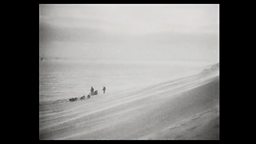
Here are five essentials you need to know about this ground-breaking film.
1. Trial by fire
Flaherty was not trained in film. He was an explorer and prospector for the Canadian Pacific Railway in the north of Canada when he decided to film the Itivimuit tribe. He did a three-week course on cinematography in New York and then learnt on the job. He was by no means a professional; in fact his original footage was completely destroyed when he dropped a cigarette on the film reels.
2. Nanook was not, in fact, Nanook
Nanook's real name was Allakariallak. Keen to play along with Flaherty's wish to represent the Inuit as living a simpler way of life, 'Nanook" was filmed hunting with a spear, despite the fact that in reality the tribe had long before abandoned spears in favour of guns. In a scene at a trading post, 'Nanook' comes across a gramophone, and is filmed appearing to try and eat the record - in actual fact he'd seen one before as Flaherty shared his gramophone, tea, tobacco and biscuits with the Itivimuit in exchange for their help with filming.
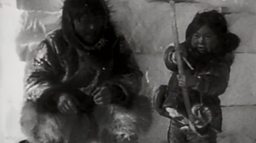
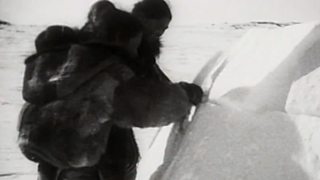
Scenes apparently showing the inside of an igloo were staged, out of necessity as the lighting needed would have melted the walls. A cutaway igloo was used to accommodate lighting and cameras. Also, the two women who played 'Nanook's' wives were actually Flaherty's common-law wives - one wonders how 'Nanook' climbing out of bed with his two wives would have been viewed by the 1920s audience. And 'Nanook", described in the film as dying of starvation two years after filming, actually died at home of TB.
3. Frozen in time
This remarkable footage can make uncomfortable viewing when we read the scene cards - one in particular describes the 'happy go lucky' Inuit, when in reality they are fighting for survival.
Tanya Tagaq considers it a film seen through "1922 goggles", particularly the gramophone scene. Speaking to CBC News in 2014, Tagaq explained: "Yeah, like, "Look at these savage people that have no idea what this is, oh isn’t that funny, they don’t know." And it’s like yeah, why don’t we take someone living in England and put them on the land and laugh at them for dying in the cold? "Oh, he’s being eaten by a bear."
4. Lights, camera...
Filming in such savage cold can be taxing on modern technology, so it is even more remarkable that Flaherty used two hand-cranked Akeley cameras, which he and his Inuit team had to dismantle at the end of every day of shooting, remove the condensed moisture from inside, and then reassemble. In his Hudson Bay cabin, Flaherty created a film lab and heated vats of chemicals to process the negative and printed dailies using sunlight. He'd then discuss the footage with the Itivimuit people.
5. Furred up
The film was financed (for $55,000) by furriers Revillon Freres, who wanted to out-do their competitors the Hudson Bay Company. The American branch of the French film company Pathé agreed to distribute it and it became hugely popular.
In 1989, it was selected as one of the first 25 films to be preserved in the United States National Film Registry by the Library of Congress as being "culturally, historically, or aesthetically significant".
Tanya Tagaq and Nanook of the North was originally commissioned by the Toronto International Film Festival in 2012 and this performance, recorded in association with The Banff Centre in Canada will be the first time it has been broadcast.
More about Northern Lights on Radio 3
![]()
Northern Lights season
Programmes, schedules and related content from Radio 3
![]()
Highlights
Programmes and clips from throughout the season
![]()
Schedules
Find out what's on throughout the season and when
![]()
Northern Lights and Words
Radio 3 Controller Alan Davey explores the season