How long could we survive without ice?
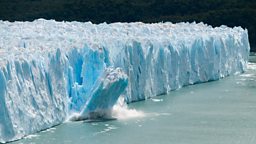
The world’s ice is melting.
At the present rate, we’ll have an iceless Arctic Ocean for the first time in human history by mid century.
In the latest episode of the BBC’s Under the Weather podcast, meteorologists Simon King and Clare Nasir are joined by ice change expert Professor Henry Pollack. They explore what an iceless world would be like, and discover how long we could survive without ice.
1) Sea levels will rise
Arctic sea ice melting doesn't actually add anything to global sea rise - it's already displacing the water it's in. Rather, it's the ice on land - over Greenland, Antarctica and glaciers - that could raise the sea level a whopping 80 metres.
“Anyone who lives at sea level, and most of the large cities of the world are at sea level, would not recognise their home.”Professor Henry Pollack
2) The world map will be very different
With some of the world’s largest cities located near the coast, hundreds of million people live in an area that would be lost to the sea with just a 90cm sea level rise.
If all the ice were to disappear, we’d see climate migration into the billions.
3) The oceans will get warmer
Arctic sea ice reflects sunlight back out into space. If it disappears, the darker ocean will absorb heat instead of it being reflected. The oceans will therefore heat up and expand, adding to the rise in sea level.
4) It will change global weather circulations
A lot of the weather is generated by the jet stream, a fast moving ribbon of air travelling around the Earth. The jet stream owes its existence to the temperature difference between the poles and equator.
But if the poles continue to warm, and that difference decreases, there’ll be a change in the jet streams and global weather patterns will also change as a consequence.
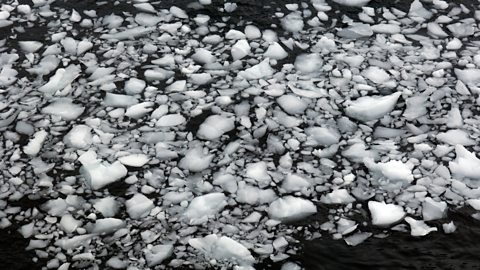
What impact will melting ice have on the world?
Professor Henry Pollack discusses how an iceless planet would impact life as we know it.
5) Communities will drastically change
Greenland and Antarctica would become habitable, and perhaps even fertile. Cool, right?
But there’d be a much greater area lost under water. Around the world there would be huge financial ramifications - with governments under massive challenges to deal with that loss of land - and the migration that comes with it.
Think migration's a hot topic now? Just wait.
6) Fresh drinking water would be lost to the sea
A full two-thirds of the world’s fresh water is locked up in glaciers. People in arid climates rely on glacial meltwater to drink and irrigate their crops. If glaciers were to completely disappear then those who depend on it would lose this vital water source and would have to move.
Fresh water feeding into the world’s oceans will also change the temperature, salinity and density of the oceans which may alter oceanic circulation patterns, such as the thermohaline circulation.
Because the ocean and atmosphere are linked, this will have a further knock-on effect to weather patterns.
Hear this entire episode of Under the Weather and subscribe.
More BBC Podcasts
![]()
Listen to Under the Weather
Meteorologists Simon King and Clare Nasir love the weather. In this BBC podcast, they are joined by a range of experts as they answer some of weather’s most challenging questions.
![]()
Listen to Evil Genius with Russell Kane
Where do you draw the line? Each week, we examine a cultural icon’s back story and weigh up the good against the bad.
![]()
Listen to Unpopped
Getting serious about the silly stuff. Hayley Campbell & friends examine the biggest pop culture moments of the recent past.
![]()
The Boring Talks podcast
Behind every boring subject is another layer of boringness you could have never imagined.