Opera: Passion, Power & Politics: Spectacular show brings art form bang up to date
29 September 2017
The latest blockbuster exhibition at London's V&A Museum takes visitors on an exhilarating journey through 400 years of opera - and blows its conservative image clean out of the water. WILLIAM COOK pays it a visit.
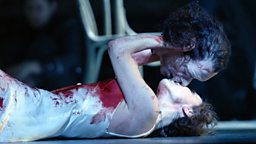
Do you think of opera as stuffy, old-fashioned and elitist? This spectacular exhibition at London’s Victoria & Albert Museum will make you think again.
In partnership with London’s Royal Opera House, the V&A takes you on a magic carpet ride through 400 years of opera, from its origins in 17th-century Venice to the avant-garde productions of today.
This show refutes the myth that opera is a conservative art form. In fact, it’s been at the cutting edge of European culture for centuries
This show refutes the myth that opera is a conservative art form. In fact, it’s been at the cutting edge of European culture for centuries, inspiring political upheaval as well as social change.
“It’s a living thing,” says opera director Robert Carsen, the artistic director of this show. “It’s always been modern.” Opera: Passion, Power & Politics brings opera bang up to date.
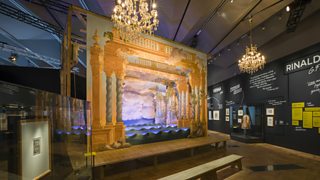
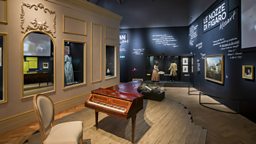
Long before 3D movies and CGI, opera was the first immersive art form – an intoxicating blend of music, drama and art. The V&A replicates this wrap-around experience in a multimedia show which features sets, costumes, historic artworks and artefacts – and glorious music, of course. It’s not like a conventional exhibition. It’s more like stepping backstage.
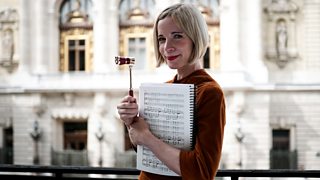
“I’d like to think it will change perceptions of opera for a whole new generation,” says the show’s curator, Kate Bailey. The layout is dramatic, a time tunnel through European history, but the best thing about it is the state-of-the-art sound system.
You’re given a set of headphones which play the relevant operas for every room you enter. There’s no need to keep tapping numbers into a handset. Wireless technology tracks your progress, and updates the playlist automatically as you walk round.
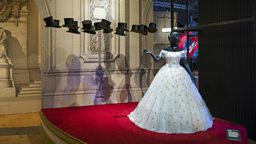

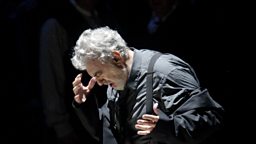
Opera: Passion, Power & Politics charts opera’s evolution through seven premieres in seven cities, from Monteverdi’sThe Coronation of Poppea in Venice in 1642 to Shostakovich’sLady Macbeth of Msensk in Leningrad (now St Petersburg) in 1934.
Each of these operas was a sensation, stretching the boundaries of the genre and shifting the cultural agenda. This wasn’t a staid amusement - these were revolutionary events.
Each of these operas was a sensation, stretching the boundaries of the genre and shifting the cultural agenda
In our brave new world of constant, round-the-clock entertainment, it’s hard to imagine what a stir these operas caused. Even the biggest modern musicals or Hollywood blockbusters don’t have anything like the same impact.
The closest comparison would probably be Beatlemania, but even The Beatles weren’t as radical as Mozart or Wagner. “These were young composers, questioning society,” says Kate.
The story begins in Venice in the 17th century, where opera began. Rich merchants and aristocrats could afford to build their own theatres, and they were keen to show off their wealth and taste by mounting the most lavish events they could afford.
In the city’s infamous carnivals, different classes could mingle freely in disguise. Out of this tipsy mix of intellectual and sexual liberty, a brand new art form evolved.
Our next stop is Britain, and Handel’sRinaldo, which premiered in London in 1711. Critics were outraged to see Londoners flocking to this hybrid foreign import, an opera by a German sung in Italian - perish the thought!
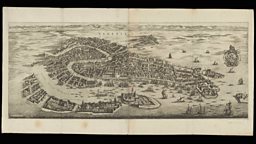
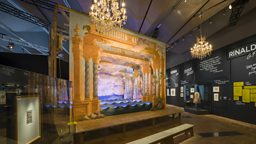
“Our great-grandchildren will be curious why their forefathers used to sit like an audience of foreigners in their own country to hear plays acted in a tongue which they did not understand,” fumed The Spectator. Hogarth satirised the spectacle of English opera lovers turning their backs on English authors like Shakespeare.
From London, we move on to Vienna in 1786, and the premiere of Mozart’sMarriage of Figaro. This masterpiece heralded a social revolution, in which servants usurp their masters. Is it too fanciful to suppose it might have helped inspire the French Revolution, three years later?
There’s little doubt that Verdi’sNabucco helped to drive a revolution. It premiered in Milan in 1842, and quickly became the unofficial anthem of Italian unification.
Is it too fanciful to suppose Figaro might have helped inspire the French Revolution?
However most of opera’s revolutions were artistic and social, not political. Wagner’sTannhauser, which premiered in Paris in 1861, turned opera into an almost cinematic experience.
Strauss’sSalome, which premiered in Dresden in 1905, challenged chauvinistic attitudes with its depiction of independent womanhood.
Shostakovich’sLady Macbeth, which premiered in Leningrad in 1934, marked a new era of musical composition, but it was banned by Stalin because Lady Macbeth didn’t match his idea of how a Soviet woman should behave.
So what do the V&A and the Royal Opera House hope to achieve with this unique collaboration? For the V&A, the pay-off will be yet another sell-out show, but for the Royal Opera House, and other opera companies, the benefits will be more long term.
Aficionados will find plenty that’s new and different here, but this show is especially suitable for folk with little or no knowledge of opera – people who’ve never been to see an opera before.
After walking through this exhibition, with these great arias ringing in their ears, visitors of all ages will go away eager to experience the real thing.
Opera: Passion, Power & Politics is at the Victoria & Albert Museum, London from 30 September 2017 to 25 February 2018.


Related Links
Opera Season
![]()
#OperaPassion Day
Five magic moments, from St Pancras to the Hebrides
![]()
Passion, Power & Politics
Inside the latest blockbuster exhibition at London's V&A
![]()
About the season
All you need to know about the BBC's celebration of opera
![]()
Season homepage
Complete TV and radio schedule for all the featured programmes