Boulez ‒ An Established Progressivist
Writing in 2015 for a BBC Symphony Orchestra 'Total Immersion' event to mark Pierre Boulez’s 90th birthday, Ivan Hewett reveals how the composer-conductor cleared a path for new music after the Second World War and became a leading light in the music of the 20th century.
The Angry Young Man
It’s hard to recall that Pierre Boulez was once the Angry Young Man of modern music. For decades he seemed almost avuncular, telling us in genial pre-concert talks that modern music really doesn’t hurt at all.
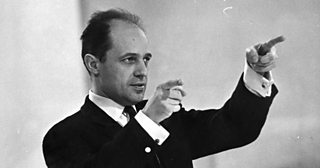
He conducted increasingly mainstream programmes of Bruckner and Richard Strauss in front of the world’s greatest orchestras, and dispensed his half-century of experience as a conductor to young players at the Lucerne Festival Academy. It wasn’t always thus.
This is the man who once declared that the best thing to do with opera houses was to blow them up. In 1952, in one of his many fiercely polemical articles, he declared that any composer who did not acknowledge the necessity of Arnold Schoenberg’s 12-note method of composition was ‘USELESS’.
Occasionally one saw a flash of the old anger, when he denounced the neo-Classicism of the mid-20th century as a dishonest evasion of the modern imperative, useful to dictators of the right and left. That reminds us that Boulez’s anger had its roots in the Second World War. As a young student in Paris he attended premieres by those classicising composers whose music seemed unthreatening to the Nazi occupiers.
This branded on his mind the sense that any compromise in the search for a new musical language, fit for the modern world and devoid of comforting illusions, would be an abject ethical and political failure as much as an aesthetic one. Schoenberg himself did not escape Boulez’s censure. In an article following Schoenberg’s death in 1951, provocatively entitled ‘Schoenberg est mort’, Boulez stated that Schoenberg had bottled out of his own revolution. He’d reformed the language of pitch but failed to dispense with the Romantic phraseology he’d inherited from his predecessors. As a result, his ‘12-note’ music was riven with contradictions.
'Embrace delirium and organise it.'
It needed a bold spirit to carry Schoenberg’s innovations forward to their logical conclusion. Boulez assumed the role with amazing confidence and precocious brilliance, though he wasn’t the only one. A number of other young men, similarly impatient with the half-achieved modernism of their elders, were working in the same direction. ‘We take up our responsibilities with intransigence,’ Boulez declared; and if some other composers such as Stockhausen and Nono were equally intransigent in their notes, no-one rivalled Boulez when it came to intransigent polemics. By the age of 26 he’d extended Schoenberg’s serial idea, whereby the notes are governed by a pre-determined ‘row’ of pitches, to every domain of music. It is typical of Boulez that, having taken up such a dogmatic position, he almost immediately abandoned it and mocked those who dim-wittedly continued along the same path.
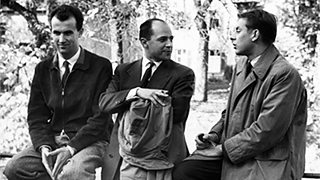
What matters to Boulez is not mechanical rigidity but an agile give-and-take between intuition, musical material and the instinct to impose order.
What matters to Boulez is not mechanical rigidity but an agile give-and-take between intuition, musical material and the instinct to impose order. He once said, ‘one must embrace delirium and organise it’, and admitted that ‘I like to give myself rules for the pleasure of breaking them’. Already in the Second Piano Sonata, the clearly-defined melodies and neatly traditional forms of Schoenberg were dissolved into a play of splintered fragments. The fact that these fragments derive from a row is almost impossible to discern. What is unmistakable is the exuberant fury of the transformative process, which turns the musical discourse into a rushing lava-stream. It was a musical metaphor for a ‘universe in perpetual expansion’, as Boulez put it.
Baton charge
In the works of the 1960s onwards, such as Éclat/Multiples and Dérive 1, one hears a new Boulez, as supple and seductive as the old one was violent. What encouraged Boulez down this path was the experience of practical music-making. In 1954 he had set up a concert series named ‘Domaine Musical’, aimed at educating Paris in the modernist classics of Schoenberg, Webern and Bartók, as well as introducing audiences to the works of himself and his contemporaries. This gave him invaluable experience as a conductor. It was not until 1963, at the relatively advanced age of 38, that Boulez burst on to the wider musical scene as a conductor, when he led the first production in Paris of Alban Berg’s opera Wozzeck.

After this belated start, his rise was amazingly rapid. In 1971 he was appointed Chief Conductor of the BBC Symphony Orchestra and Music Director of the New York Philharmonic. In both roles he continued the aims of the Domaine Musical, promoting his particular, very partial vision of modern music in the teeth of considerable hostility. In 1976 he conducted the Patrice Chéreau production of Wagner’s Ring at Bayreuth, which at the time caused uproar, but is now accepted as a classic. These three careers – as composer, conductor and polemicist-in-chief of modernism – you’d think would be enough for any man.
À la recherche du...
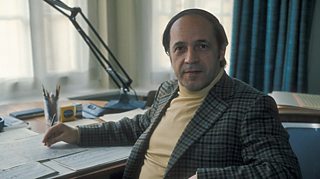
But in 1977 Boulez added a fourth, when he became Director of the newly opened Institut de Recherche et Coordination Acoustique/Musique (IRCAM). The institute was created at the behest of President Pompidou, no less, as a way to tempt Boulez back from Baden-Baden, where he’d gone in protest after his proposals to reform Paris’s musical life were turned down. The aims of IRCAM were the ones Boulez had always had, projected into the realm of technology. The development of musical instruments had come to a disastrous halt, he declared, and this failure was now stifling musical invention itself. He held out a vision of music as a form of collaborative research, in which composers, working with technicians and computer programmers, would boldly go where none had gone before.
Boulez: the legacy
The uncontroversial part of Boulez’s legacy is the remarkable body of recordings he made with the world’s great orchestras, particularly of the great modernist masterworks and the symphonies of Mahler. His other legacies are and always will be deeply controversial. Many say that his power has stifled the careers of musicians who refused to toe the modernist line, particularly in France. IRCAM struggles to stay relevant in a postmodernist world when every composer has access to sophisticated off-the-shelf software, and its output of great or even good pieces is modest. Boulez’s vision of a world in which all composers would march in lock-step to the modernist tune has turned out to be very wide of the mark.
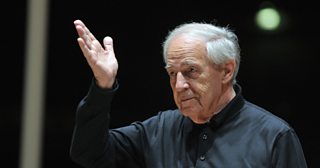
In Boulez’s best works one hears something beyond bracing modernist rigour: the delirium and terror at the root of human existence, which the urge to order can only ever partly subdue.
With Boulez’s music we are on surer ground. There are some undoubted masterworks, though the output is striking as much for its half-fulfilled promise and tantalising might-have-beens as for its actual achievement. Boulez was an obsessive reviser, and several works, including Éclat/Multiples, never reached their final form. The promised opera on a scenario of Antonin Artaud never materialised. Nevertheless, the body of work he completed is actually quite substantial – larger, for example, than the output of two of his heroes, Berg and Webern. Boulez’s music inhabits an immediately recognisable expressive world, at once seductive and violent, with that mysterious fusion of idea and sound that marks the true composer. In Boulez’s best works, above all Pli selon pli, one hears something beyond bracing modernist rigour: the delirium and terror at the root of human existence, which the urge to order can only ever partly subdue.
© BBC/Ivan Hewett
Ivan Hewett is a critic and broadcaster who for nine years presented BBC Radio 3’s Music Matters. He writes for the Daily Telegraph and teaches at the Royal College of Music.