Can Indian hip-hop take over the world?
Three years ago, Indian hip-hop was barely in the public consciousness. Now the genre is home to some of the country’s rising stars and the subject of an upcoming Bollywood movie. How has a once small, barely recognised scene sprung to such prominence?
BBC Asian Network’s Bobby Friction recently traveled to Mumbai to find out, meeting Indian hip-hop’s leading MC's and discovering a scene that puts cooperation and independence over money, fame or personal gain.
Meeting local rap crews, fledging hip-hop talent and aspiring entrepreneurs, Bobby also heard first-hand about plans for the scene to go one bigger, gaining exposure to a worldwide audience.
Below is the story of Indian hip-hop so far, and where it plans to go next. Here are six things you need to know:
1. The scene has risen from India's poorest areas
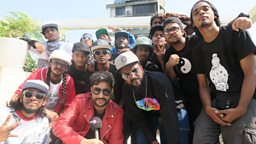
As of September 2017, inequality in India was at its highest in 92 years. Mumbai is the site of businessmen, movie stars and real estate for the super-rich. But these symbolic signs of glamour are a stone's throw from the country's poorest communities.
On ‘Straight Outta Mumbai’, Bobby Friction declares how Indian hip-hop is “giving a voice to a generation that feels it’s been ignored by the rich and powerful for too long.”
Indian hip-hop shares traits with The Bronx’s underground movement in 70’s New York, and even the rise of grime in the UK, in that the music is relatively affordable to make – self-starters only need a microphone, a beat and something to record on – and its key players traditionally come from marginalised communities, primarily in Mumbai, Delhi and Bangalore.
Watch: Bobby Friction hosts the Dharavi United Cypher in Mumbai
2. Divine is the scene's most celebrated star

Many of India’s talents, like breakout star Divine, call themselves “gully rappers”. They come from the streets, and their songs relate a warts ‘n all detail of what it’s like to grow up in their own environment. There’s no glossing over real life. Nobody in Mumbai’s scene lists out luxury cars or designer garms if they don’t actually own them. As one rapper tells Bobby: “If we wear clothes of 250 rupees, that’s what we talk about.”
Divine, real name Vivian Fernandes was first inspired by U.S. rappers Nas and Jay-Z. Not fully schooled in English, he was inspired by how these MC’s used local slang, and this gave him the motivation to start rapping in Hindi. More musicians took the same route, rapping in their local tongue of Marathi, Gujarati or Tamil.
Divine’s songs have since picked up millions of views online, and he’s widely seen as Indian hip-hop’s most honest, tradition-shunning talent, having signed a record deal with Sony Music India. He told BBC News in 2017: “I’m talking [about] how I grew up, how I was left alone in this jungle, full of snakes and rats… We don’t have cars, we don’t have guns, so we don’t talk about that.”
3. MC's are giving opportunities to the next generation
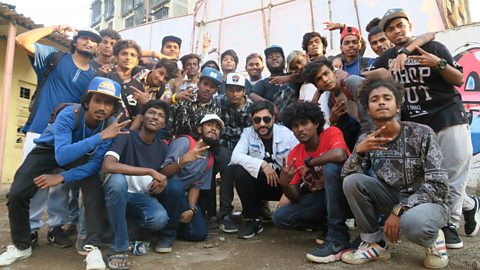
Straight Outta Mumbai: Poetik Justis
Poetik Justis explains how his crew are inspiring a new generation of Indian hip hop
The biggest MC’s in India aren’t just aspiring to get rich quick and leave Mumbai – they’re intent in giving back to the community.
When visiting the Dharavi, one of the city’s biggest slums, Bobby found a group of artists “actively trying to get kids involved in the world of hip-hop.” At the centre of this is the SlumGods "After School of Hip-Hop", which sees local rap crews offering regular, free classes to kids as young as seven, teaching rap, breakdancing, graffiti art and beat-boxing. Not only are kids in Mumbai’s poorest areas being steered away from trouble, they’re also learning valuable skills.
As Bobby sums up, these are “positive, real life models in areas where there aren’t any.”
4. The scene is the subject of a new Bollywood film
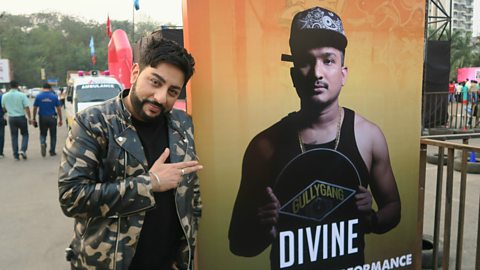
Straight Outta Mumbai: Prabh Deep & Divine
Rappers Prabh Deep and Divine talk about Bollywood is embracing Indian hip-hop
In terms of Indian popular culture, nothing gets bigger than Bollywood. And while Indian hip-hop still wants to retain its independence, it can’t turn down attention from the country’s film industry.
2019 film Gully Boy will be the first high-budget Bollywood release to document Indian hip-hop. It stars some of the industry’s biggest stars – Ranveer Singh and Alia Bhatt – and bases itself in the Dharavi slums and the fledgling rap movement.
Mumbai’s biggest MC’s have ensured the scene has a big input on the final film. Divine and fellow rapper Naezy have given lead star Singh lessons in flow and delivery. Bollywood’s co-sign is being seen as a chance to expose hip-hop to a traditionally conservative audience.
5. It wants to address its diversity problem
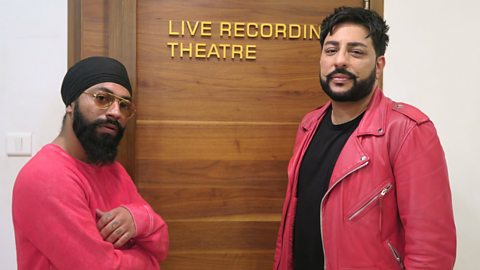
Straight Outta Mumbai: Prabh Deep
New Delhi rapper Prabh Deep talks about the lack of females in Indian hip hop
As Indian hip-hop gradually reaches a wider audience, one nagging problem remains: the majority of its biggest stars are male.
Dee MC, one of the scene’s only female rappers, explained to Bobby why men monopolise the movement. “I can count people on my fingers who come after me,” she said. “A female has so many problems in India, hip-hop is the least of their concerns. They are being crushed by patriarchy. They think that’s their life, being born into this family and having kids."
Although the scene remains cautious to the danger of selling out or compromising its independence, Bollywood film Gully Boy could be a landmark moment. “If more females have to get involved in hip-hop, first of all they have to listen to it. For that to happen, it has to go through Bollywood,” said Dee MC. “At the end of the day, Bollywood is what reaches mass audiences in India, in small villages.”
6. Next stop: World domination

So far, the story of Indian hip-hop is one of rising from the slums and giving back to poverty-stricken communities. In the future, the scene wants to host not just rappers but entrepreneurs: label bosses, designers, business owners.
U.S. hip-hop’s origins eventually gave way to the likes of Diddy, Jay-Z and Dr. Dre; savvy, ambitious rappers who put their name to far more than just music. Indian hip-hop is striving to do the same.
“I vision a market that creates money for itself. For all the artists,” explained rapper Poetik Justis, speaking to Bobby. He envisions a lucrative future, but one that can only be achieved if everyone works together. “That starts with us. There has to be unity. Everybody needs to form an ecosystem.”
Bobby says it’s all for the taking, but they just need to play their cards right.