The arts mood of the nation
Journalist and Chair of Hull City of Culture 2017 Rosie Millard reflects on a week of debates about art and culture that took place up and down the UK.
Do the arts matter? And if they do, then how? The BBC strove to gauge the mood of the nation in its initial Get Creative push last week, bringing out not just the big channels and the stars of the corporation, but using its unique and crucial muscle, namely local radio, to do so.
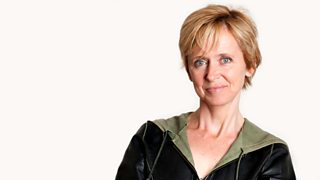
There are people across the UK, from every background possible, who are itching to talk about creativityRosie Millard
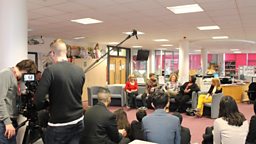
BBC local radio stations from Kent to Humberside via Cumbria and Basingstoke devoted hours of airtime to a public debate held at arts centres across the country. I don’t think this has ever happened before, and it was not a pointless exercise. It was incredibly well-attended.
So the first big message is that, quite simply, the British people care deeply about the arts, in a very varied and profound way. There are people across the UK, from every background possible, who are itching to talk about creativity. Creativity is not the exclusive domain of the middle classes, review shows on Radio 4, the broadsheet newspapers or the foyer of the National Theatre. Auditoria throughout the nation were packed with people wanting to have their say.
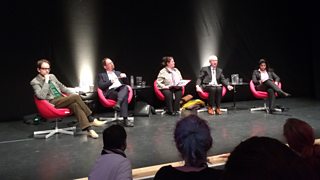
At Hull Truck, where the hour-long debate was focused on what makes a City of Culture, the theatre was so full that the debate continued, off-air, for another hour, in the foyer of the theatre afterwards. So, two hours of uninterrupted chat about the arts.
What was discussed? There was an overriding notion that people value the arts hugely. Audiences at the Curve in Norwich articulated that while the arts might not be a quantifiable industry, their importance goes way beyond monetary value. This was echoed across the week. The word ‘joy’ was widely used.
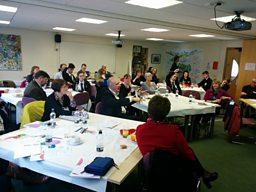
Yet there was also a sense of ‘us and them’ about the subject, which is why the notion of putting the debate out to the vast reach of BBC local radio was such a valuable one. The arts in Britain are hugely focused on London, and discontent with this was palpable. A commentator at the Gulbenkian Theatre, Canterbury brought up the notion that the arts were perceived as ‘not for them’, while again in Hull Truck, during a BBC Radio 4 Front Row debate about arts funding, former Creative Director of the Royal Opera House Deborah Bull admitted that she had never danced in Hull during her time at the Royal Ballet. Audience members questioned, again and again, the seeming inability for our nationally funded arts to be spread across the country in a meaningful way.
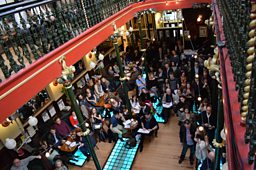
The problem about dimunition of arts provision in schools and the National Curriculum was debated widely, from Greater Manchester to London, with school children, teachers and parents alike criticising a perception that the government does not take the arts ‘seriously’ enough. Commentators argued that there was too much focus on STEM (Science, technology, engineering and maths) subjects and not enough on STEAM (the same, with arts inserted in the middle).
The cost of ballet classes divides people into two camps, those who can afford to pay, and those who can’t...the government should do more to support children’s access to danceCarlos Acosta
BBC Cumbria ran a whole series of talks based around Cultural Education in the Rural landscape, where the anxiety about the arts being squeezed out was discussed. At the Liverpool Playhouse, in an inspired piece of programming, the discussion followed a performance of Willy Russell’s Educating Rita.
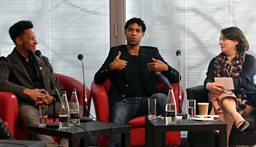
Leading people in the arts world took part in Get Creative. This was important, and stopped the exercise from feeling like it was some backroom community exercise. Arts celebrities have clout. They are listened to. They have authority. When someone like Carlos Acosta gets up at Sadler’s Wells and says, on air, “the cost of ballet classes divides people into two camps, those who can afford to pay, and those who can’t...the government should do more to support children’s access to dance,” it makes waves.
You joined the conversation
- Approximately 1,800 attended
- Almost 30 debates across the UK
- Thousands more listened on radio and TV
- Discussions on Google Hangout and Twitter Takeover
- 16,000 mentions on Twitter
It was important that Get Creative, annexed to the What Next? national arts conversation, had taken the time and trouble to involve household names such as Acosta, Bull, playwright John Godber, or sculptor Cornelia Parker, because it gave the mission a sense of depth and prominence.
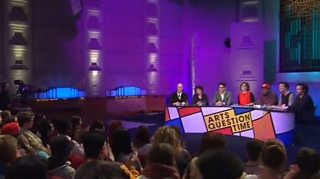
It was a clever use of ‘celebrity culture’, a spectre that is held in such disdain by viewers that it was the first question on BBC Four’s Arts Question Time, a lively show hosted by Kirsty Wark. While it included many over-familiar names, and had an unfortunate London bias, it did at least include input from Yancey Strickler, an entrepreneur who invented the group funding model Kickstarter.
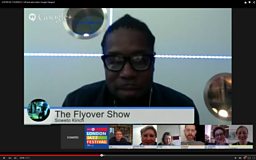
Throughout the whole Get Creative project, it was clear that the BBC had really made an effort to include ‘modern’ ways of looking at life, such as Kickstarter. There was a Twitter Takeover at Welsh National Opera and a Google Hangout featuring Soweto Kinch talking about festival culture. This was important and made Get Creative feel properly contemporary, and not like some worthy campaign dreamed up in a boardroom by someone who had no notion of how many people communicate these days.
I would say there were three key things about Get Creative, which was supported by on-air advertisement and a national poster campaign, as well as online. It felt that the BBC was taking the arts seriously and not just paying lipservice to Tony Hall’s clarion call last year (pace Richard Brooks' criticism in the Sunday Times last year). It felt properly national. It also allowed the consumers of the arts, namely audiences, across the country, to have their say and appear on the same platform as the luminaries.
Since What Next has arguably paved the way for such conversations to be held regularly it would be good if Get Creative might be a yearly exercise, and the discussions evaluated year on year.
Hear the national conversation
![]()
Arts Question Time
Kirsty Wark chairs a special one-off edition of the lively and provocative debate show. A panel of leading creative people answer questions from the audience about the challenges, opportunities, failings and future of the arts in the UK.
![]()
The Front Row debate
Are artists owed a living? John Wilson hosts a public debate with dancer Deborah Bull, playwright Richard Bean, economist Philip Booth, commentator Ekow Eshun, sociologist Tiffany Jenkins and an audience at the Hull Truck Theatre.
![]()
Get Creative debates
Get Creative kicked off with a series of debates about art and culture up and down the UK. The BBC will be capturing the conversation across the nations and regions to get people talking about the role and social value of the arts in their lives.