When the organ even makes the orchestra gasp...
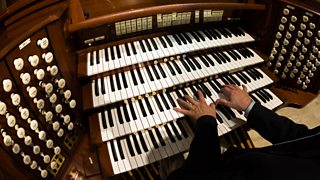
So you’re a composer, writing an orchestral piece, all headed for a massive, triumphant climax.
But no matter how many tubas, timpani, contrabassoons and piccolos you cram in the score, you can’t help the nagging worry that – well, it’s just not… exciting enough. What to do?
Here’s Choir and Organ’s guide to five great moments when composers have unleashed the King of Instruments – and nailed that thrilling finale…
1. Saint-Saëns: Symphony No. 3
Let’s start with perhaps the most celebrated orchestral organ moment. And not just because it was famously used in the film “Babe” about a piglet which was better than dogs at herding sheep. This is the finale of Camille Saint-Saëns’ last and most famous symphony.

It’s all pretty heady and impressive stuff given that the organ initially doesn’t appear until page 59 of the symphony’s score, entering with a pianissimo A-flat: hardly the stuff to get your blood pumping.
But then, the tub-thumping final maestoso begins with a series of huge organ chords – Saint-Saëns piles in trumpets, horns, quadruple winds, cymbals and even a piano played four-hands.
Altogether now: DER DUR DER DURR DERR DERRR DERRRR DERRRRDERRRRRRR(pummmmpahpahpah, pummmmpahpahpah).
This is a short extract from Saint-Saëns' Symphony No. 3 in C minor, Op 78, performed by the Philadelphia Orchestra, conducted by Christoph Eschenbach. The organist is Olivier Latry.
2. Respighi: Vetrate di Chiesa
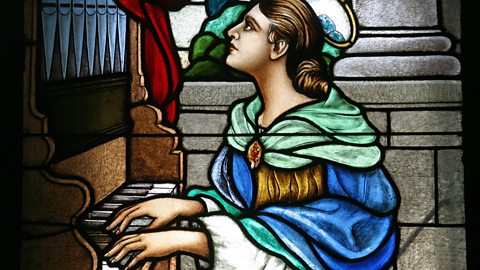
From Respighi's Vetrate di Chiesa (Church Windows): 4th movt – San Gregorio Magno
With the Philharmonia Orchestra, conducted by Geoffrey Simon and Leslie Pearson (organ).
Little-known by comparison with his famous Pines of Rome and Fountains of Rome, Ottorino Respighi’s Vetrate Di Chiesa started life as a trio of piano pieces before the composer decided to pull out his biggest manuscript paper and orchestrate them – adding a fourth piece for good measure. Respighi then asked a friend what he should call them. “Church Windows sounds good," came the reply.
The final movement builds slowly and evocatively – and the music does indeed suggest glinting shafts of light through stained glass. The texture builds inexorably, with throbbing brass and pounding timpani until the organ suddenly and dramatically enters the fray with a solo that hints at a solemn voluntary. All becomes becalmed, before a thrilling orchestral climax which loses marks for not re-using the organ for maximum excitement.
3. Janáček – Glagolitic Mass
All the works on this list involve an organ joining the orchestral texture – a bit like a gleam-toothed nightclub singer strutting sexily on to the stage to join their backing band. Except for one: the 8th movement of Leoš Janáček’s Glagolitic Mass is preposterous. There’s no other way to describe it. It’s also brilliant, insane and the stuff of every shy organist’s nightmares.
The work’s a setting of the Catholic Ordinary of the Mass, setting words in Old Church Slavonic, with a huge orchestra and blaring brass fanfares that begin and end the work. Bizarrely, its penultimate movement features a solo for an organ that has played barely two minutes of music up to that point and goes utterly berserk.
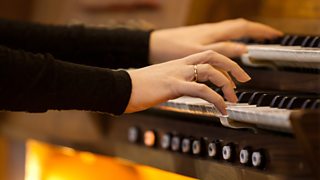
It’s the organist’s time to shine, playing endless cascading notes and huge fistfuls of chords. And at the end, there’s a furious, batty section for pedals and a final, gripping, weird, melty chord progression – like a distorted reflection in a funfair hall of mirrors. Preposterous, but wonderful.
This is a short extract from the organ solo in a CBSO recording of Janáček’s Glagolitic Mass conducted by Simon Rattle. The organist is Jane Parker-Smith.
4. Vaughan Williams: Sinfonia Antartica

From Vaughan Williams's Sinfonia Antartica: 3rd movt.– Landscape
With Malcolm Hicks (organ) and the London Philharmonic conducted by Bernard Haitink.
Some people say Vaughan Williams’s Symphony No.7 (Sinfonia Antartica) is the most unusual and original of his nine symphonies. We say, it’s the only one to feature an organ…
Drawn from his score to Charles Friend’s 1947 film “Scott of the Antartic”, the symphony was first performed by the Hallé Orchestra under the baton of John Barbirolli some six years later. In the third movement – Landscape – the harsh, shimmering echo of a suspended cymbal gives way to isolated shards of music from the flutes and brass, evoking the otherworldly frozen wastes of the Ross Ice Shelf. Throughout, the tone is ominous – the weird, jagged sonorities like icicles – before a warmer theme on the strings suggests the humans of Scott’s expedition: tiny figures in an unimaginably vast scene.
The music swells, the landscape and the harshness grows, and then abruptly – almost from nowhere – the soundscape erupts with the majestic sound of an organ, as the explorers are confronted with the awe-inspiring, terrifying presence of a gigantic glacier. The instrument barely plays for a minute. But it’s perhaps the most perfect musical choice Vaughan Williams could have made: evoking vast, monolithic, almost sacred splendour, a sense of awed ritual and a disorientating, beguiling otherworldliness.
5: Sunrise from Also Sprach Zarathustra by Richard Strauss
Prehistoric times. A gaggle of apes. A giant black monolith. And a bone. You know what we’re talking about… possibly the most famous fanfare in sci-fi movie history. (And one which was readily adopted by BBC TV for its coverage of the Apollo space programme and moon landings.)
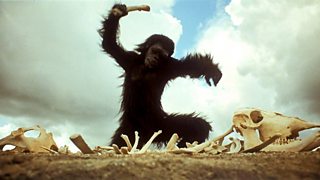
Except… for some reason director Stanley Kubrick decided to curtail the iconic, brilliant organ chord at the end of Richard Strauss’s "Sunrise" for his epic film, “2001: Space A Odyssey”. Our advice: hear it in the concert hall and swoon at the long, sustained power of that massive major chord.
This is a short extract from the introduction to Strauss's tone poem Also Sprach Zarathustra, Op 30 (Einleitung), performed by the Berliner Philharmoniker, conducted by Herbert von Karajan.Photo © 2014 Warner Bros. All Rights Reserved
Choir and Organ: Every Sunday at 4pm Sara Mohr-Pietsch presents an irresistible mix of music and singing; with a monthly programme devoted to recorded performances of the best organ music.