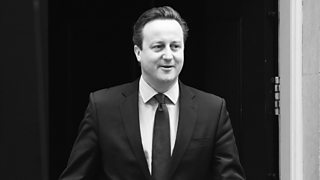
Ten things we learned about David Cameron
By Leala Padmanabhan, producer of Cameron Years
1. Conservatives disagree widely about David Cameron’s own views about Europe.
David Cameron’s legacy will be dominated by Brexit, but what did he really think about the EU? Tory insiders we spoke to had radically different views. The MP George Eustice, who was Cameron’s press secretary from 2005 to 2008, said the former Tory leader was a critical Eurosceptic who “believed European integration had gone too far”. But Cameron’s leadership rival, the former Cabinet minister Ken Clarke, told us Cameron at heart was “a perfectly sound pro-European” who merely “nodded in the direction” of Eurosceptics to preserve party unity.
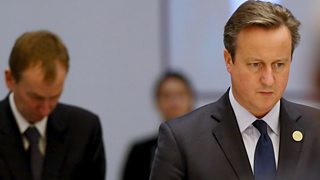
I think David can hold his head up high and say we went into that election which we won with a clear promise of a referendum, I delivered the promise of a referendum and we lost that referendum.Ed Vaizey
2. David Cameron believed that if he didn’t hold the EU referendum, his leadership would have been at stake.
David Cameron’s close allies insist there was no way he could have avoided holding an in-out referendum on Europe. His former communications director Craig Oliver told us Cameron was under intense pressure from Eurosceptics in his party to include the promise in the 2015 election manifesto and nervous about possible defections.
If he hadn’t made the promise, said Sir Craig, Cameron would have been forced to stand down as leader: “He would hold the referendum, or have to go.” And, having promised it, he was duty bound to deliver it.
3. Cameron’s EU renegotiation is much misunderstood.
Some take the view that Cameron took a laid-back approach to renegotiating the UK’s relationship with the EU ahead of the referendum. But we learned that the renegotiation sucked up huge amounts of political energy after the 2015 election. Craig Oliver told us David Cameron spent “60 per cent of his time, going round Europe, trying to win people over”.
Cameron allies also insist the deal he secured was significant but they do admit that they had not achieved enough on immigration. “Immigration was the number one reason why we lost the referendum,” said Craig Oliver.
4. Cameron’s ally Oliver Letwin believes the decision by Boris Johnson to back the Leave campaign was a decisive factor in Cameron’s downfall.
In the run-up to the referendum, David Cameron had been deeply worried about the way two pivotal figures – Boris Johnson and Michael Gove – might go.
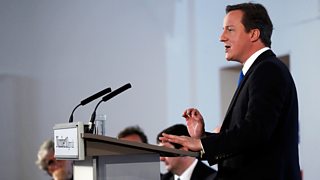
People will blame David for an awful lot of the chaos which has existed ever since the referendum.Ken Clarke
He despatched his friend Ed Vaizey to try to persuade Gove to back Remain, and Oliver Letwin to talk to Johnson. Letwin lobbied Johnson during “quite a lot” of one-to-one meetings and told us his failure to persuade him was decisive. “My gut feeling is he made a considerable difference,” said Letwin, adding that if Johnson had backed Remain, “it could have gone the other way.”
5. Cameron’s modernisation project didn’t get off to a good start.
After the third successive general election defeat in 2005, Conservative modernisers were looking for a figure who could make the party electable again and had high hopes of the young David Cameron. The MP Nick Boles, then head of the key thinktank, Policy Exchange, told us he and his team were initially “utterly disappointed” by Cameron. “He was meant to be the young exciting, fresh, new candidate and he was sounding like a sort of classic Tory from the sort of John Major-Margaret Thatcher era. It was this absolutely conventional Tory high command sort of guff," he said. But Boles said Cameron got better over time, and he changed his mind.
6. Cameron’s domestic legacy will be defined by his response to the financial crash and so-called “austerity”.
In the early years, Cameron wanted to be seen primarily as a social reformer; his modernising mission had taken shape around the idea of the “Big Society”. But his economic policy – particularly deficit reduction in the form of deep public spending cuts – took precedence after the global financial crash. Although views differ on the outcome, both critics and supporters agree that “austerity” will form a major part of David Cameron’s legacy.
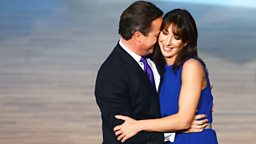
7. Family and friendships are hugely important to David Cameron and helped him cope with the pressures of politics.
All our interviewees – both supporters and critics – described David Cameron as a calm, level-headed and charming man who is socially comfortable, makes friends easily, inspires great personal loyalty and places a huge importance on family life. All of which helped style his leadership and enabled him to weather many a political storm. However, we also learned how the Brexit referendum has tested and even destroyed some of Cameron’s close personal relationships. We also discovered evidence that Cameron repeatedly underestimated the extent to which politics can trump personal loyalty.
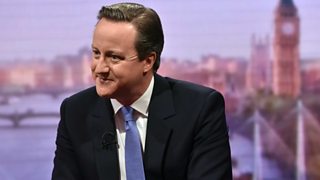
As Ted Heath is defined by taking us into the European Union, so David Cameron will be defined by taking us out. I think this is slightly unfair on him, because he did really important work as Prime Minister.Jacob Rees-Mogg
8. One of David Cameron’s biggest achievements was leading a rare peacetime coalition.
Cameron’s achievement in forming and leading the 2010-15 coalition with the Liberal Democrats was bold and historic. We learned that he was helped by assiduous preparation by his close ally Oliver Letwin, who had studied the Lib Dem manifesto in depth before the 2010 election. The former Lib Dem Business Secretary in the coalition, Vince Cable, praised Cameron’s management of the coalition years but complained that the Conservatives’ approach to power sharing was “ruthless” and “back-stabbing”.
9. David Cameron is proud of his achievement in introducing same-sex marriage in England and Wales.
Cameron’s friends cite the same-sex marriage legislation as one of his most significant reforms and told us he is particularly proud of this achievement. We heard he decided to pursue the reform after a frank discussion on the subject among close aides during an unappetising dinner at Davos.
10. Brexit will define David Cameron’s legacy.
Friends and critics, Leavers and Remainers, all agreed on this. Despite the breadth of his record in other areas, and despite his original intention not to “bang on about Europe”, Europe overwhelmed him and history will remember him chiefly for this.

![]()
Cameron Years
In a three-part series, Steve Richards looks back on David Cameron's years in power and explores his legacy.