Why we need to change the way we talk about Muslim women
Sayeeda Warsi is a British lawyer, politician and member of the House of Lords. In her programme, How to be a Muslim Woman Sayeeda spoke to a variety of British Muslim women about their lives, revealing some of the many other ways it’s possible to be a British Muslim woman in 2018.
Here Sayeeda discusses her reasons for making the documentary, and highlights the women involved in the programme.
A couple of years ago, I gave a copy of the book I’d just written to my sister. Having grown up with me, I wanted to see what she’d make of how I’d told my story. But when she’d finished reading it, her response was simple: “Your life sounds quite ordinary – there’s no dramatics”.
More often than not, Muslim women are only heard in public life, or in the media, when we fit an existing narrative or reinforce a lazy stereotype
That pleased me enormously, because in many ways my story has been quite ordinary. Yet as Muslim women, being able to tell the ordinary bits of our stories is in itself, well, extraordinary.
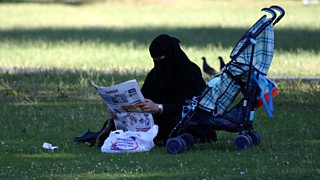
Because more often than not, Muslim women are only heard in public life, or in the media, when we fit an existing narrative or reinforce a lazy stereotype. If the story’s about polygamy, FGM, forced marriages or – most often – the burka – you’ll hear Muslim women on the radio. It sometimes seems that we are only seen as the sum total of our bad experiences.
But as I travel around the country I know we are so more than that. I’m always meeting brilliant, ambitious and innovative British Muslim women. And so now for my new documentary and podcast ‘How to be a Muslim Woman’ for BBC Radio 4, I’ve sat down with seven of them to share some of the many other ways of being a Muslim woman.
How to Be a Muslim Woman
Muslim women share their views and the many ways to be a Muslim woman with Sayeeda Warsi
Suhaiymah Manzoor-Khan
I spoke to women who are victims of Islamophobia, and of terrorist attacks; women of the political right and left; women whose main challenges come from within Muslim communities and those who see them from outside.
It’s not just Muslim women who need a space to tell new stories, and find new ways of being, but Muslim men, too
We’ve shared tears, laughter – lots of laughter, and conversations which are uplifting, tragic, intimate and sometimes shocking. We’ve talked about sex, prayer, the Daily Mail, the British Army, parents, patriarchy, dressing up as a pig, and yes, even the burka.
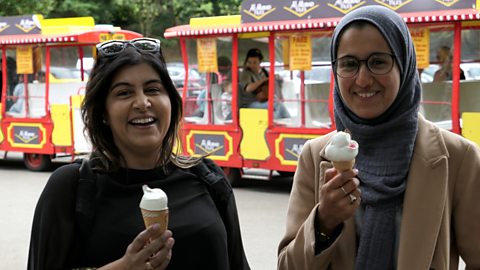
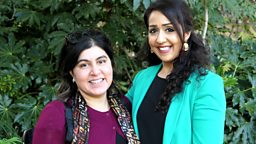
I started with spoken word poet Suhaiymah Manzoor-Khan (pictured above with Sayeeda Warsi).
She was reluctant to get involved at first, tired of being asked to fit into a mainstream narrative, or made exceptional, or create a new norm.
Ammani Bashir
After Suhaiymah and I had finished our interview, and had an ice cream – it was a warm, sunny day in Roundhay Park in Leeds – I travelled to Saltaire, the other side of Bradford.
There, beside the Leeds to Liverpool canal I sat down with Ammani Bashir, a young woman whose lifetime ambition was to be a medic in the British Army.
She told me that, much to her surprise, it was in the Army that she was able to develop her own relationship with Islam.
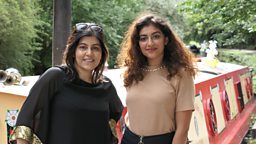
In one day, I heard from a critic of state violence, and someone joining the Army – yet these young women had much in common. Both feel their faith is intrinsic to who they are; both want to see a more open conversation about the causes of violence; and both would like less judgement about what Muslim women wear.
Back in London, I heard echoes of that from activist Julie Siddiqi and trade unionist Shavanah Taj: why do so many people feel they should have access to our wardrobes – and when will they get out?
They each had long lists of the many important issues facing Muslim women, and wider Muslim communities – from austerity to LGBT rights. But they were concerned that too often they don’t get discussed, because of an obsession with how Muslim women dress, and a focus on theological niceties at the expense of the core tenets of Islam.
Nimco Ali
My next conversation was with Nimco Ali. She is a Somali-born anti-FGM activist whose every action is met with the kind of scrutiny few of us could sustain.
As Muslim women, being able to tell the ordinary bits of our stories is in itself, well, extraordinary
Yet she is unapologetic (on her Twitter profile she calls herself ‘chief fanny defender’), and still willing to speak her mind.
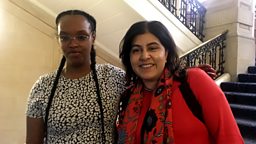
Sajda Mughal and Maz Saleem
The final issue, and one on which there was a lot of agreement, was Islamophobia. Sajda Mughal and Maz Saleem have both been on the receiving end of this.
Sajda was caught up in the 7/7 bombings and has made it her life’s work to give a platform for Muslim women to speak out on the issues that matter to them.
Maz lost her father, Mohammed Saleem, when he was murdered by a far right extremist in a terrorist attack.
But the loving way she described him, and the positive effect he had on his family and indeed whole community, was a useful reminder that it’s not just Muslim women who need a space to tell new stories, and find new ways of being, but Muslim men, too.
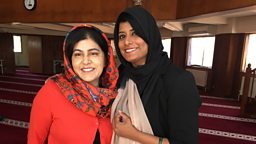
To hear more from each of the women Sayeeda Warsi spoke to, listen online or download the How to be a Muslim Woman podcast
More from Radio 4 in Four
![]()
Podcast: How to be a Muslim Woman
Some of the many other ways it’s possible to be a British Muslim woman in 2018.
![]()
Khadijah: the woman who became the first Muslim
The Prophet Muhammad was married many times; but for 25 years, he remained faithful to Khadijah - a successful business woman.
![]()
Meet Generation M: the Muslims shaping the world
Two thirds of Muslims worldwide are under 30. How are they shaping the world around them?
![]()
Why wear the burka?
Why do some Muslim women wear a Burka when others feel a simple headscarf is enough to be compatible with their Islamic values?