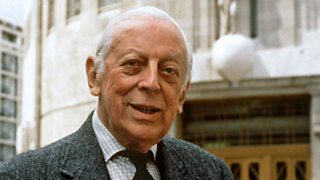
Max Factor Jr and make-up (1904 - 1996) - 21 June 1996
Nobody here is under the delusion that Mr Yeltsin's narrow victory was a victory of democracy over communism. Most people know that Mr Yeltsin's government is a very blasé form of democracy, but it is one riddled with corruption. But something like a South American democracy has developed, a thin crust of the new rich, and under it a huge stewing population of the poor and the old, unpaid, not well fed, and alarmed by the mushrooming of crime, gangsters, pornography, drugs. Not democracy's finest exports.
The yearning of old folks who lived under communism is well understood. They're yearning for a guaranteed job, a home, rudimentary healthcare, some order in social life even if it has to be imposed by an old guard communist like Mr Zyuganov. But Mr Yeltsin's seduction of the general is seen here as a brilliant political manoeuvre, since from every sign of his known character, the general is the one most likely to purge much of the gangsterism and bring back some order, without the terrorist repression of the old Soviet Union.
But I want to talk about something else, about a man who performed an historic service to humanity and has had very little recognition.
We'll approach him through the memory of another man who lived and died without the slightest recognition by the mass of mankind he brought his blessing to. His colleagues did give him a passing salute. I don't know how many years ago it was, but it was the Motion Picture Academy's annual shindig known as Oscar Night. I've forgotten now the identities of any of the big winners – the actors, actresses, the glamour–pusses. But one picture in my mind remains very sharp. It's of an old man – oh anyway he was well along in his seventies – and he stood awkwardly upstage waiting to be led to the rostrum to receive an odd award for a lifetime's photography.
He looked more like a Russian politician than anybody else, in one of those square shouldered department store suits that look as if it were made of cardboard. Graceful he was not. Distinguished? No, much too self–conscious. Charming? Absolutely, when you considered the immensity of his contribution to motion pictures, more to television, and the genuinely embarrassed but grateful way he was taking it. He received his Oscar, nodded and said thank you, and I'm sure was relieved to get away.
His name should be emblazoned on every public auditorium, every football stadium, every golf, tennis, hockey organisation, and every advertising agency that sponsors news or politics or sports on television. The name is Joseph Walker, a movie lighting cameraman who made a hobby of collecting lenses and eventually invented television's zoom lens, which, more than any other optical invention, transformed our interest in any large gathering, in every sport, from that of a distant observer to a fascinated intimate. Before the zoom lens – I'm sure there are lots of listening oldsters who could testify – a soccer field was seen as a steady, distant picture inside a rectangular frame. It still is for movement over the whole field. But then, we could never swoop in on a hand, a foot, a clubhead, a player's frown, smile, backhand, a sweating forehead.
You'll have noticed too that in covering wars, wars of the past forty years or so, the cameramen can apparently choose to be fifty yards away or three. "Isn't he running a huge risk?" a friend of mine said, who should have known better, when we saw a close–up of a man being wounded on a street in Haiti – could have been Bosnia, Israel, Beirut, anywhere. The cameraman was a hundred yards away. I don't know anyone else who has done more for us in the history of television than Joseph Walker, the sole inventor of the TV camera's Electra–Zoom. He's gone now and you won't find him in any general encyclopaedia.
A few years ago, an American publishing house put out an enterprise called Fifty Who Made a Difference, profiles of individuals who had most effectively made a difference to our lives since 1900, everybody from the Rockefeller brothers to Eleanor Roosevelt, from Martin Luther King to Duke Ellington – you'll gather this was an American collection. Still, no Joe Walker and his zoom lens. I've often tried to, without any success, to find out more about that dentist in Newhaven, Connecticut, who looked out of his office surgery window down on the dodging scramble of motorcars and vans going on at an intersection, and so he invented the simple and absolutely indispensable institution: the traffic light.
Well we come now to the benefactor of mankind who died only the other day. Or I should say, with emphasis, a benefactor of womankind. A man who left a more permanent impression – literally – on more women around the world than, I think, Boadicea, Freud, Mrs Pankhurst, Marie Curie and Betty Friedan or Germaine Greer combined. But with him too, no point in looking him up in encyclopaedias, not consequential, let alone dignified enough to rate an entry. His name is, was, Max Factor Junior, and for once the Junior has to be mentioned because his invention was inspired by his father, a Russian Pole or Polish Russian Jew – the Russians owned Poland when he was born – who worked in some decorative trade, wig making they say, at the court of the Tsar. In 1902, a year in which small, ferocious pograms in Eastern Europe were as random and unpredictable as thunderstorms, a year in which thirty thousand students rioted in Moscow, 1902, father Factor decided it was a good time to escape – Trotsky had just done it, from Siberia to settle in London.
Max Factor Senior took his wife and three children and settled first in St. Louis Missouri where the fourth child, Francis, was born. Soon they moved on to Los Angeles, eight or nine years ahead of the motion picture business. In 1903, let's say, Hollywood was a sheep town in the hills without a post office. Mr Factor continued his old trade: he made wigs, he sold perfume. It seems to have been simply a freakish good break that within a decade, he would find himself in the one town, more than any other on earth, that had daily need of wigs and perfumes and a new line – cosmetics – which in the early 1900s were universally accepted as necessary for stage actresses and actors, but unthinkable for any girl or woman who was not, in the idiom of the day, a fallen woman.
Father Factor, whose most enthusiastic helper from boyhood was young Francis, branched out into cosmetics. The early movie makers discovered that in daylight, and with the fairly rudimentary lenses they had, the actors looked pretty ghastly. Max Factor and son worked on chemical combinations of greasepaint and dyes to produce cosmetics that made the actors in the silent films look natural, we said at the time. Today you might say, less ghastly.
Young Factor called the new greasepaint "make–up", and when colour came along and father Factor died, young Francis, having the rising company's name in mind, changed his name to Max Factor Junior. And, in an equal service for the colour cameras and the ladies they sought to beautify, he invented something called pancake, the root, the base today of every other subtle addition. Eyeshadow was another product, another word. And by then, all three were thoroughly acceptable among the most thoroughly respectable families of any class.
From 1938 to '73, the son developed what is properly called a "cosmetic empire" and a huge fortune which, like many another immigrant who prospered, he dispensed in handsome sums to many worthy causes. Hospitals mostly. One of his remarkable achievements to me, given that sooner or later somebody was going to develop cosmetics superior and more sophisticated than the standard greasepaint of the theatre, remarkable thing, is that Max Factor Junior gave at least three new words to the language: make up, pancake and eyeshadow. I suspect most listeners can hardly believe that these words weren't there in our language when they were born, which for most people, let's say over sixty, is true.
Have you ever thought how difficult it is to introduce a new word to English? Almost every new word, especially new slang, comes like folk music from an individual but sounds so right, so felicitous from the beginning that everybody takes it up and the identity of the inventor is lost. Once, at the urging of my old linguistics mentor, H L Mencken, the author of three massive expert volumes called The American Language, once I tried to coin a word and get it into circulation.
One day in the late 1930s, a recent president of the New York Stock Exchange was caught misappropriating a trust fund to save himself from bankruptcy. He was tried. Richard Whitney, big name, big scandal. In those days newspapers always described the tough questioning of a defendant as a grilling. The headlines read: "D.A. grills Whitney."
This gave me an idea. A standard sandwich in all lunch counters was a grilled American cheese. Grilled American on whole wheat to go. Round my corner was a lunch counter I patronised all the time, they knew me. One day I went in and said to Joe, "Whitney on rye." "What?" "You saw the papers Joe, a grilled American!" "Hey," he said. "That's right, I like it. Whitney on rye." I was thrilled. I sent off an express letter to Mencken – I'd made it! I tried it every time. If Joe wasn't there, no dice. Soon Joe dropped it and it was never heard of, or from, again. Richard Whitney however, did go off to Sing Sing.
THIS TRANSCRIPT WAS TYPED FROM A RECORDING OF THE ORIGINAL BBC BROADCAST (© BBC) AND NOT COPIED FROM AN ORIGINAL SCRIPT. BECAUSE OF THE RISK OF MISHEARING, THE BBC CANNOT VOUCH FOR ITS COMPLETE ACCURACY.
Letter from America audio recordings of broadcasts ©BBC. Letter from America scripts © Cooke Americas, RLLP. All rights reserved.
![]()
Max Factor Jr and make-up (1904 - 1996)
Listen to the programme