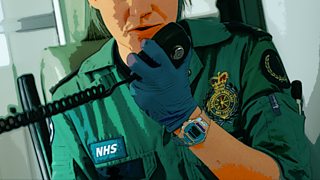
Hidden heroism on an industrial estate
I keep a file on my computer of things that make me burst into tears. On the whole it’s filled with ideas around and links to indiscriminate acts of kindness, be they frozen meals cooked by a dying person for their loved ones to eat posthumously, or links to Facebook posts about animals rescuing each other from immediate peril.

I keep a file on my computer of things that make me burst into tears.
For a while now, at the top of that list was a transcription of a telephone call I’d read in a Sunday newspaper about a seven year old who dialled 999 after he found his mother lying unconscious on their kitchen floor. The ambulance person talked this child through what must have been the most terrifying moments with certainty, clarity and kindness. At one point, the ambulance person asked the child to open the front door, to which the child burst into tears at the thought of leaving his mother’s side only to be told that the reason he had to do so was because the paramedics were standing outside. Tears.
I keep this list because immediate situations that inspire such instant empathy nearly always make for potentially good stories. Life Lines started there.
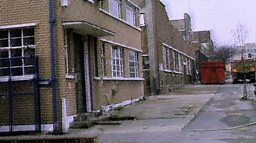
Some months ago, my ever-industrious radio producer, Sally Avens, organised a trip for me to visit an Ambulance Service NHS Foundation Trust. Somewhat naively I had expected to find the call centre located in the back of an A&E in some enormously busy hospital, but what I found was that these calls are taken in a rather non-descript, two-storey call centre at the back of an industrial estate.
The call centre, a large open-plan office, is sliced into three chunks. At one end are a group of a dozen or so Emergency Medical Advisors and at the other the same number of Emergency Medical Dispatchers. Along the side are an assortment of clinical supervisors and logistical experts. When you dial 999, the first person you speak to is an operator – someone who’ll ask you what flavour emergency you have (fire, police, medical etc), and should you have a medical emergency in the South West, your call’s immediately forwarded here. The only person you’ll speak to here is an Emergency Medical Advisor (EMA). However in the EMA’s ear are several other voices – primarily an Emergency Medical Dispatcher (their job, as you might imagine, is ostensibly to solve the logistical challenge of making sure there are enough ambulances to meet every emergency) and, if necessary, a Clinical Supervisor – someone with any extra expert medical knowledge the EMA might need to handle the call. The EMA’s job is to establish, as quickly and efficiently as possible, what the precise nature of your emergency is, and to inform you what the medical response will be. Their shifts are twelve hours long broken up by two fifteen minute, and two thirty minute breaks. They work four days on, four days off. It is hard, intense work.
All calls start the same way: Ambulance Service, is the patient breathing and conscious. In fact, the sequence of questions is highly organised. The EMAs sit with a headset on before a computer that quickly organises and informs their line of enquiry. The system, PATHWAYS, asks the EMA a series of clear and increasingly refined questions to establish the precise nature and severity of the emergency underway. Key questions that are asked immediately serve to establish whether the patient is conscious, whether they are breathing, and whether they are bleeding. If they’re not doing either of the first two, the heat’s really on, and if they’re bleeding, they’re asked by how much. I rather liked that the unit of measurement for bleeding is the “cupful”. Cheers to that. The computer then informs the EMA to ask increasingly refined questions until a colour-classification is given: red, amber or green. All red calls aim to have an ambulance at the scene of the emergency within eight minutes, amber within thirty and green within the hour. I won’t go into detail as to what constitutes which colour for fear of getting it wrong, but you can imagine the sort of thing. Heart attacks are red, stubbed toes are green (unless, of course, you stubbed your toe whilst having your heart attack).
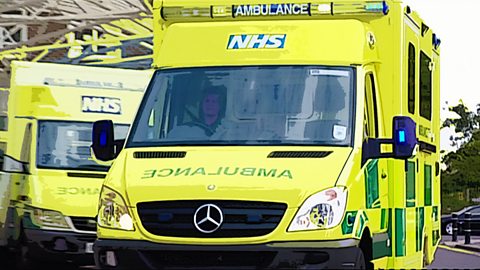
'His tongue is swollen and his eyes are white'
Al Smith's tense drama set in an ambulance control room.
I spent the day sitting next to Tom, an EMA there. Within a few minutes he’d given me a headset of my own and plugged me in so that I could be a fly-on-the-wall to the calls he took. I’m forbidden to go into details but within the first thirty minutes I’d heard him talk a person through CPR, deal with a patient teetering on the edge of a diabetic coma and liaise with another medic about transporting a sick patient to another hospital. The calls came in thick and fast, and no matter the severity of the emergency at hand he met each one with the same cool-headed, kind yet direct approach. The tone’s fascinating – whilst they’re warm, they’re not there to be friendly; they’re there to get you to explain the precise issue at play, to understand it and to deal with it as quickly as possible.
These guys are under constant, relentless pressure to deliver on emergencies that happen day and night, every single day of the year.
Hanging on the walls around the whole place are TV screens each quartered into four numbers. One tells them the number of calls currently waiting, another the number of calls currently being answered. A third numbers the calls broken off-mid conversation and the last notes the average number of seconds it take to answer each one. Less than three seconds. I left with these numbers ringing in my head. These guys are under constant, relentless pressure to deliver on emergencies that happen day and night, every single day of the year. The speed at which the answer and deal with calls was astonishing. As withdrawn and unassuming as the office might have been, I found it housed amongst the most concentrated and focused group of people I’ve ever come across. Truly heroic. I hopeLife Lines does them justice.