

Wednesday 24 Sep 2014
Programme Information
Network Radio BBC Week 1: Tuesday 4 January 2011
BBC RADIO 2 Tuesday 4 January 2011
www.bbc.co.uk/radio2
Jamie Cullum showcases his love for all types of jazz, and music rooted in jazz, from its heritage to the future.
This week, one of Jamie's favourite jazz bands, American trio The Bad Plus, perform music from their latest album Never Stop at the BBC's Maida Vale studios. Joining them in the studio for the session, Jamie asks them about their influences, their current tastes and their plans for the future.
Presenter/Jamie Cullum, Producer/Karen Pearson for Folded Wing
BBC Radio 2 Publicity
Mark Radcliffe and Stuart Maconie's regular feature, The Chain, reaches its second millennium with the 2000th record.
Starting back in April 2007, The Chain has taken the faithful listener on a varied musical journey, never repeating a single record. It has included 40 appearances by The Beatles, 33 by David Bowie and 19 by the Rolling Stones, but just two by Coldplay.
Listeners are invited to charge their glasses, unpack the bunting, crack open the mature cheddar and join Mark and Stuart and special guest, Gordon "The Voice of the Chain" Burns, in commemorating this special occasion, the 2000th record of The Chain.
Presenters/Mark Radcliffe and Stuart Maconie, Producer/Lizzie Hoskin for Smooth Operations
BBC Radio 2 Publicity
Feeling Good – The Nina Simone Story Ep 1/2

Nina Simone's daughter, Simone, explores the career of her mother as an unsung pioneer of civil rights, jazz chanteuse, blues artist and live performer.
In this two-part series, Simone offers her own personal take on her mother's life and music. Contributions from some of Nina's closest friends provide an insight into the real Nina and there are also exclusive, unreleased tracks of her in concert.
In the first programme, Simone talks about her mother's musical beginnings as a child protégé, learning classical piano from the age of five. Living in North Carolina, she was aware of the racial problems and high school friend Hannah Ferguson recalls how Nina spoke out about these injustices.
Nina won a place at New York's famous Juilliard School, but was turned down by the elite Curtis Institute in Philadelphia. This was an incredible blow for the young Eunice Waymon, who turned to teaching piano and playing in bars to make ends meet, taking the stage name Nina Simone.
Moving to New York City, she signed her first record deal without reading the small print, which cost her dearly later in her career. Here, Nina became closely associated with the Civil Rights Movement and was connected with the controversial Malcolm X, writing her first protest song, Mississippi Goddamn, in 1963.
Nina met and married Andy Stroud, Simone's father, who became her manager. Throughout the Sixties her output was prolific. She toured constantly in the US and Europe, always highlighting the civil rights message. When her marriage ended she left the US in the Seventies, becoming a global nomad moving between Liberia, Switzerland, the Caribbean, the Netherlands and finally France.
Contributors include Nina's niece, Joyce Stroud; her close friend, Verta Mae Grosvenor; concert promoter Ron Delsener; her friend and A&R man for Elektra Records Michael Alago; her drummer for 18 years Paul Robinson; and singer Patti Smith.
In part two, Simone explores her mother's musical style and what she was like as a live performer.
Presenter/Simone, Producers/Vicki Wickham and Sue Clark for Sue Clark Productions
BBC Radio 2 Publicity
BBC RADIO 3 Tuesday 4 January 2011
www.bbc.co.uk/radio3
BBC Radio 3's lunchtime exploration of Mozart's concertos continues in a series of three concerts from Studio 7 in Manchester.
The BBC Philharmonic is joined by New Generation Artist Francesco Piemontesi for one of the six piano concertos Mozart wrote in 1784, his "annus mirabilis" for composing this series of works.
He also plays one of the set of sonatas written in Munich a decade earlier and this live broadcast begins with a dark masterpiece, the Adagio and Fugue in C minor, for strings.
Producer/Mike George
BBC Radio 3 Publicity

Sir Neville Marriner, one of the best and most prolific interpreters of Mozart, joins Suzy Klein to discuss his Mozart recordings.
Presenter/Suzy Klein
BBC Radio 3 Publicity
BBC RADIO 4 Tuesday 4 January 2011
www.bbc.co.uk/radio4
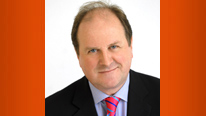
In the second of three programmes marking the 400th anniversary of the publication of the King James Bible, James Naughtie tells the story of how six companies of men produced a new translation of the Bible which has come to be regarded as one of the greatest works of English literature ever produced.
The translators in London, Cambridge and Oxford drew on several earlier translations as they went about their work.
In the chapel at Hertford College, Oxford, James sees a stained glass window of William Tyndale, the first man to translate the Bible into English directly from Hebrew and Greek. The translators drew heavily on his work. Many of the phrases that come to mind when people think of the King James Bible are in fact those of Tyndale.
The translators had several other Bible translations at their disposal, each with its own agenda: the Great Bible with its frontispiece depicting the idea of Royal Supremacy, and the Puritans' Geneva Bible which challenged that very idea.
One of the Oxford companies of translators worked in the Tower room at Corpus Christi College. This was the room of John Rainolds, the college president and one of the "godly." It was Rainolds who, as head of the Puritan faction, had initiated the new translation at the Hampton Court conference.
James is shown two extraordinary documents which reveal how the translators worked. One, a 1602 copy of the Bishops' Bible, contains annotations made by the scholars suggesting alternative translations. The other is a copy of notes made by one which reveals the mind of the revision committee that met to review the translations of all the companies.
James goes to Stationers' Hall in London where that revision committee met. It's here that the King James Bible would have been read out loud for the first time. As James hears the opening words from Genesis, he reflects on the achievement of the translators in giving a version of the Bible which has come to be a "national epic".
Presenter/James Naughtie, Producer/Rosie Dawson for the BBC
BBC Radio 4 Publicity
Music In The Dark Years Ep 1/2
Stephen Johnson explores how Paris's vibrant musical scene survived, and flourished, through the "dark years" of Nazi occupation.
On 14 June 1940, German tanks rolled into a humbled and deserted Paris. The Nazi war machine had abruptly plunged the celebrated "City of Light" into darkness, condemning it to four long years of occupation.
Yet these "dark years" were not to be ones of silence. Within weeks, musical life in the French capital – previously perhaps Europe's most vibrant and eclectic cultural hub – had resumed. Before long opera houses, jazz clubs, cabaret theatres and concert halls were playing again to packed houses of German soldiers and French music-lovers alike.
Broadcaster and music journalist Stephen Johnson travels to Paris some seven decades after the city's fall, to untangle the mythology of "la France resistante musicale" – telling the story of this brief period of frenetic musical activity and its bitter aftermath.
In the first programme, Stephen investigates how the occupation affected France's proud tradition of classical music and opera. He also explores what constitutes "resistance" and "collaboration" in music, and looks at the life of one of French music's greatest heroes, conductor Roger Désormière.
Contributors to the programme include 94-year-old Henri Dutilleux – considered one of France's greatest contemporary composers; Jewish violinist Devy Erlih; Alan Riding, author of a new cultural history of the occupation; and radio presenter and cultural historian Karine Le Bail.
Presenter/Stephen Johnson, Producer/Steven Rajam for the BBC
BBC Radio 4 Publicity
Scottish Shorts Ep 1/3
A series of three short stories on consecutive days showcases new Scottish writing.
Today's opening story is Fear In A Hat by Nicola White, in which a shy schoolgirl fears the worst when she attends a compulsory religious retreat with her catty classmates. It is read by Sally Reid.
Wednesday's story is The Last Cup by Merryn Glover. A kindly old fisherman and his stern minister find a sliver of common ground over tea from a chipped china cup. It is read by Matthew Zajac.
The final story on Thursday is Matryoshka by Kirsty Logan. A spoilt princess craves possession of the one thing she can't have in this new spin on a familiar tale. It is read by Nicola Jo Cully.
Readers/Sally Reid, Matthew Zajac and Nicola Jo Cully, Producers/Eilidh McCreadie and Patricia Hitchcock for the BBC
BBC Radio 4 Publicity

Matthew Parris explores the life of Aneurin "Nye" Bevan, founder of the National Health Service.
Bevan is the choice of Lord Kinnock, the former leader of the Labour Party. Like Bevan, Lord Kinnock grew up in Tredegar in the heart of the Welsh coalfields, where he met his hero many times.
Kinnock regards Bevan as a hero on a level with Nelson Mandela and believes it was Nye alone who had the force of personality and political will necessary to get the Health Service established after the war.
Matthew Parris and his other studio guest, Bevan's biographer John Campbell, are more sceptical. Campbell goes so far as to argue that the achievement of the NHS not withstanding, Bevan's life was essentially a failure because, in his commitment to socialism, he misread the trend of history completely.
Now, with the NHS facing radical reform, this programme captures some of the passion and debate that surrounded its inception and provides personal insights into the life and character of the man responsible for its creation.
Presenter/Matthew Parris, Producer/Isobel Eaton for the BBC
BBC Radio 4 Publicity
Rufus Hound invites Julian Clary to read embarrassing extracts from her teenage diary in public for the very first time, in the third programme of the series.
Presenter/Rufus Hound, Producer/Victoria Payne for Talkback Productions
BBC Radio 4 Publicity
Richard Phinney reports from West Africa, where scientists claim to have discovered that vaccines and vitamin supplements can have unexpected effects on the immune systems of young children.
Richard is the first British journalist to visit the Bandim health surveillance unit, where Dr Peter Aaby and his team have toiled for more than 30 years, through wars, natural disasters and epidemics. A small army of doctors, nurses, field workers and lab technicians now monitor the health of 100,000 people.
Their detective work has generated more than 600 scholarly articles in the world's leading medical journals, and has been responsible for the withdrawal of a potentially deadly measles vaccine by the World Health Organisation.
The team's work seems to show that the world's most commonly used vaccines may strengthen – or weaken – a child's immune system in the long term, and affect their ability to fight off disease. The results directly challenge the WHO's global health advice followed by most countries in the developing world. The programme hears from some of world's most respected public health scientists who back Aaby's findings. It also asks if safety tests for new vaccines and vitamin supplements, heavily promoted by donor agencies and pharmaceutical companies, are sufficiently far-reaching.
Presenter/Richard Phinney, Producer/Anthony Baxter for Wantok Productions
BBC Radio 4 Publicity
Follow The Leader Ep 1/2
Carolyn Quinn begins a two-part series by looking under the bonnet of leadership to question what makes a great leader, whether leadership is "in the blood" or if people can be taught to improve their leadership skills.
Pulitzer Prize-winning political scientist James McGregor Burns wrote that leadership is "one of the most observed and least understood phenomena on Earth," and the debate about what makes an ideal leader goes back to Plato.
From the courage of Winston Churchill to the charisma of Barack Obama, psychologists have tried to distill the ingredients that make such a leader.
Carolyn visits the London Management Centre to see if they can turn her into a good leader. The leadership industry, from self-help books to training courses, is a multi-million pound industry – but can someone be trained to be a good manager?
Professor Mark van Vugt argues that age, height and facial appearance all play their part in how potential leaders are judged. In one study he morphed the faces of male politicians to make them more "masculine", with strong jawlines and bushy eyebrows, or more "feminine" with large eyes and fuller lips. People were more likely to choose the masculine looking faces during times of war, and the feminine ones in peacetime.
Contributors to the programme include Deborah Meaden, Michael Howard, Mark Steel, Deborah Mattinson and Professor Alex Haslam.
Presenter/Carolyn Quinn, Producer/Michelle Martin for the BBC
BBC Radio 4 Publicity
Rhyme And Reason Ep 1/4
In the first programme of this new series, poet Mr Gee is joined by singer Florence Welch to discuss her love of poetry.
Florence's album Lungs was the fastest selling debut in 2009. Reading and discussing their favourite poetry, Mr Gee delves deeper into her relationship with poetry and looks at how it has inspired her music.
Other guests in the series include Tori Amos, Tim Rice-Oxley and Billy Bragg.
Presenter/Mr Gee, Producers/Nic Philps and Ben Appleyard for the BBC
BBC Radio 4 Publicity
BBC RADIO 5 LIVE Tuesday 4 January 2011
www.bbc.co.uk/5live
Mark Pougatch, live from Melbourne, and Shelagh Fogarty, in the studio, present news from the UK including the latest from the business world, travel updates and the day's big sports stories.
There's also coverage from day two of the Fifth Ashes Test.
Presenters/Mark Pougatch and Shelagh Fogarty, Producer/Scott Solder
BBC Radio 5 Live Publicity
5 Live Sport

Mark Chapman presents a round-up of the day's sports news followed at 8pm by live Premier League commentary on the match between Manchester United and Stoke City with updates from Blackpool versus Birmingham City and Fulham versus West Bromwich Albion plus the League One encounter between Bristol Rovers and Plymouth Argyle.
From 10pm Mark presents the reaction to the evening's games in The Final Whistle.
Presenter/Mark Chapman, Producer/Mike Carr
BBC Radio 5 Live Publicity
BBC RADIO 5 LIVE SPORTS EXTRA
Tuesday 4 January 2011
www.bbc.co.uk/5livesportsextra
Highlights of the second day of the Fifth Test between Australia and England in Sydney, with close-of-play analysis from Jonathan Agnew and Geoffrey Boycott.
Producer/Jen McAllister
BBC Radio 5 Live Sports Extra Publicity
Football
This evening's football features live uninterrupted commentary on the Championship match between Cardiff City and Leeds United.
Producer/Jen McAllister
BBC Radio 5 Live Sports Extra Publicity
Test Match Special
Live from Sydney, the Test Match Special team present uninterrupted commentary on the third day of the Fifth Ashes Test between Australia and England.
Producer/Adam Mountford
BBC Radio 5 Live Sports Extra Publicity
BBC 6 MUSIC Tuesday 4 January 2011
www.bbc.co.uk/6music
Gideon Coe's selection form the BBC archives includes concert tracks from Lloyd Cole And The Commotions and Nine Below Zero plus archive sessions by former Josef K front-man Paul Haig, experimental but melodic electronicist U-Ziq and Eska and Fairport Convention playing for Top Gear in 1969.
Presenter/Gideon Coe, Producer/Mark Sheldon
BBC 6 Music Publicity
BBC ASIAN NETWORK Tuesday 4 January 2011
www.bbc.co.uk/asiannetwork
Gagan Grewal features a rare and exclusive interview with Pakistani TV presenter, actress and director Zeba Bakhtiar.
Zeba discusses her political family background (her father was an Attorney General and confidante of Zulfiqar Ali Bhutto) and also about playing the lead role in the Nineties hit film Henna.
The Gagan Grewal show on BBC Asian Network delivers music, news, entertainment and celebrity chat in Hindi-Urdu and English.
Presenter/Gagan Grewal
BBC Asian Network Publicity
Programme information
Network Radio
Network Radio – Days
Key
- New
- Live event/outside broadcast

- Interactive programme

- Picture available
BBC iD
BBC iDBBC navigation
BBC links

BBC © 2014The BBC is not responsible for the content of external sites. Read more.
This page is best viewed in an up-to-date web browser with style sheets (CSS) enabled. While you will be able to view the content of this page in your current browser, you will not be able to get the full visual experience. Please consider upgrading your browser software or enabling style sheets (CSS) if you are able to do so.
