BBC don identify young pipo wey dem don kill for Iran protests
- Author, the BBC Monitoring, Disinformation, Persian and Visual Journalism teams
- Role, BBC News
- Published
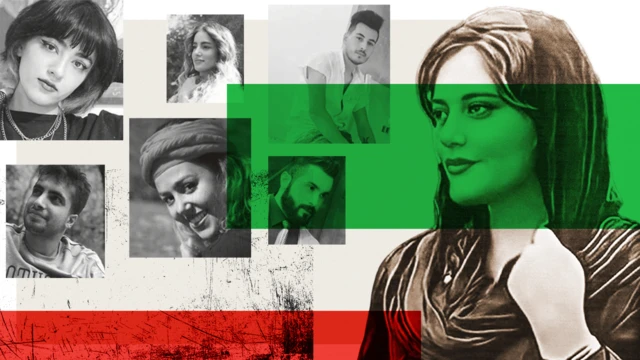
Dis be some of di schoolchildren and young pipo wey dem don kill for protests wey dey shele across Iran - di boldest challenge to di Islamic Republic since dem establish am for 1979.
Iran Human Rights Activists News Agency (HRANA) don estimate say dem don kill 222 pipo for inside in or afta di wides demonstrations wey dey caused by di death in custody of Mahsa Amini, 22, wey bin dey detained say she allegedly break rules on headscarves.
Di authorities strict control of information and independent reporting make am say di number and identities of doz wey don kill dey hard to verify.
BBC News don use variety of investigative techniques to name total of 45 men, women and children wey don die - many of dem, dem shoot.
Women

Almost all of di Islamic Republic protests wey don happen before na about di state of di economy.
Now, for move wey nobodi dey expect, women, particularly young women, don enta streets - di slogan dem dey chant for di protests: "Woman. Life. Freedom."
But di security services don crack down on dem - and dem don shoot some women.
Dem kill Nika Shakarmi and Sarina Esmailzadeh, both 16, for di capital Tehran and di surrounding area.


End of Di one wey oda users dey read well well
Ms Shakarmi bin go missing for Tehran, on 20 September, afta she tell her padi say police officers dey chase her. Death certificate wey BBC Persia get tok say states she die afta "multiple injuries caused by blows wit a hard object".
Human-rights groups say Ms Esmailzadeh, wey be YouTuber, die afta she bin dey beaten by security forces armed wit batons on 23 September.
Mahsa Mougouyi, 18, died for Isfahan, central Iran.
Women for di 20s and 30s also don dey killed, just like Minoo Majidi, 62, for Kermanshah, western Iran.

How BBC News identify di victims
Dem dey heavily restrict information for Iran. Di internet dey censored, dem dey slow am down plenti times and somtimes dem dey stop am.
Journalists dey sufferprosecution for reporting facts wey dey oppose di goment view.
According to di International Federation of Journalists, dem don arrest 24 reporters since di demonstrations start.
E also get very strong online disinformation campaign run by di authorities to discredit organisations wey dey try find di truth.
Journalists from di BBC Monitoring, Disinformation and Persian teams use names from trusted sources, including human-rights groups wey dey already verify identities, and match dem to social-media posts from dem or dia family.
Dem come closely examine audio-visual material, such as images and footage of deaths, burials and funerals, and cross-reference am wit death certificates and official online records.
Some of di families, unda pressure not to speak to journalists, am dem contact dem in confidence.
Schoolchildren
For di streets and in schools across Iran, young women and schoolgirls dey burn dia mandatory headscarf - wey be direct challenge to di clerical establishment ideology.
Girls wey dey recorded and shared videos of demsef as dem dey remove dia headscarf for class don enta streets and become key part of di movement, wey be some wey university students dey lead wella.
Dis kain protests by high-school pupils na somtin wey bin no expect.
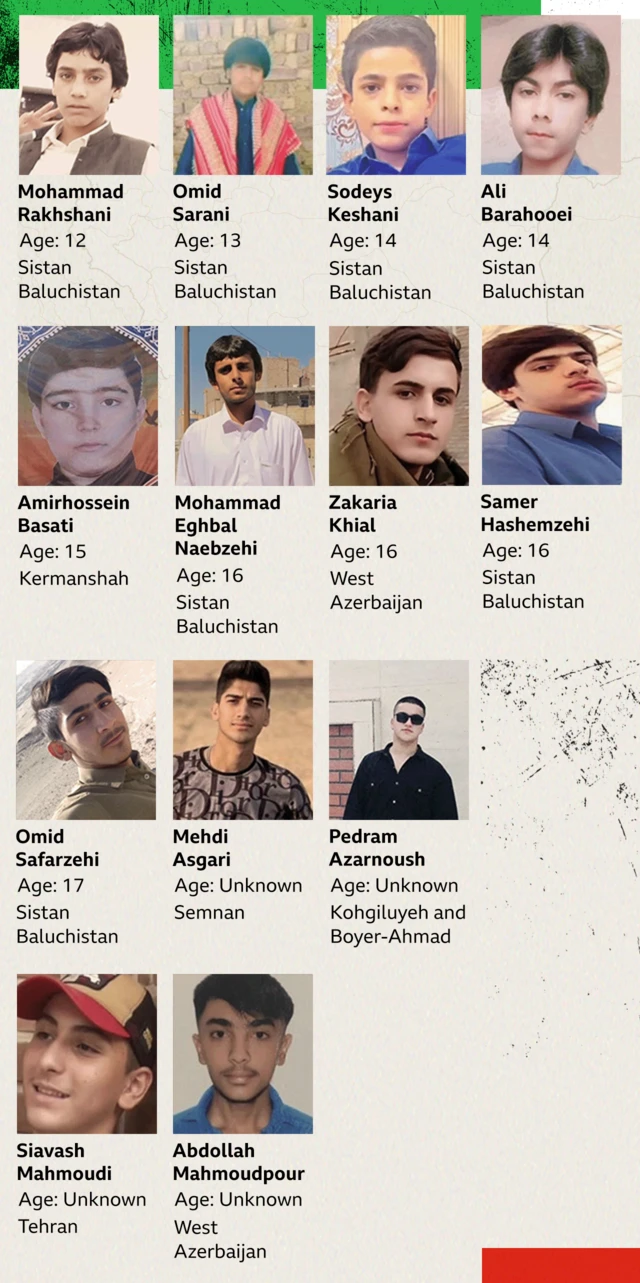
Some numba of children bin dey killed on 30 September for Sistan Baluchistan province for di south-east, wey be home to plenti pipo from di Baluch ethnic group.
Amnesty International don accuse Iranian authorities of say dem kill dozens of pipo dat day, firing live ammunition for move wey shock di kontri.
Dem kill schoolboy Mohammad Rakhshani, 12, di youngest pupil verify by BBC News, dat day. Omid Sarani, 13, Sodeys Keshani and Ali Barahooei, both 14, and Samer Hashemzehi, 16, follow die.
For oda sides, dem kill schoolboy Amirhossein Basati, 15, for Kermanshah province, north-west Iran, and Zakaria Khial and Amin Marefat, follow 16, die for West Azerbaijan, north-west Iran.
Pipo from regions wit high numbers wey belong to ethnic minorities
BBC News don confam deaths across di kontri but pipo wey belong to ethnic minorities, wey don face repression and political violence, na im dey targeted.
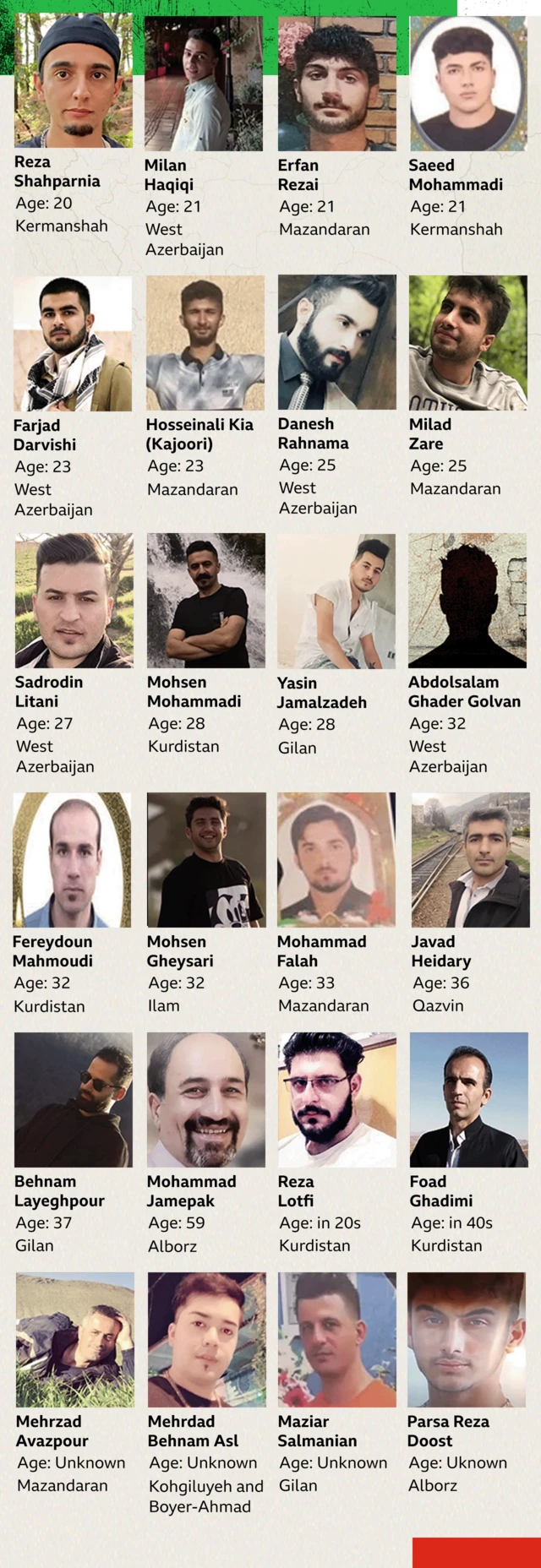
As well as groups wey dem kill for Sistan Baluchistan province, BBC News don identify wey dem kill for areas wit high numbers of Kurdish pipo, wia tensions don dey vey high. Dem include:
- for Kermanshah, Reza Shahparnia, 20, and Saeed Mohammadi, 21
- for Kurdistan province, western Iran, Reza Lotfi, in his 20s, Mohsen Mohammadi, 28, Fereydoun Mahmoudi, 32, and Foad Ghadimi, in his 40s
Ms Amini, wey die for custody on 16 September, three days afta her arrest, be Iranian Kurd.
Wen you map, all di deaths verified by di BBC go round di kontri, but wit clusters for north west, around di capital Tehran and for south-eastern Sistan Baluchistan.

Members of di security forces
Di goment don deny kill "peaceful" protesters and say more dan 20 security personnel don die.
Reporting by Kayvan Hosseini, Shayan Sardarizadeh and Nooshin Khavarzamin; production and visual journalism by Lucy Rodgers, Dominic Bailey and Rafael Chacon; graphics by Mark Bryson, Matt Thomas and Erwan Rivault.