How one of di strongest earthquakes for modern history wey lead to tsunami warnings hapun
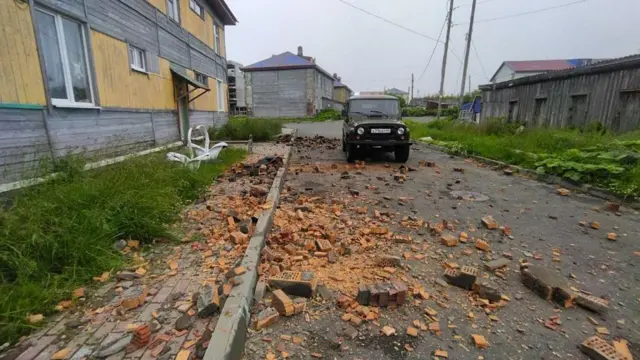
Wia dis foto come from, Getty Images
Na around 11:25 local time on Wednesday (00:25 BST), di sixth most severe earthquake in recorded history strike, for off Russia far eastern coast.
About 17 hours later, di worst threat pass.
With di ogbonge magnitude of 8.8, di earthquake near Russia Kamchatka Peninsula bin send tsunami waves towards Japan, Hawaii and di US west coast.
As e dey hapun, more dan two million pipo across di Pacific bin dey ordered to evacuate, with alerts wey dem also issue for China, the Philippines, Indonesia, New Zealand and as far as Peru, Chile and Mexico.
"Di disaster wey we bin dey expect no come," one Hawaii tourist tell BBC, half a day after di earthquake strike. Di Russian govment say dem no record any casualties.
Wen e be like danger still dey, North America, South America, Oceania, Asia and Russia bin dey at alert with different advisories and warning from authorities concerning di mata.
Earlier, authorities bin evacuate pipo for Japan, Hawaii and some parts of di US West Coast as di magnitude 8.8 earthquake for Russia far eastern Kamchatka Peninsula bin cause countries around Pacific Ocean to begin sama tsunami warning.
Dem bin report Tsunami waves wey high reach up to 3-4 metres (10-13 feet) for Kamchatka as anoda 30cm (12in) waves bin hit one city for Hokkaido, northern Japan.
Hawaii Govnor Josh Green bin ask pipo to follow evacuation orders and stay calm while US President Donald Trump advise Americans to dey on alert for tsunami warnings.
Several pipo injure for Kamchatka sake of di earthquake TASS news agency report.
Authorities bin also issue different Tsunami alerts for parts of China, di Philippines, Indonesia, Guam, Peru and di Galapagos Islands off Ecuador.
Japanese authorities bin ask more dan 1.9 million pipo to evacuate. Around 10,500 of dis pipo dey for Hokkaido, wia local media footage show pipo dey gada ontop rooftop.
Some pipo also gada for one observatory wey overlook di beach for Chiba south of Tokyo.
Di Meteorological agency say tsunami waves fit reach up to 3 metres high.
Meanwhile, Russia Sakhalin region bin declare a state of emergency for di northern Kuril Islands, di same part of di kontri wia video of tsunami waves for port town bin emerge.
Tori be say Tsunami waves hit California around 1am dis morning. Oda cities wey report say dem see di waves include Seattle, Monterey, and Eureka, California.
Department of Transportation for Hawaii say dem don cancel all flights to and from Kahului Airport, di main airport for Maui.
For social media post, dem say passengers dey take shelter for di airport terminal.
For early July five powerful earthquakes of 7.4 magnitude hit ocean water near Kamchatka. Di quake get di largest depth of 20 kilometre according to tori pipo AP.
Why dis one no bad like oda tsunamis?
Di quake bring tsunami waves of 4m (13ft) for parts of eastern Russia, according to authorities dia.
But dem no come close to di waves pf tens-of-metres high of Boxing Day 2004 tfor di Indian Ocean and Japan 2011.
"Di height of di tsunami wave also dey become affected by local shapes of di seafloor near di coast and di [shape] of di land wia e land," Prof Lisa McNeill, professor of tectonics for di University of Southampton tok.
"Dis factors, along with how populated di coast dey, affect how serious di impact dey," she add.
First reports from di US Geological Survey say di earthquake bin dey centred at a narrow depth, about 20.7km (12.9 miles) below di Earth surface.
E fit lead to greater displacement of di seafloor, and a bigger tsunami wave, but e dey hard to tell for sure so soon afta di event.
"One possibility na say di tsunami models don maybe take a conservative estimate on di earthquake depth," Dr Hicks tell BBC News.
"Potentially you fit shift dat earthquake anoda 20 kilometres deeper, and e go actually reduce di amplitude of di tsunami waves quite considerably."
Anoda important element na di development of early warning systems.
Due to di high occurrence of earthquakes for di Pacific region, many countries don get tsunami centres. Dem send out warnings via public announcements for populations to evacuate.
No such system bin dey in place wen di 2004 Boxing Day tsunami hapun - e no give many pipo time to evacuate.
More dan 230,000 pipo die across 14 countries for di Indian Ocean.
Early warning systems dey important because of di limited ability of scientists to predict wen earthquake go occur.
Wetin be tsunami?
Tsunami na veri strong long waves wey dey suddenly come from ocean. E dey usually happun wen earthquake don happun below or under ocean.
E dey take long hours to land for any location e wan happun. Dis dey give authorities enough time to issue warnings and to evacuate residents ahead.
E no be like normal ocean waves. Tsunamis no dey only show for surface level, e dey start from under di ground water and dey move wit high energy and force - e fit cause major damage on anytin e hit.