
Tom Shakespeare

Tom is a Research Fellow at Newcastle University. His non-fiction books include Genetics Politics: from Eugenics to Genome and The Sexual Politics of Disability.
Pastures New
12th May 2010
In the spring, a middle-aged man's fancy lightly turns to thoughts of gardening, as Alfred Lord Tennyson should really have said. Or at least, mine does. Like classical music, gardening seems to become relevant to most people only once they have passed the age of 35. Maybe it's about developing patience, or maybe it's about having become jaded with nightclubbing and gigs. Anyway, I began my Tyneside garden when I moved house in 2002, and now it's mature, overflowing with verbena boniarensis and clematis and fatsia japonica.
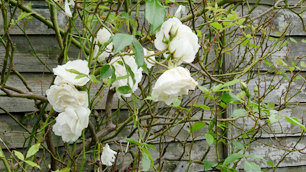
In fact, it's rather too mature. Now that I am a wheelchair user, I find it more difficult to tackle the weeding (too low) or the pruning (too high) or the mowing (too much). I depend on my personal assistants to have green fingers and mainly confine myself to directing operations from the patio. This winter, helpers have been busy with other things, and I am uncomfortably aware that my eucalyptus, which I planted to help my Australian ex-wife feel at home (it obviously didn't work), is now more of a tree than a shrub, and will shortly be the subject of dirty looks from my neighbours and strongly worded letters from the local council. They grow rather fast, gum trees. Visibly, in fact.
With the exception of the eucalyptus, being a gardener means being patient. Much like being disabled, as I have discovered since becoming paralysed.
Waiting is now second nature to me. I have learned to take the long view. And flowers are worth waiting for, unlike many human beings, in my experience.
Waiting is now second nature to me. I have learned to take the long view. And flowers are worth waiting for, unlike many human beings, in my experience.
Having a garden, even my small suburban plot, enables you to connect to the cycles of the seasons, and to the mysterious movements of nature. Like the morning a few days ago, when, up early and spreading my toast, I looked out of the window and saw what appeared to be a large tabby cat in the back yard. Or rather, as I looked more closely, a fox, complete with bushy tail and insouciant attitude, padding across the lawn and slipping over the fence into the neighbour's patch. What a thrill!
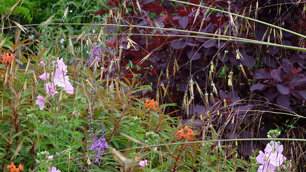
Due to work commitments I have recently left my Newcastle garden behind, foxes and all, to start afresh in France.
I have just moved into a new apartment, near Geneva, and joy of joys! It has a small garden. Now, I can once more make plans to tame and till and tend.
I have quickly discovered that French garden centres are very similar to British garden centres, although they seem to sell wine (organic), which you certainly don't get in the Newcastle equivalents. I am falling in love with composting all over again, and hanging out treats for les oiseaux.
But this time, my partner is adamant that she'll leave the horticultural aspect of our home to me, so I need to organise my new garden with my mobility limitations in mind. I am planning raised beds, and tubs, and complicated irrigation systems, and a row of fruit bushes which should require minimal maintenance (just protection from all those birds who I have successfully attracted to our corner of France). Perhaps the rest I can leave as a miniscule wild flower meadow, and thus encourage more wildlife (visions of home-grown frogs legs).
I’ve just googled disability and gardening, which threw up a couple of a million hits, so plainly people have wheeled this path before me, whether in search of adaptations and aids, or the therapeutic benefits of pottering around with plants. There's even a charity called Thrive, which specialises in the subject of gardening with a disability. This only goes to show that the phrase "disability and" can end with almost every conceivable noun or verb.
At times over the last six years I've despaired at finding a topic for this column, but something has always come up at the last moment. I've written over seventy Ouch articles now, and the only way that I've repeated myself is by consistently annoying the more ideological of my readers.
But all good things come to an end. My contributions to Ouch! are halting for now due to my commitments with the World Health Organisation. I might be back one day, but not for a while.
Thank you for reading, and for your feedback and your arguments. Always remind the BBC that they can't even dream of pruning Ouch, because we need it.
I'm off to read a gardening catalogue. So, think only this of me: that there's some corner of a foreign field that is for ever England.
I have just moved into a new apartment, near Geneva, and joy of joys! It has a small garden. Now, I can once more make plans to tame and till and tend.
I have quickly discovered that French garden centres are very similar to British garden centres, although they seem to sell wine (organic), which you certainly don't get in the Newcastle equivalents. I am falling in love with composting all over again, and hanging out treats for les oiseaux.
But this time, my partner is adamant that she'll leave the horticultural aspect of our home to me, so I need to organise my new garden with my mobility limitations in mind. I am planning raised beds, and tubs, and complicated irrigation systems, and a row of fruit bushes which should require minimal maintenance (just protection from all those birds who I have successfully attracted to our corner of France). Perhaps the rest I can leave as a miniscule wild flower meadow, and thus encourage more wildlife (visions of home-grown frogs legs).
I’ve just googled disability and gardening, which threw up a couple of a million hits, so plainly people have wheeled this path before me, whether in search of adaptations and aids, or the therapeutic benefits of pottering around with plants. There's even a charity called Thrive, which specialises in the subject of gardening with a disability. This only goes to show that the phrase "disability and" can end with almost every conceivable noun or verb.
At times over the last six years I've despaired at finding a topic for this column, but something has always come up at the last moment. I've written over seventy Ouch articles now, and the only way that I've repeated myself is by consistently annoying the more ideological of my readers.
But all good things come to an end. My contributions to Ouch! are halting for now due to my commitments with the World Health Organisation. I might be back one day, but not for a while.
Thank you for reading, and for your feedback and your arguments. Always remind the BBC that they can't even dream of pruning Ouch, because we need it.
I'm off to read a gardening catalogue. So, think only this of me: that there's some corner of a foreign field that is for ever England.
More articles about
Bookmark with...
Live community panel
Our blog is the main place to go for all things Ouch! Find info, comment, articles and great disability content on the web via us.

Listen to our regular razor sharp talk show online, or subscribe to it as a podcast. Spread the word: it's where disability and reality almost collide.
More from the BBC

All the latest news from the paralympics.

News and views for people who are blind or partially sighted.

Weekdays 12.40pm. Radio 4's consumer affairs programme.

~RS~q~RS~_bbc_=0&__ip__=54.77.33.255&dnainitialtitle=Pastures%20New&dnahostpageurl=http://www.bbc.co.uk/ouch/opinion/pastures_new.shtml&dnauid=ouch:article:2246&s_baseHeadingLevel=1&dnashow=10&dnafrom=0&dnato=9&dna_encoding=utf-8&s_sssicomponent=1&s_sssiCommentCount=&dnacommentforumlistprefix=%5B_%5D&dnarecentcommentsprefix=%5B_%5D&s_commentprofileurl=/dna/mbouch/CommentProfile?&s_contact=0~RS~z~RS~14~RS~)

Comments
Hi - I wish you well Tom but I'll miss your column. France & WHO gain is England's loss. All the best
Complain about this comment
View these comments in RSS