
Home > Opinion > Mining the disability market
Rich Donovan

Rich Donovan is Founder and Chief Investment Officer at WingSail Capital, a New York based investment management firm that offers institutional equity strategies. Rich happens to have cerebral palsy and uses a disability lens to find investments that beat the market.
Mining the disability market
5th April 2011
• Last time: A fresh approach to disability employment
In the second of two articles, New York based disabled businessman and former Wall Street trader, Rich Donovan, looks at the opportunity that the disability market holds, how to get it moving and the benefits to all concerned.
In the second of two articles, New York based disabled businessman and former Wall Street trader, Rich Donovan, looks at the opportunity that the disability market holds, how to get it moving and the benefits to all concerned.

Getting gold out of the ground seems simple enough - dig a hole, and poof, there it is.
The reality of gold mining, however, is that there are steps that must be taken which require more than a shovel and a dream. The good thing about taking those steps is that, at the end of the day, you have the increased potential to strike it rich by finding ... well, gold.
New and different action in disability holds the same promise - a significant economic benefit with relatively small outlays and adjustments. These new and different actions must come from three sources: government, business, and disabled people themselves. Let's look at all three.
The reality of gold mining, however, is that there are steps that must be taken which require more than a shovel and a dream. The good thing about taking those steps is that, at the end of the day, you have the increased potential to strike it rich by finding ... well, gold.
New and different action in disability holds the same promise - a significant economic benefit with relatively small outlays and adjustments. These new and different actions must come from three sources: government, business, and disabled people themselves. Let's look at all three.
Government
Governments must help unlock the economic potential in disabled people by enacting policy that encourages a generation of self-sustaining disabled consumers. What governments can make a difference with right now, is prepare them for earning higher levels of income through education.
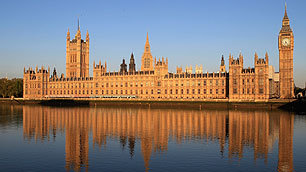
So-called Special Education is not focused on prepping disabled people to compete for jobs. This is simply because, at its inception, few thought a career for a disabled person was a viable goal. Things have changed, and our education system needs to play catch-up and adjust its expectations.
Disabled kids today are not taught to dream about a career. It troubles me every time I meet a bright fifteen year old disabled kid who has never been asked the simple question: "What do you want to be when you grow up?"
Progress has been made with a social focus. Now governments need a shift to an economic focus by equipping disabled students with the tools and passion to build their careers.
Disabled kids today are not taught to dream about a career. It troubles me every time I meet a bright fifteen year old disabled kid who has never been asked the simple question: "What do you want to be when you grow up?"
Progress has been made with a social focus. Now governments need a shift to an economic focus by equipping disabled students with the tools and passion to build their careers.
Business
The path for business is simple - do what you are best at. There is no need to become experts in disability. Attack this market as you would any other: find out the desires of disabled consumers as they relate to your profitable enterprise, adjust your product and messaging to attract their business then execute this in line with your company's process and culture.

Mistakes are made when companies try to 'disablise' their business or do just enough to comply with regulations. Disabled people don't want 'special' products ... but they are hungry to be included in the mainstream consumer experience.
Doing this right is OXO Good Grips, a US kitchen tool company. OXO's products don't scream 'designed for disabled', yet they were inspired by a woman with arthritis who loves to cook. Their branding makes them attractive to twentysomethings who just think they are cool.
Message to CEOs ... if disability is not part of your annual strategic business plan you and your shareholders are missing a big opportunity.
Doing this right is OXO Good Grips, a US kitchen tool company. OXO's products don't scream 'designed for disabled', yet they were inspired by a woman with arthritis who loves to cook. Their branding makes them attractive to twentysomethings who just think they are cool.
Message to CEOs ... if disability is not part of your annual strategic business plan you and your shareholders are missing a big opportunity.
Disabled people
Disabled people must become 'inspired consumers' and 'motivated investors'. The last thirty years of lobbying governments and the courts, has come and gone.
We must turn our attention to informing companies on how to improve our consumer experience. Rather than marching on Parliament, shift your focus to products and services that you enjoy that could be better. Start telling companies how their offerings could be best tailored to you.
We must turn our attention to informing companies on how to improve our consumer experience. Rather than marching on Parliament, shift your focus to products and services that you enjoy that could be better. Start telling companies how their offerings could be best tailored to you.

Here is some 'inside insight': companies actually want to hear from you. They make their 'stuff' better by collecting feedback from their customers. Great companies love feedback, and the ones that don't, you can feel free to ignore.
Communication from consumers to companies happens in two primary ways. First, reward companies that earn your business by buying their products aggressively, and tell them why you did so. Punish companies that 'do disability' poorly, or who merely comply with the law, by not buying their products, and tell them why you did so.
As part of this process, individuals and groups must start flowing information about product/service improvements to companies. This can be as simple as calling the number on the back of the package, and can be as sophisticated as organized groups publically reviewing products that work or miss the mark. It is important that this happens in large numbers, say in the low thousands.
To paraphrase what I've been told by more than 10 corporate executives - 'disabled customers are too quiet; we would do more if it was demanded'. They need to hear from you.
The second and more complex way to entice companies to better serve the disabled customer is through ownership. By owning shares in companies, disabled people can exert power to ensure they are represented in the boardroom.
There is a long history of how to do this - women and the environmental movement have done it well through funds like Calvert Investments.
Part of Calvert's role is to work with the boards of the companies they invest in and, alongside maximising value for shareholders, they do business in a way that addresses their investors' social and green agenda.
Large investors like pension funds and endowments can play a role in encouraging and investing in funds like Calvert to support progressive goals.
Similarly, disabled people and their 'champions' must start to pressure large investors to pay attention to the emerging market of disability.
Communication from consumers to companies happens in two primary ways. First, reward companies that earn your business by buying their products aggressively, and tell them why you did so. Punish companies that 'do disability' poorly, or who merely comply with the law, by not buying their products, and tell them why you did so.
As part of this process, individuals and groups must start flowing information about product/service improvements to companies. This can be as simple as calling the number on the back of the package, and can be as sophisticated as organized groups publically reviewing products that work or miss the mark. It is important that this happens in large numbers, say in the low thousands.
To paraphrase what I've been told by more than 10 corporate executives - 'disabled customers are too quiet; we would do more if it was demanded'. They need to hear from you.
The second and more complex way to entice companies to better serve the disabled customer is through ownership. By owning shares in companies, disabled people can exert power to ensure they are represented in the boardroom.
There is a long history of how to do this - women and the environmental movement have done it well through funds like Calvert Investments.
Part of Calvert's role is to work with the boards of the companies they invest in and, alongside maximising value for shareholders, they do business in a way that addresses their investors' social and green agenda.
Large investors like pension funds and endowments can play a role in encouraging and investing in funds like Calvert to support progressive goals.
Similarly, disabled people and their 'champions' must start to pressure large investors to pay attention to the emerging market of disability.

The toughest part of successfully mining for gold is bringing all of the right pieces together prior to digging a hole. All involved in disability acknowledge that the economic potential in this segment is about the size of China, yet attempts at unlocking the potential have yielded limited results.
We know that there is 'gold in them hills', how we get it out is more important than its mere existence. What is missing today is new and different actions, producing new and different results.
We know that there is 'gold in them hills', how we get it out is more important than its mere existence. What is missing today is new and different actions, producing new and different results.
More articles about
Bookmark with...
Live community panel
Our blog is the main place to go for all things Ouch! Find info, comment, articles and great disability content on the web via us.

Listen to our regular razor sharp talk show online, or subscribe to it as a podcast. Spread the word: it's where disability and reality almost collide.
More from the BBC

All the latest news from the paralympics.

News and views for people who are blind or partially sighted.

Weekdays 12.40pm. Radio 4's consumer affairs programme.

~RS~q~RS~_bbc_=0&__ip__=54.76.44.195&dnainitialtitle=Mining%20the%20disability%20market&dnahostpageurl=http://www.bbc.co.uk/ouch/opinion/mining_the_disability_market.shtml&dnauid=ouch:article:2414&s_baseHeadingLevel=1&dnashow=10&dnafrom=0&dnato=9&dna_encoding=utf-8&s_sssicomponent=1&s_sssiCommentCount=&dnacommentforumlistprefix=%5B_%5D&dnarecentcommentsprefix=%5B_%5D&s_commentprofileurl=/dna/mbouch/CommentProfile?&s_contact=0~RS~z~RS~47~RS~)

Comments
When looking at a photo of a friend having her IV meds in hospital with perfect nails, it occurred to me that it would be a great place to set up a manicure business - after all, you have to sit still for ages, so you might as well have something done to cheer you up at the same time. Not by me tho, I can't hold the brush steady... There you go, you can have that idea for free :)
Complain about this comment
perhaps you could start by insisting that they talk to us
Complain about this comment
"What governments can make a difference with right now, is prepare them for earning higher levels of income through education.
So-called Special Education is not focused on prepping disabled people to compete for jobs. This is simply because, at its inception, few thought a career for a disabled person was a viable goal. Things have changed, and our education system needs to play catch-up and adjust its expectations."
As a victim of that system, I can confirm what you say is true - but how are you going to persuade a government to do that when it prefers to demonise Disabled people - like ours does? And what about those of us whose lives have already been ruined by such a system? If I enrol in a university full-time, I lose my home because I won't get Housing Benefit.
Complain about this comment
You have to bear in mind that this man is American. They have a totally different market to the UK. For a start there are millions more people to sell to and so a good sales strategy can repay literally a million-fold. That does not work here, as quite a number of rueful US business hotshots will tell you!
So don't take this stuff to seriously. The US is accustomed tpo buying and selling to and from the neighbours. They have a tradition of supplying services of assorted kinds. Americans are constantly selling to each other. It wouldn't necessarily work here.
Complain about this comment
Wow Rich, you found higher gear...we as a community need to own our futures. I for one would rather be discussing a larger role as a consumer than arguing about better benefits. I'm going to start calling the number on the back of the package...once a week. And I'll tell my blogger to do the same...
Complain about this comment
Just wanted to say that I enjoy reading the blogs posted here. It helps me be more aware of what is happening for disabled individuals all over the world. I'm an American; but it isn't always easy for us disabled folks over here. Seems if a person has monies, though, that they oftentimes fare better. Just a way and attitude of people, I guess.
Keep blogging! Cheers!
Complain about this comment
Interestingly the Ouch Team post on the message board here asking for our (the ouch regulars) comments on this concept, but then don't even bother to link to that thread from this article so that readers here can consider our views as well.
So for a wider spread of views on this please also visit:
http://www.bbc.co.uk/dna/mbouch/NF2322273?thread=8150910
Remember guys "Nothing about Us without Us" :)
Complain about this comment
It's really interesting for me reading people's comments about all sorts of topics on the Ouch! website from down here in the penal colonies (Australia - no, we still haven't forgotten the Pommy toffs who sent us here!). The parallels between our two nations on so many things, including disability reform, are (perhaps unsurprisingly) significant. I notice one commentator responding to this article suggested that the UK is different to the US - I have spent a great deal of time in both countries over many years and I don't think that's actually true.
In relation to this article (another great read, Rich), I feel really quite frustrated by the dominant tone of the responses. Please don't get me wrong, I know only too well how hard it is to participate fully in our society with any form of disability (in my case, spinal cord injury), and I have always also felt a sense of injustice and frequently anger about our communities' lacklustre, even pathetic efforts to provide a level playing field for people with disabilities that the majority of people take for granted. But we have just got to get over this folks. We only have three choices here: we accept the status quo; we get angry and lash out; or we get organised and rationally but forcefully push our case at every opportunity and with every means we have at our disposal. The first choice gets us nowhere, the second can sometimes be effective but at great personal cost, and the third requires a great deal of time and effort. In my experience we've spent more time on the first and second choices than we should have, and we have done ourselves a disservice. Rich's suggestions have a great deal of merit in my opinion.
Rich is arguing that companies don't respond to legislation forcing them to employ people with disabilities, but they do respond if they recognise a market opportunity. Others have responded that the only thing that will increase employment opportunities is a harsh legislative approach. I think both are true.
Some time ago I developed a "market segmentation" of community attitudes (that includes companies) towards people with disabilities - like Rich, I've spent my working life in the business sector! Market segmentation is a simple technique (don't let marketeers tell you otherwise) that recognises that everyone has a different perspective on just about everything, including their perceptions of any particular product. That's not very helpful in developing marketing campaigns and communications strategies - we can hardly develop a separate campaign for every individual! So the segmentation bit looks to group similar attitudes together, then tries to understand what drives the different groups of attitudes - age, location, educational experience, gender???
My "employer attitudes to people with disabilities" market segmentation came up with five "market segments": the "I'm doing it" group (I've been employing people with disabilities for years); the "I'm ready" group (I've been hearing a lot about employing people with disabilities and I think it's time I gave it a go); the "Never thought of it" group (I've never even met a person with a disability, let alone thought about employing one); the "I tried but…" group (I employed a young bloke in a wheelchair 20 years ago but he didn't work out); and the "They're not like me" group (you know these mongrels - they don't like anyone who is not male, white, Anglo-Saxon, private school, aged between 40 and 45). I think the same types of attitudes apply across the community.
My point is we don't use the same technique to change people's attitudes or behaviours across every group. Why would you use the big stick (legislation) approach for the "I'm ready" or "Never thought of it" groups, for example? They're much more likely to respond to Rich's approach. But the last group in particular probably won't respond to anything but a whack over the head with a heavy object (legislation). I simply don't believe a "one size fits all" approach is the right way to go.
Complain about this comment
My problem with the advice Rich offers is the results shown by the exploitation of illness & disability from companies that operate in the UK without strict regulation - including LGA's & private business. i.e. try buying a reasonably priced wheelchair that is reliable.
1. unlike America we have no bill of rights.
2. as a nation disability has been invisible for over a century and indeed in America it has, in my opinion, not been business that can claim credit for creating improvements. It was the GI bill and the intensive campaigning on behalf of returning veterans from Vietnam that pushed back barriers for disabled people against a very reluctant and at times intransigent business and political structure.
3.In the current economic climate (I believe currently estimates of 41 million people are without any form of health care cover in the US) it is very unlikely that anyone other than investors looking to increase profits - Unmn - ATOS - Insurance & management companies looking to take over GP surgeries & fill the gap right-wing ideology is creating will be the only ones interested in getting into the health market. And when it comes to prioritising, shareholders & their investment portfolios do & always will always be a first concern - not the disabled.
Complain about this comment
View these comments in RSS