
Home > Features > Disability is everywhere: Chilean mines, Prime Ministers, humour
Disability is everywhere: Chilean mines, Prime Ministers, humour
14th September 2010
Simon Minty looks at the news of the past month to find stories where disability is just below the surface.
Chilean miners
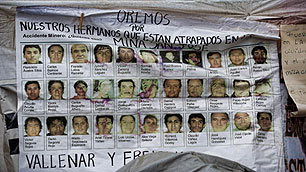
You can't have missed the remarkable, and ongoing, story of the 33 miners trapped underground in Chile. I've been following this since the news broke in early August, and am relieved to hear that the estimated four month wait for a rescue shaft to be drilled, has now been reduced to two months.
Being 2,257 feet underground at the bottom of a San José mine, in a space of 52 sq metres, alongside 32 colleagues for several months, is pretty hard for most to comprehend. Chile has state of the art drilling equipment yet the rescue will be slow steady work with the men eventually being pulled out, one by one, using a rope.
A rope? This sounds a bit of a basic solution for the 21st century but the best technology can’t always overcome the speed nature enforces on us.
Technologies are being used to help them in other ways, though. MP3 players and computer games have been sent down to keep the men occupied. They are getting medicine and supplies too. Reports say they're likely to experience psychological trauma for quite some time afterwards.
The Guardian reported the uncle of Raúl Bustos, a trapped miner, saying: "Psychologists and psychiatrists are going to be talking to the kids, especially the young ones who are going to need more help." And Laurence Golborne, Chile's minister for mining, explained they have not ruled out lowering anti-depressants into the shaft. It's one of those times you’d rather disability wasn’t everywhere.
Being 2,257 feet underground at the bottom of a San José mine, in a space of 52 sq metres, alongside 32 colleagues for several months, is pretty hard for most to comprehend. Chile has state of the art drilling equipment yet the rescue will be slow steady work with the men eventually being pulled out, one by one, using a rope.
A rope? This sounds a bit of a basic solution for the 21st century but the best technology can’t always overcome the speed nature enforces on us.
Technologies are being used to help them in other ways, though. MP3 players and computer games have been sent down to keep the men occupied. They are getting medicine and supplies too. Reports say they're likely to experience psychological trauma for quite some time afterwards.
The Guardian reported the uncle of Raúl Bustos, a trapped miner, saying: "Psychologists and psychiatrists are going to be talking to the kids, especially the young ones who are going to need more help." And Laurence Golborne, Chile's minister for mining, explained they have not ruled out lowering anti-depressants into the shaft. It's one of those times you’d rather disability wasn’t everywhere.
The death of David Cameron's father

In the June article I spoke of the connections that UK leaders have with disability. Last week I learnt of another link that the Prime Minister David Cameron has, this time via his father Ian Cameron - a successful 'old school' stockbroker, who sadly died on the 8th September following a stroke.
The press have widely referred to Ian as being born "without heels". Later in life he wore prosthetic legs as a result of a double amputation.
David’s comments about his father and most of the reporting of his death didn’t slip in to Douglas Badar-like praise, we simply heard that he refused to play the hero. Indeed, I couldn’t help being tickled when I read a dated, and slightly sexist, tribute from an old friend of his. He described the young Ian Cameron as having held, "endless parties attended by many beautiful women". We also learnt that he banned his children from pursuing a career in accountancy, as he disliked it so much after studying it himself.
The press have widely referred to Ian as being born "without heels". Later in life he wore prosthetic legs as a result of a double amputation.
David’s comments about his father and most of the reporting of his death didn’t slip in to Douglas Badar-like praise, we simply heard that he refused to play the hero. Indeed, I couldn’t help being tickled when I read a dated, and slightly sexist, tribute from an old friend of his. He described the young Ian Cameron as having held, "endless parties attended by many beautiful women". We also learnt that he banned his children from pursuing a career in accountancy, as he disliked it so much after studying it himself.
That Alison Lapper statue again

Someone who seems less comfortable when reporting about disability is Lynn Barber, writer on the Sunday Times magazine. On 15th August she wrote of her interview with Marc Quinn, the artist who has dabbled with using disabled models as part of his sculpture work. This includes, as I’m sure you already know, the much discussed 2005 statue of a naked and pregnant Alison Lapper.
Lynn seemed rather confused: she felt "one had to applaud" Marc for putting the sculpture on the 4th plinth in Trafalgar Square ... yet she resented "the whole right-on preachiness of the exercise". Uncharacteristically, it seems she decided to pull her punches.
Lynn seemed rather confused: she felt "one had to applaud" Marc for putting the sculpture on the 4th plinth in Trafalgar Square ... yet she resented "the whole right-on preachiness of the exercise". Uncharacteristically, it seems she decided to pull her punches.
Ain't nothin' funny about disability

Writer and comedian David Baddiel recently suggested that we should be a bit more confident when dealing with taboos. He was referring mostly to making jokes involving Muslims, rather than directly referring to disability but it has interesting parallels in terms of people’s natural hesitation.
Baddiel suggests, "not making jokes about something is a type ... of apartheid ... actually, most people want to have jokes made about them, and want to make jokes about themselves ... so it's a very alienating thing to say, 'Oh, we can't make jokes about them'."
He also spoke of his experiences of depression, and whilst clearly tough for him, it’s a well versed assumption that a successful comedian has experienced mental health problems at some point. It sometimes seems like an almost essential qualification for the job.
As to his observations, I really love it when someone makes a well-crafted and original joke about disability that we can all laugh at. To assume there is no humour in aspects of disability is absurd. Maybe there are still too many cheap or careless jokes that seep through, but you get the feeling that those who believe disability has no humour whatsoever are well meaning but misinformed, and think it’s too tragic to even mention.
Maybe Barber would've benefited from talking to Ian Cameron, who you feel may have been partial to the odd wise crack.
Baddiel suggests, "not making jokes about something is a type ... of apartheid ... actually, most people want to have jokes made about them, and want to make jokes about themselves ... so it's a very alienating thing to say, 'Oh, we can't make jokes about them'."
He also spoke of his experiences of depression, and whilst clearly tough for him, it’s a well versed assumption that a successful comedian has experienced mental health problems at some point. It sometimes seems like an almost essential qualification for the job.
As to his observations, I really love it when someone makes a well-crafted and original joke about disability that we can all laugh at. To assume there is no humour in aspects of disability is absurd. Maybe there are still too many cheap or careless jokes that seep through, but you get the feeling that those who believe disability has no humour whatsoever are well meaning but misinformed, and think it’s too tragic to even mention.
Maybe Barber would've benefited from talking to Ian Cameron, who you feel may have been partial to the odd wise crack.
'London 2012' volunteers wanted

Although still a couple of years away, the breathless preparation for the London 2012 games continues. We know there will be 'disabled people everywhere' at the Paralympics, on the track and on Channel 4, as they’ve won the broadcast rights.
The London Organising Committee of the Olympic Games and Paralympic Games, abbreviated thankfully, if inaccurately, to LOCOG are actively seeking disabled volunteers to help with the games. Might be fun if you have the time? Be sure to if you get involved.
The London Organising Committee of the Olympic Games and Paralympic Games, abbreviated thankfully, if inaccurately, to LOCOG are actively seeking disabled volunteers to help with the games. Might be fun if you have the time? Be sure to if you get involved.
More articles about
humour, islam, mental health, muslim, paralympics, alison lapper, david cameron
Bookmark with...
Live community panel
Our blog is the main place to go for all things Ouch! Find info, comment, articles and great disability content on the web via us.
Listen to our regular razor sharp talk show online, or subscribe to it as a podcast. Spread the word: it's where disability and reality almost collide.
More from the BBC

All the latest news from the paralympics.

News and views for people who are blind or partially sighted.

Weekdays 12.40pm. Radio 4's consumer affairs programme.

~RS~q~RS~_bbc_=0&__ip__=54.77.26.26&dnainitialtitle=Disability%20is%20everywhere%3A%20Chilean%20mines%2C%20Prime%20Ministers%2C%20humour&dnahostpageurl=http://www.bbc.co.uk/ouch/features/disability_is_everywhere_chilean_mines_p.shtml&dnauid=ouch:article:2316&s_baseHeadingLevel=1&dnashow=10&dnafrom=0&dnato=9&dna_encoding=utf-8&s_sssicomponent=1&s_sssiCommentCount=&dnacommentforumlistprefix=%5B_%5D&dnarecentcommentsprefix=%5B_%5D&s_commentprofileurl=/dna/mbouch/CommentProfile?&s_contact=0~RS~z~RS~07~RS~)

Comments
But when non-disabled people talk about "joking about Disability", they mean joking about impairment - not experiencing the absurdity of Disability.
Complain about this comment
View these comments in RSS