
Home > Features > Disability is everywhere: Charlie Chaplin premier, Apple Mac, Oliver Sacks
Disability is everywhere: Charlie Chaplin premier, Apple Mac, Oliver Sacks
2nd December 2010
In this series, Simon looks at how disability related matters are just below the surface of everything. In his latest despatch, technology comes to the fore.
A good friend of mine recently sent me a weblink but his email mysteriously didn't have any comment in it. Being ever conscious of getting a virus, I checked with him and he confirmed it was fine and suggested I might find it interesting.
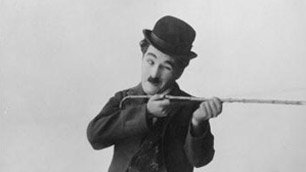
I clicked through and was soon watching some grainy black and white footage of guests arriving at the premier of a Charlie Chaplin film, The Circus, in 1928.
In a preamble, the chap who put the clip on YouTube explains that, being a film director himself, he always watches the Extras you get with a box set of DVDs. And this is where he found the old footage.
We see a woman who walks past the camera holding a mobile phone to her ear. At the end of the clip she half-looks to the camera and you see her lips move. It seems natural enough: she has arrived to a film event. She is chatting to a friend on her mobile phone and pauses before she goes in.
The problem, as you will have realised, is that this was shot eighty-two years ago, and mobile phones didn't exist then. Tongue in cheek, or maybe at a loss, he suggests the only explanation is that the woman must be a time traveller.
I spent a few minutes re-watching the clip, wondering if it were doctored or fake, though I felt neither of these was the right answer. But I didn't know what she held in her hand. Take a look for yourself:
Watch the Charlie Chaplin premier clip. Is there a disability link?
... I'll tell you my theory at the bottom of this article.
I clicked through and was soon watching some grainy black and white footage of guests arriving at the premier of a Charlie Chaplin film, The Circus, in 1928.
In a preamble, the chap who put the clip on YouTube explains that, being a film director himself, he always watches the Extras you get with a box set of DVDs. And this is where he found the old footage.
We see a woman who walks past the camera holding a mobile phone to her ear. At the end of the clip she half-looks to the camera and you see her lips move. It seems natural enough: she has arrived to a film event. She is chatting to a friend on her mobile phone and pauses before she goes in.
The problem, as you will have realised, is that this was shot eighty-two years ago, and mobile phones didn't exist then. Tongue in cheek, or maybe at a loss, he suggests the only explanation is that the woman must be a time traveller.
I spent a few minutes re-watching the clip, wondering if it were doctored or fake, though I felt neither of these was the right answer. But I didn't know what she held in her hand. Take a look for yourself:
Watch the Charlie Chaplin premier clip. Is there a disability link?
... I'll tell you my theory at the bottom of this article.

Sticking with technology, I'm a recent convert to Apple Macs after using a Windows PC for 20 years. Like Damon Rose, the BBC Ouch Editor who coincidentally wrote a piece about accessibility podcasts a few weeks ago, I too listen to a couple of downloadable radio shows to learn more about my Mac.
One of my favourites is Mac Cast, unashamedly identifying itself as: 'for Mac geeks by Mac geeks'. The podcast is invariably in love with all things Apple and the deity, CEO Steve Jobs. I've listened to it for nearly a year and found them informative if occasionally longwinded.
The Mac Cast plays to its target audience of fan boys, however, October's edition seamlessly blended disability and accessibility in to the regular format. It naturally made me listen a little harder, particularly as I'd just been discussing accessibility of touch screen hardware like the iPad and Samsung Galaxy, with a blind friend.
It suggested that the fashionable march towards 'touch screen' doesn't have to mean the end of access to 'VIPs' which I suspect is true especially as the guest was visually impaired himself. He explained how many Apple products now include screen magnification and speech output free and as part of the basic user interface, including iPad, iPhone, iPod Touch, iPod Nano and Mac Book trackpad computers.
One of my favourites is Mac Cast, unashamedly identifying itself as: 'for Mac geeks by Mac geeks'. The podcast is invariably in love with all things Apple and the deity, CEO Steve Jobs. I've listened to it for nearly a year and found them informative if occasionally longwinded.
The Mac Cast plays to its target audience of fan boys, however, October's edition seamlessly blended disability and accessibility in to the regular format. It naturally made me listen a little harder, particularly as I'd just been discussing accessibility of touch screen hardware like the iPad and Samsung Galaxy, with a blind friend.
It suggested that the fashionable march towards 'touch screen' doesn't have to mean the end of access to 'VIPs' which I suspect is true especially as the guest was visually impaired himself. He explained how many Apple products now include screen magnification and speech output free and as part of the basic user interface, including iPad, iPhone, iPod Touch, iPod Nano and Mac Book trackpad computers.
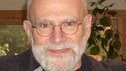
After a Friday night out, I caught the tail end of the Culture Show on BBC2 on 5th November. They discussed Oliver Sacks' new book, The Minds Eye which tells the story of various case studies whose senses or fundamental abilities - sight, 3D perception, speech - are gone or disrupted.
Sacks is a doctor, a professor of neurology and a best selling author who has written 11 books, mostly about people who've consulted him on a wide range of disabilities. He is now losing his sight.
Many years ago I was given his most famous book, The Man Who Mistook His Wife for a Hat and as I read it I was interested, although somewhat uneasy.
The first guest on the show rather liked the book. Others disagreed, citing possible voyeurism or exploitation. It was gratifying to hear the first guest then shift positions. I'm reminded that disabled academic Tom Shakespeare once wrote: "Oliver Sacks is 'the man who mistook his patients for a literary career".
Sacks is a doctor, a professor of neurology and a best selling author who has written 11 books, mostly about people who've consulted him on a wide range of disabilities. He is now losing his sight.
Many years ago I was given his most famous book, The Man Who Mistook His Wife for a Hat and as I read it I was interested, although somewhat uneasy.
The first guest on the show rather liked the book. Others disagreed, citing possible voyeurism or exploitation. It was gratifying to hear the first guest then shift positions. I'm reminded that disabled academic Tom Shakespeare once wrote: "Oliver Sacks is 'the man who mistook his patients for a literary career".
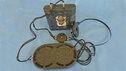
• Oh and back to the issue of the woman talking on her mobile phone when arriving at the 1928 premier of Charlie Chaplin's The Circus. The best explanation I found was it being a hearing aid made by Siemens in 1924.
Disability is, and was, everywhere.
Disability is, and was, everywhere.
More articles about
Bookmark with...
Live community panel
Our blog is the main place to go for all things Ouch! Find info, comment, articles and great disability content on the web via us.
Listen to our regular razor sharp talk show online, or subscribe to it as a podcast. Spread the word: it's where disability and reality almost collide.
More from the BBC

All the latest news from the paralympics.

News and views for people who are blind or partially sighted.

Weekdays 12.40pm. Radio 4's consumer affairs programme.

~RS~q~RS~_bbc_=0&__ip__=54.77.33.255&dnainitialtitle=Disability%20is%20everywhere%3A%20Charlie%20Chaplin%20premier%2C%20Apple%20Mac%2C%20Oliver%20Sacks&dnahostpageurl=http://www.bbc.co.uk/ouch/features/disability_is_everywhere_charlie_chaplin.shtml&dnauid=ouch:article:2354&s_baseHeadingLevel=1&dnashow=10&dnafrom=0&dnato=9&dna_encoding=utf-8&s_sssicomponent=1&s_sssiCommentCount=&dnacommentforumlistprefix=%5B_%5D&dnarecentcommentsprefix=%5B_%5D&s_commentprofileurl=/dna/mbouch/CommentProfile?&s_contact=0~RS~z~RS~42~RS~)

Comments
Sometimes you find what you look for!
The best theory I've heard is that many extras "doubled up" as women and this is a male extra trying to disguise his face.
Although perhaps he was using the hearing aid to do this!!
Complain about this comment
Tom Shakespeare accusing someone else of careerist opportunism? Has he no grasp of irony?
Complain about this comment
View these comments in RSS