 Home Home | Explore the BBC |
 | ||
 | 13 October |  |
| ||
| | | | | | | |
| |||||||
| Search ON THIS DAY by date | | |   | |||
| |||||||
| |||||||
|
|
| | | | | | | | ||||||||||||||||
| 1994: Loyalists announce a ceasefire Northern Ireland could be on the brink of peace after the three main loyalist paramilitary groups announced a ceasefire in Belfast.
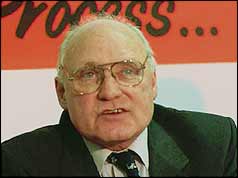
The move comes after the IRA declared a similar truce seven weeks ago. A statement by the Combined Loyalist Military Command, an umbrella group for the Ulster Volunteer Force, the Ulster Defence Association and the Red Hand Commando, was read by Gusty Spence, a convicted terrorist who was sentenced to 20 years in 1966 for killing a Catholic barman. Mr Spence, 61, said that the command would ''universally cease all operational hostilities as from 12 midnight on Thursday 13 October 1994". He added that the truce would be linked to the IRA's ceasefire. 'Closure of tragic chapter' Loyalist leaders said that the price for their agreement to the ceasefire was full inclusion at the table for peace talks, with loyalist parties close to the paramilitaries allowed in alongside Sinn Fein. The declaration was hailed by political leaders, ranging from Unionists to Sinn Fein's Gerry Adams. Albert Reynolds, the Irish Prime Minister, said the announcement marked the ''closure of a tragic chapter in our history''. The Ulster Unionist MP, David Trimble, also welcomed the ceasefire, as did John Hume, leader of the nationalist SDLP party. British Prime Minister John Major described the truce as "another very important part of the jigsaw falling into place". He added:"What we now need to do is absorb what has happened and decide how we move forward. "We will do that in our own time and in our own way." The British Government believes talks between Northern Ireland officials and Sinn Fein could be under way by Christmas. But Sinn Fein president Gerry Adams has urged Downing Street to immediately agree to all-party talks, and make concessions to the Republican movement. In a statement issued in Belfast, Mr Adams said: "The British Government is now the only agency with armed forces under its control which has not ceased its military activity. Mr Major must stop fumbling with this peace process. "This is a unique and historic opportunity for peace which the British government must grasp." Meanwhile, Sir Patrick Mayhew, the Northern Ireland Secretary, said a loyalist ceasefire was welcome and long overdue, adding that it must be unconditional. The loyalist paramilitary organisations have killed more than 900 people in 25 years and more than 3,000 people have died on both sides.
| |
| | | Stories From 13 Oct | | ||||||||||||||||
| | ||||||||||||||||||||||
| | | | | | | |
| |||||||
| Search ON THIS DAY by date | | | | |||
| |||||||
| |||||||
 | ^^ back to top |
| Front Page | Years | Themes | Witness | |
| ©MMVIII | News Sources | Privacy & Cookies Policy |




 Timeline