 Home Home | Explore the BBC |
 | ||
 | 8 November |  |
| ||
| | | | | | | |
| |||||||
| Search ON THIS DAY by date | | |   | |||
| |||||||
| |||||||
|
|
| | | | | | | | ||||||||||||
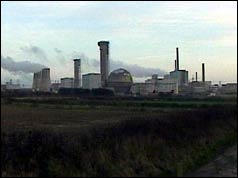
| 1957: Inquiry publishes cause of nuclear fire An inquiry into last month's fire at Cumberland's Windscale nuclear power plant has blamed the accident on a combination of human error, poor management and faulty instruments. The fire happened on 10 October during a routine maintenance operation. An unspecified amount of radioactive iodine vapour - iodine 131 - escaped into the atmosphere and on the advice of the health physics manager a ban on the sale of local milk was imposed. The Committee of Inquiry report made several recommendations including more speedy assessment of risks to public health following such an accident in future. Lessons to be learned However, it emphasised the fire had "no bearing on the safety of nuclear power stations being built for electricity authorities" and that the Medical Research Council was satisfied it was unlikely any harm had been done to human health. This point was emphasised by the Prime Minister, Harold Macmillan, addressing MPs in the Commons today. He announced three new committees will be set up to study the report and advise on lessons to be learned from the fire. Fire broke out at atomic pile [nuclear reactor] number one during a routine maintenance exercise called a Wigner release. This involves switching off the reactor's cooling device to allow graphite to heat up in a controlled situation to release the energy that builds up when graphite is irradiated. This procedure is known as "annealing". But on 10 October the energy was released too quickly because instruments not specifically designed for annealing showed incorrect readings. Milk ban The fuel melted, fuel cans burst, uranium was ignited and iodine 131 was released through the cooling chimneys. This collected on grass in fields around the plant which was in turn eaten by cows and soon absorbed into their milk. Local milk was analysed on 12 October. The following day milk produced by local cows was banned from sale. The report adds there was "no district radiation or inhalation hazard" and that to issue an emergency warning "would have caused unecessary alarm". Nevertheless, Sir Edwin Plowden, chairman of the UK Atomic Energy Authority has also pointed out a need for better communication beween the plant's management and various local interests. Windscale has been producing plutonium for the military since October 1950 as part of the Britain's weapons program which began in 1946. Reactors use natural uranium as fuel, graphite as the moderator and air for cooling.
| |
| | | Stories From 8 Nov | | ||||||||||||
| | ||||||||||||||||||
| | | | | | | |
| |||||||
| Search ON THIS DAY by date | | | | |||
| |||||||
| |||||||
 | ^^ back to top |
| Front Page | Years | Themes | Witness | |
| ©MMVIII | News Sources | Privacy & Cookies Policy |



 22 August 2003 - Successful year for Windscale removal