1994: Camelot wins UK lottery race
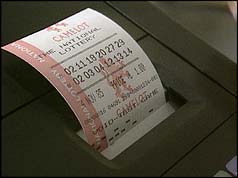
The Camelot consortium has won the contract to run Britain's first national lottery which starts in November.
The group predicts it will bring in a total of �32bn during the seven years of its licence. It plans to give �9bn of that to the lottery fund's five "good causes".
Camelot has pledged to give up to 30% of its takings to the fund split equally between charities, the arts, sport, National Heritage projects and a Millennium Fund.
From November, there will be a national draw each week when two people will share a jackpot of up to �5m to be announced on a special television programme - either on BBC or ITV, depending who wins the TV rights.
Each ticket will cost �1 and there will be smaller prizes - about 250,000 people are expected to win between �10 and a few thousand every week. Instant scratch cards will go on sale next spring.
|
 |
Camelot - owned by Cadbury Schweppes, bank note printer De La Rue, telecoms group Racal, US computer company GTech and British computer firm ICL - beat off seven other contenders. They included the bookmakers' favourite UK Lottery Foundation headed by billionaire businessman Richard Branson and former cabinet minister Lord Young.
Announcing the decision, national lottery director-general Peter Davis said: "Camelot was clearly the all-round best applicant... They were strong in every department."
But Mr Branson was not happy with the choice and said his consortium would have given all profits not used to run the lottery to the nominated charities and the arts.
"With this business there is no risk. It's a licence to print money," he said. "For a few shareholders to cream off hundreds of millions of pounds from this is absolutely wrong."
 Home
Home




 19 November 1994: Britain braced for first lottery draw
 In depth