1957: Cheers as petrol rationing ended
Petrol rationing, which has been in force in Britain for five months following the Suez crisis, has finally been abolished.
There were loud cheers in the House of Commons when the Paymaster General Reginald Maudling made the announcement that restrictions had been lifted because stocks were "at a satisfactory level".
|
 |
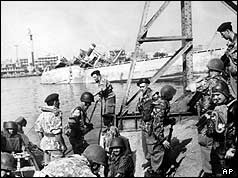
Rationing was brought in after Egypt's President Gamal Abdul Nasser took over the running of the Suez Canal from a Franco-British company in July last year. He had been refused funds to build the Aswan High Dam because of his links with the USSR and he nationalised the canal as a sign of Arab defiance against western powers. Supplies from Iraq to the Mediterranean across Syria - a staunch Nasser ally - were also interrupted.
Now traffic is set to travel freely through the Suez Canal - but the whole British economy has been affected and the motor trade, tourism, farmers and travelling salesmen have all expressed their relief that rationing has been lifted.
A spokesman for the Commercial Travellers' Association told the Daily Telegraph newspaper: "Our members will be overjoyed. Now they can get down to making up the leeway of turnover they lost through this wretched business."
Surcharges on petrol prices imposed to compensate garages and oil companies for loss of revenues are to remain for the time being.
A 10% cut in fuel oil supplies to industry - which resulted in a four-day working week for many factories - will continue until new arrangements have been made with the oil companies.
A conservative estimate suggests oil firms have lost about �4m in revenue.
Rationing has cost the Ministry of Power about �20,000 a week to enforce. Up to 700 driving instructors will soon return to their usual jobs after spending the last five months administering the rationing.
 Home
Home




 Nasser's mixed legacy