 Home Home | Explore the BBC |
 | ||
 | 1 July |  |
| ||
| | | | | | | |
| |||||||
| Search ON THIS DAY by date | | |   | |||
| |||||||
| |||||||
|
|
| | | | | | | | ||||||||||||
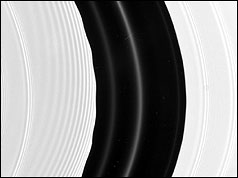
| 2004: Cassini captures Saturn's rings The international mission to Saturn, known as Cassini-Huygens, has successfully gone into orbit around the planet.
The $3.3bn probe fired its main engine for 95 minutes to slow it sufficiently to be captured by gravity. Within hours, it was sending back the first close-up photographs of the planet's rings. Cassini has travelled for more than six years and covered almost two billion miles (three billion km) to get to Saturn. The joint US-European mission will study the planet for four years. It will orbit Saturn 75 times, carrying out flybys of several of the 31 known moons and studying its famous rings. Jubilation There were cheers and clapping in mission control at Nasa's Jet Propulsion Laboratory in California when confirmation came through that Cassini has successfully completed the most dangerous moment of its entire mission, entering orbit at 0412 GMT. The spacecraft had been programmed to perform a series of manoeuvres to get into the right position. Scientists and engineers would have been powerless to intervene had anything gone wrong, as there was an 80-minute time lag for signals to reach Earth due to the massive distances involved. "It was kind of a nail-biter throughout but what you saw was the result of a lot of work by a lot of people and it all paid off just perfect," said Bob Mitchell, the Cassini programme manager. Close-up pictures Cassini had to travel through a gap in Saturn's ring system to reach the point where it entered orbit. As it did so it took the most close-up images yet seen of the planet's most famous feature. "That brings tears to my eyes. That's just gorgeous," said Cassini's imaging team leader Carolyn Porco on seeing the first pictures. The pictures were not yet close enough to tell scientists anything about the composition of the rings, although they did reveal differences in colour which might be caused by variations in the material which makes up the rings. Cassini is also carrying the Esa-funded Huygens probe, intended for delivery to Saturn's biggest moon, Titan, early next year in what is hoped to be the highlight of the mission. Titan has eluded study for years because it is shrouded by dense yellow cloud cover. Scientists believe it to be made up of a cocktail of organic elements, similar to the Earth before life began.
| |
| | | Stories From 1 Jul | | ||||||||||||
| | ||||||||||||||||||
| | | | | | | |
| |||||||
| Search ON THIS DAY by date | | | | |||
| |||||||
| |||||||
 | ^^ back to top |
| Front Page | Years | Themes | Witness | |
| ©MMVIII | News Sources | Privacy & Cookies Policy |



 In depth: Mission to Saturn
 The Cassini-Huygens mission