1980: Steel workers strike over pay
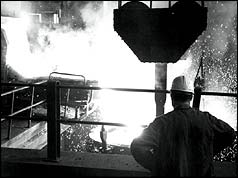
Steel workers are staging their first national strike for more than fifty years.
The shutdown at British Steel Corporation plants across the country is in support of the steelmen's demand for a 20% pay rise. The management has offered a 6% increase, with tough conditions attached.
The steel workers also fear British Steel's long term plans for profitability may mean the closure of some plants with the loss of thousands of jobs.
Today's walkout has been called by the Iron and Steel Trades Confederation, the biggest steel union. It has 90,000 members among the 150,000 staff employed by British Steel.
|
 |
The strike is also being backed by the National Union of Blast Furnacemen, which has almost 13,000 members who work for British Steel. Talks between the unions and management broke down in early December when the pay offer on the table was only 2%. Since then management has upped its offer to 6%, and proposed an additional 10% based on local productivity deals.
ISTC leader, Bill Sirs, said: "We are being looked upon as the worst producing steel nation in Europe, and those facts are not strictly correct at all."
He said the steel industry had improved productivity by 8% last year and 7% the year before and members were angered at having their pay rises linked to fresh productivity deals.
British Steel reported half-yearly losses of �145.6m last month. It claims it may need to lose around a third of the workforce to get back into profit. Workers at Port Talbot and Llanwern in South Wales fear their plants will be the first to close.
 Home
Home





 Steel hit by new tragedy