 Home Home | Explore the BBC |
 | ||
 | 16 January |  |
| ||
| | | | | | | |
| |||||||
| Search ON THIS DAY by date | | |   | |||
| |||||||
| |||||||
|
|
| | | | | | | | ||||||||||||
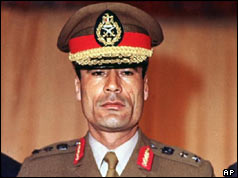
| 1970: Gaddafi takes over as Libya's premier Colonel Muammar Gaddafi has taken direct control of Libya four months after a bloodless coup that brought an end to the monarchy under King Idris.
Since the military coup of 1 September led by Gaddafi's "Free Unionist Officers", the country has been run by civilian ministers. But they were obliged to refer to the so-called Revolutionary Command Council on matters of state and twice threatened to resign. Now the 28-year-old colonel has taken the title of prime minister and appointed four members of his council to his new 12-member Cabinet. British bases forced to close Last month Col Gaddafi thwarted an attempted coup by his Defence and Interior Ministers and took charge of the main ministries single-handedly. Now he can delegate to ministers he feel he can trust. An outspoken Arab nationalist, Col Gaddafi set about freeing Libya from what he regards as colonialism by ordering Britain to abandon its military bases in the country. But in an exclusive interview with the Times newspaper, he denied that defence contracts with the West would be terminated and said Libya was still interested in buying nearly 200 British Chieftain tanks. However he would not be drawn on whether they would be sent to the Egyptian border - along with 50 Mirage aircraft already ordered - to be used against Israel. "Until now there has not been any decision that war is to be the only solution to the Middle East conflict," he said. "Therefore since this question has not arisen yet, there is no need to answer it." Egypt's President Abdel Nasser has been a great influence on the new leader and he has already strengthened ties with his Arab neighbour. He and his young followers have expressed his hope for a future where all Arab nations would be united under Islam. Soon after the coup, he began a process of "Libyanisation" of commerce and industry. Non-Libyans were forced out of influential positions and even Latin characters were removed from street signs in the capital, Tripoli, and in Benghazi. This has had a damaging effect on the economy with skilled expatriates forced to leave the country to look for work elsewhere. However Libya's oil industry continues to thrive and she remains the fourth largest oil producer in the world.
| |
| | | Stories From 16 Jan | | ||||||||||||
| | ||||||||||||||||||
| | | | | | | |
| |||||||
| Search ON THIS DAY by date | | | | |||
| |||||||
| |||||||
 | ^^ back to top |
| Front Page | Years | Themes | Witness | |
| ©MMVIII | News Sources | Privacy & Cookies Policy |



 20 December 2003