 Home Home | Explore the BBC |
 | ||
 | 7 December |  |
| ||
| | | | | | | |
| |||||||
| Search ON THIS DAY by date | | |   | |||
| |||||||
| |||||||
|
|
| | | | | | | | ||||||||||||
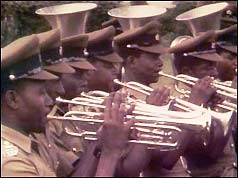
| 1979: Lord Soames to govern Rhodesia Cabinet minister Lord Soames has been named transitional governor of Rhodesia to oversee its progress into legal independence. He is to enforce law and order in the divided country, oversee fair elections and help form a government to advance the state to independence. The newly appointed Rhodesian Governor has full authority for a transitional period, and his post is an outcome of the Constitutional Conference at Lancaster House, London, this autumn. The all-party conference, which included opposition African Patriotic Front leaders, reached agreement on a new constitution, transitional arrangements and a ceasefire in Rhodesia. Lord Soames said he hoped to turn the country away from war towards free and fair elections and majority rule. The minister and his wife Mary, a daughter of Sir Winston Churchill, are expected to leave in the next few days. Rhodesia, a British colony since 1923, has been dogged by violence and international alienation during its struggle for independence. Strained relations In 1964, the Prime Minister of Southern Rhodesia Ian Smith rejected British conditions for independence. He made a unilateral declaration of independence a year later which was not recognised by London. Britain cut all ties with the newly renamed Rhodesia, which was also then subject to UN sanctions. The African nationalist Zapu and Zanu parties - although divided - are under the umbrella of the Patriotic Front. They took up arms against the regime and African guerrilla groups were involved in clashes with Rhodesian security forces, who were backed by South African forces after 1967. Constitutional settlement talks have taken place in the last decade but without success.
| |
| | | Stories From 7 Dec | | ||||||||||||
| | ||||||||||||||||||
| | | | | | | |
| |||||||
| Search ON THIS DAY by date | | | | |||
| |||||||
| |||||||
 | ^^ back to top |
| Front Page | Years | Themes | Witness | |
| ©MMVIII | News Sources | Privacy & Cookies Policy |



 Maverick or prophet? Your memories of Ian Smith's Rhodesia
 In Depth