 Home Home | Explore the BBC |
 | ||
 | 14 December |  |
| ||
| | | | | | | |
| |||||||
| Search ON THIS DAY by date | | |   | |||
| |||||||
| |||||||
|
|
| | | | | | | | ||||||||||||||||||||||||||||||||||||||
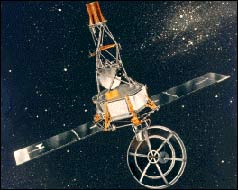
| 1962: 'Music of spheres' hails Venus fly-by The unmanned US spacecraft, Mariner 2, has taken the first-ever scan from space of the planet Venus.
The mission took the spacecraft closer to Venus than any had ever been. Radio contact was established at about 1900 GMT, heard in the form of strange chord-like sounds at the Goldstone tracking station in California. As the sounds were picked up at Goldstone for the first time, Dr William Pickering of the Jet Propulsion Laboratory said, "Listen to the music of the spheres." Long-distance signal The scan lasted a little over 40 minutes, seeking heat and microwave emissions breaking through the cloud cover around the planet. The continuing signal transmitted a wealth of information across 36 million miles (58 million km) of space. The readings will now be analysed to see if they indicate some form of life on Venus. James Webb, Nasa administrator, called the 110-day flight an unqualified success. He said Mariner's observation systems were working perfectly. "More may be added to Man's knowledge of the planet Venus than has been gained in all the thousands of years of recorded history," he said. Never before has a radio signal successfully been transmitted over such a distance. Setbacks The success of the mission is all the more remarkable as it had to overcome continual setbacks. The most recent was this morning when the electronic commander on board failed twice to trigger the radiometers on board the spacecraft. Finally at 1341 GMT Mariner 2 verified the radio signal had been received and acted on. Other problems included the loss of the craft's direction control nearly two weeks into the mission, possibly due to a collision with a small object. Then at the end of October, one solar panel failed, turning off scientific instruments for a week. The panel failed again at the beginning of last month, but by then Mariner 2 was close enough to the Sun for one panel to supply enough power. There was further tension during the past week when the space capsule began overheating in temperatures which turned out to be far higher than allowed for by scientists. In the event, however, instruments continued to function despite the heat.
| |
| | | Stories From 14 Dec
| | ||||||||||||||||||||||||||||||||||||||
| | ||||||||||||||||||||||||||||||||||||||||||||
| | | | | | | |
| |||||||
| Search ON THIS DAY by date | | | | |||
| |||||||
| |||||||
 | ^^ back to top |
| Front Page | Years | Themes | Witness | |
| ©MMVIII | News Sources | Privacy & Cookies Policy |




 Special report
 Space
Space What the weather is like on Venus