
The Indian Ocean - The Spice Islands - Coral reef off Pemba Island

Locations
The Indian Ocean - coastal waters
Location map
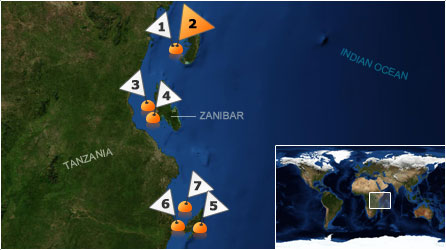
Introduction
The tropical Indian Ocean is home to the Spice Islands. Characterised by beautiful sandy beaches, fringing coral reefs and coastal mangrove forests, this is a vibrant nursery area for marine life, such as whale sharks, crabs, seahorses and a great variety of fish. The coastal areas are where humans have the most direct impact on the ocean's resources.
Coral reef off Pemba Island
Overview
The biodiversity of life on a coral reef can be greater than that in a rainforest. At night the animal part of the reef - the polyp - emerges to feed. Armed with stinging cells, its tentacles reach out to hunt prey as currents bring food from the depths.
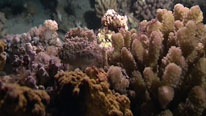
Some corals grow about 1cm a year, so large corals, like the table corals found here, often indicate a healthy ecosystem. The great variety of coral species found here include staghorn and pineapple coral. Corals compete for prime position where there is the greatest exposure to the sun. At night, slow-growing corals emit toxins to fend off faster growing rivals. These night battles keep the reef ecosystem healthy, as no one single coral dominates.
| Importance: | The health of coral reefs is an important indicator of the state of the world's oceans. These habitats are fragile and easily damaged by human activity. |
| Dive category: | Night dives, a great way of seeing how coral reefs transform at night, should be undertaken with training in how to communicate and navigate underwater in the dark. |
| Access: | Several specialist operators on Pemba Island offer night dives to the coral reefs around the island. |
Interesting for
- Coral - marine organisms that build reefs
- A biological profile of coral by Wikipedia.
- Coral
- Coral conservation
- The World Wildlife Fund's article on corals and their conservation.
- Coral reefs - home to 25 per cent of all marine life.
BBC related content
- Oceans presenter biography: Philippe Cousteau
- Oceans presenter biography: Tooni Mahto
- Oceans ultimate dives: Paul Rose's coral dive
- Oceans image gallery: The Indian Ocean - coastal waters
Episode region
BBC iD
BBC iDBBC navigation
BBC links

BBC © 2014The BBC is not responsible for the content of external sites. Read more.
This page is best viewed in an up-to-date web browser with style sheets (CSS) enabled. While you will be able to view the content of this page in your current browser, you will not be able to get the full visual experience. Please consider upgrading your browser software or enabling style sheets (CSS) if you are able to do so.
