
The Red Sea - Heat tolerant corals, Eritrean reef

Locations
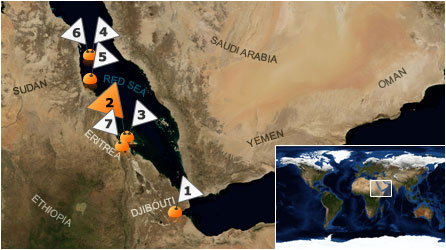
The Red Sea
Location map
Introduction
The Red Sea is one of the youngest oceans in the world and one of the warmest. The northern region, with its diverse array of marine life, is one of the most visited dive locations on earth while the southern end remains virtually unexplored. It's a global hotspot for marine biology and an important trade route throughout human history, linking the trade goods of India and the Far East with the markets of Egypt and Europe.
Heat tolerant corals, Eritrean reef
Overview
Coral is vital to the future of the ocean as it is home to a vast diversity of species. But rising temperatures in the world's seas are causing the death of coral reefs due to a process called bleaching, when corals turn white and die. As the Red Sea water is so warm it is an ideal place to study the impact of heat on coral.
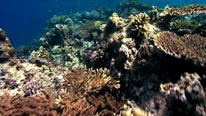
In Eritrea the coral is not only surviving these warm temperatures but is thriving. It is thought that there might be a heat resistant algae that exists in coral in the Red Sea. If this algae can be extracted, scientists believe there may be a way of saving coral around the world from bleaching.
| Importance: | These corals could hold the key to protecting coral reefs around the world. |
| Dive category: | This is a scientific reef dive which involves taking specimens of the coral. |
| Access: | Very few dive companies operate in Eritrea. The Foreign & Commonwealth Office advises against travel in certain parts of this country. |
Interesting for
- The heat tolerant reefs of Eritrea
- WeatherOnline looks at how the coral reefs of Eritrea offer hope for the global marine future.
- Hope for global marine future
- What is coral bleaching?
- Wikipedia explains coral bleaching.
- Coral bleaching
BBC related content
- Oceans presenter biography: Philippe Cousteau
- Oceans image gallery: The Red Sea
- BBC News: Coral bleaching causes reef death
Episode region
BBC iD
BBC iDBBC navigation
BBC links

BBC © 2014The BBC is not responsible for the content of external sites. Read more.
This page is best viewed in an up-to-date web browser with style sheets (CSS) enabled. While you will be able to view the content of this page in your current browser, you will not be able to get the full visual experience. Please consider upgrading your browser software or enabling style sheets (CSS) if you are able to do so.
