| Nine things you never knew about Nottinghamshire's most famous buildings | |
| 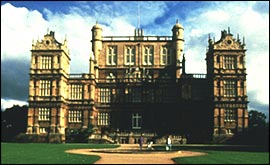 | | Wollaton Hall |
| | From Nottingham Castle to Wollaton Hall, here's nine facts about some of Nottinghamshire's most famous buildings. |
| | | | 1 | | Nottingham Castle was formally opened by his Royal Highness, the Prince of Wales, now the Midland counties museum and gallery of art, on the 3rd July 1878. |
| 2 | | The tallest building in Nottingham is the Victoria Centre which stands at 256 ft / 72m. It was built in 1972. This makes it taller than the Leaning Tower of Pisa (180 ft / 55m) but smaller than Big Ben (320ft / 106m). |
| 3 | | On top of the Council building in Market Square, four statues stand, representing Commerce, Civic Law and Prosperity and Knowledge - the hallmarks of the City of Nottingham. |
| 4 | | Wollaton Hall, built during the period 1580-1588, is one of the most ornate Tudor buildings in Britain. |
| 5 | | Newstead Abbey, which dates back to 1170, is said to have been built as a part of Henry II's penance for the murder of Sir Thomas Beckett. It is more commonly known as the former home of Lord Byron. |
| 6 | | The Queens Chambers in Market Square is decorated with mythical beasts as a well as a scowling Queen Victoria. |
| 7 | | The Great Northern Station, designed by Thomas Chambers Hine and built in 1856, which was superseded by the Grand Victorian Station in 1900, and is now home to a health club. |
| 8 | | Pierrepoint Holme Hall, built by Sir William Pierrepont in 1500, is one of the earliest brick built houses to survive in the county. |
| 9 | | Rufford Abbey is currently the subject of a Heritage Lottery bid to reveal more of what experts believe to be one of the most complete country estate landscapes in England. |
| | | |
|
|