Page 1
I at age 3 along with my Mother 2 brothers and sister were left homeless after a bomb hit our house my Mother was hurt and taken to the hospital,us children ranging in age from 3to 8 were left on our own and wandered the street, until we were picked up by some US soldiers and taken to a refugee camp ,where we stayed until 1944 until my Mother died ,my father was in the fire service at the time . we were fostered to an elderly couple in Portadown, I was very sick and was admitted to Belfast Chidrens hospital for almost 2 years ,recovering from TB...
My Father was not heard from .
I have no idea which street we lived on my name is Colin ,my brothers were Barry, Brian and sister was Stella, my Mothers name was Agnes ,here family were the Galweys from Portadown, and I have just in the past couple of years found some relatives. If you have any information that you can share, would be most happy
- C Lewis
Both my grandparents an aunt and two uncles, young children at the time, were killed in the Percy Street raid. My father and his younger sister surived. Can anyone give me any information about them. Their names are William and Mary Guy daughter Doreen sons Percy and Sidney. My parents did not meet until four years later and my father rarely talked about them. I would be grateful if anyone can tell me anything about them.
- Doreen Beare "My great grandmother, Mary Jane Mells, was killed in the Percy street air raid shelter. My father, William Mells , stayed in his grandmothers house, granny Thomson, in Beverly st. His father, William, was an air raid warden. Does anybody have any info?"
- Stephen Mells
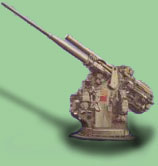
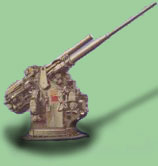
"People often ask if you can remember where you were when J.F. Kennedy was assassinated. I can - in a pub in Hampstead, London around 7.20pm. Similarly, I can remember when Chamberlain announced the beginning of WW2. I was standing on a hilly, stoney path called Laurel Hill just off the Ballynahinch/Drumbo Road in in the very rural Carryduff of the day. We lived in an unpicturesque damp thatched cottage that belonged to a farmer called Jim `King' Kelly. My father was unemployed. We had a battery/accumulator wireless (to call it a radio was to be sophisticated then) and he had just heard it on the news. His only comment was that a war might bring jobs. It did. Fast forward and we are now living in a better house near the Killynure Road/Ballynahinch Road. My father is working in the shipyard again. Soon afterwards he is bringing home reports of having seen German reconnaissance planes over the shipyard and of a particular one sweeping so low over the Musgrave Channel Road that he saw the pilot. Then the air raids started and a large part of the shipyard was damaged and one night he brought back home part of the green silk cord belonging to a parachute that had slowly let down a mine to devastate one of the gantries. The nightshift Fire Watch had seen the parachute descending and thought it was German pilot bailing out so one of them ran towards it with the idea of capturing him and was killed by the explosion. I wondered if the plane that did that had flown over our house. My mother was about to give birth in 1941 when I was nine years old. My father had called the midwife from Comber by knocking up Mr Anderson, who owned a quarry nearby, and asking to use his phone. By this time we could hear the German planes passing overhead. Shortly afterwards there were seven explosions as a plane dropped its bombs on Belfast. My sisters and me were allowed out of bed to look at the glow over Belfast, seven miles away. When the midwife arrived she said the planes were dropping - what she called - flaming onions on Comber. Flares. My father tried to assure her that they wouldn't waste bombs on Comber as it was too small. This really annoyed her. Even at that age I thought this must be the bravest woman I had ever met - she had come all the way in her Austin Seven in the pitch black by narrow secondary roads with blackout shields on the headlamps that only threw out a pencil-thick light. My father and I was told by the midwife to stand outside the house while the birth took place. Standing outside in the chilly air we could hear the German bombers going overhead quite clearly. The engines slowly gave off a high note followed by a low note much like the petrol-driven Belfast to Ballynahinch bus climbing what used to be called The-Three-Mile-Hill that ran from Newtownbreda to Purdysburn. Their flight seemed just as leisurely. The rumours later was that the RAF fighter pilots had been at a party and were too drunk to intercept them. People seemed to prefer that improbable version rather than feel they weren't being protected. My father thought that if the bombers were challenged they might drop their bombs anywhere in order to lighten the plane and escape. On Carryduff?... My three young sisters were allowed to stay indoors. It was a still birth and the midwife took the dead baby away with her. On the second German air raid a couple of weeks later one ack-ack gun was firing at the planes from the Killynure Road/Ballynahinch Road junction. That was fifty yards from where we lived. The house shook with each shell fired and slates came sliding off the roof. My father, with the cheek of the devil, went out to tell the gun crew they shouldn't be so near the houses but he was soon back saying a revolver had been pointed at him. No German planes had been brought down. The only causalilty of the shelling was a shipyard joiner my father knew. He had come out to the front door to watch and was killed by a piece of shrapnel falling to earth from one of the shells from the ack-ack gun. During the next few weeks during the night you would hear the sound of feet in the still air. It would grow louder and louder. Hundreds, maybe thousands of people, including children, were walking the roads out of Belfast and looking for places to stay the night. Our house was crammed full of people for weeks on end. Some people were even camping in our garden. The ditches nearby had whole families clinging to each other for warmth. After that the evacuation of children to the countryside began. Whole buses of them passed our door continuously with the children holding souvenirs of the raids - bomb parts, heavy German plane machine-gun shells. The Northern Ireland Transport Board were short of buses so they borrowed numbers of them from England. It was a novelty to ride in a blue Yorkshire bus for example. Others had Blackpool and other English cities written on the sides. It made us feel like cosmopolitans. Air raid precautions were practised in Belfast after that. One was the burning of hundreds of barrels of tar mixed with oil and branches of trees. That was to make a smokescreen to blot out targets the German pilots wanted to see. But the smoke blotted out the most of the Ormeau Road during daylight. There was a huge pall of smoke over the city for days afterwards. As children we watched it from a distance from our school in Clontonacally which was on high ground. We also saw a few barrage balloons riding the skies over the city. This was supposed to stop German planes from coming down too low. Of course it was all too late and besides most people knew it was easy enough for a plane to machine-gun a balloon. At our school we had lectures and drills on what to do if enemy planes appeared over our school - hug the walls and make for the air raid shelter. Then there were the gasmasks to be worn in case of poisinous gas being dropped. To wear them for five minutes was to suffer suffocation. Anyway, as children, we entered into the spirit of things and devised war games of our own. Climbing trees with stones to bomb one another was one game. We devised dozens of them. In our innocence war could be fun."
- Wilson John Haire
"As a wee boy of six, I along with my father Big John and my brother Billy lived in my grandmothers house, in Templemore Avenue off the Newtownards Road. On the night of the 3rd raid we took off for the hills up Castlereagh Road. Our house was devastated along with the public library across the street and several streets beyond that. Ironically, my Aunt & Uncle, Madge & Jim Beattie, along with their three kids, Wee Jim, Anna and Lil, who had taken over our old house, on Tamar Street off Dee Street, in 1938 after my mothers death, all went into a shelter along with another family. A land mine landed nearby and exploded. All the females survived and all the males died as a result of the blast. After this lot our family was evacuated to relatives in Carryduff, then to Bangor and finally back to East Belfast in 1945."
- John Shannon.
(Retired and living in Toronto, Canada)
"My father was a curate,at this time,in East Belfast,and he told me of his parish being almost destroyed with the first bombing raids,and also of taking shelter under the kitchen table............most of his parishoners ran into open fields and spent the night in ditches."
- Carol Griffith
"My Parents came from the Whitewell area which suffered badly during the blitz, and as a young boy I remember my Father telling me about seeing parachute mines dropping around the Throne Hospital. My friends and I used to play in this huge crater just behind the hospital, not realising it had been made by one of the mines! I've often wondered if the crater is sill there."
- John Blair
"Easter Tuesday 1941, school was closed for the Easter holiday and we children were free to play all day at the various street games which were so popular at that time. No one I knew went away for holidays at Easter and especially not now when war was raging throughout Europe."
- Ruth McCart
Read Ruth's full story...
My grandmother told me that an incendiary bomb fell across the road from her house in Mashona Street (East Belfast). Luckily (for her and me) it didn't go off - my father hadn't even been born by that stage!
- Alan McBride
During the raids over belfast we had to run to the falls park or dunville park in the middle of the night. I was 9 years old and you knew deep down that something terrible was going to happen. We would have to hurry and get dressed and once my mother turned and went back home to get her fox fur collar. we also took cover in clonard monastry and i to hear the monks singing in the distance, very moving and haunting sounds whilst the bombs dropped around us
Ann McGrath
I am the only surviving member of my family who lived through the Percy Street raid. My father, Thomas Harvey, was killed and received the Defence Medal. My mother and aunt were wounded, our house destroyed. My mother was allowed out of the hospital (in borrowed clothes) to bury my father. I was 5 years old when he was killed.
- Mildred Thompson
"My regiment was stationed at the Pollock dock in Belfast. We were sited between the Harland & Wolff Shipyard and the "Ark Royal" aircraft carrier, which was in dock for repair. During the night of the Belfast Blitz the loud throbbing of a great number of aircraft overhead wakened us."
- Frank Johnston (Royal Artillery)
Read Frank's full story... More of your stories - Page 2 >> | 


 print version





















 POST A COMMENT ON THIS ARTICLE