India is a vast country, whose size and diversity can be very difficult to grasp. It is equivalent in area to the whole of Europe, excluding the former Soviet Union, with a population of approximately one billion people. Many different languages are spoken and there are many different faiths including Hindu, Muslim, Christian, Sikh and Buddhism.
Largely because of pressure on land and widespread unemployment, there has been a tradition of emigration from India. Many Indians were attracted to the United Kingdom where they could earn much higher incomes than they could at home. Others migrated to East Africa though since the late 1960s many of these also came to the United Kingdom.
While migrants came from all over India, the majority came from the Punjab and Gujarat, two provinces in the north-west of the country. Places of emigration were often highly localised and sometimes whole villages migrated. Destinations were also often highly localised, with migrants who had been friends or neighbours in India gravitating to the same places when they went abroad. This process took the form of chain migration: prospective migrants in India learned of employment opportunities and accommodation from relatives and former neighbours who were already working overseas. Migrants retained strong links with their place of origin, keeping in touch through frequent visits and by regularly sending money to relatives who had stayed behind.
Migrants often maintain their family ties, even over large distances. For many Indians, family life means living with grandparents, parents, aunts, uncles and children - all residing under one roof, pooling their labour and sharing their land, business, or other property. This is not always possible in the UK where the houses are usually too small or where immigration restrictions did not permit the whole family to migrate. Indian families here often consist of parents and children only.
Indians first arrived in Northern Ireland in the 1920s. The first to come were Sikhs who arrived as seamen or as former soldiers who had served abroad with the Indian Army. Many of these early migrants settled together in the north-west of the province. Some Indians came to Northern Ireland, as elsewhere in the UK, for education particularly in the medical profession. Many liked the country and decided to stay. Later migrants set up in business, frequently beginning on a very small scale as door-to-door salesmen. Indian entrepreneurs are among the most energetic of businessmen and have created many jobs in which people from Northern Ireland, as well as Indians, are employed.
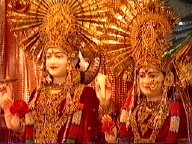
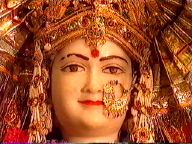
Many of the Indians who have migrated to Northern Ireland more recently are Hindus. About 200 Hindu families now live in the province, most of them originally from the same small area in the Punjab. With over 900 million followers, the Hindu religion, or Hinduism, is the world's third largest religion. It is practised in many countries but is closely associated with India, where it has its origins and where 800 million of its followers live today. While Hindus believe that there are literally millions of gods most believe that in some way these are all aspects of the one divine essence, just so many facets of the one god.
A Hindu's relationship to other Hindus is regulated by their membership of one of the four main caste group. Every Hindu is born into a particular caste and children are automatically members of their parents' caste. The Hindu religion organises the castes into these four main ranked categories (called "varna") on the basis of their religious purity and spirituality. Brahmins, or priests, are at the top of this scale, followed by the less pure warriors (or Kshatriya), the traders and craftsmen (Vaishyas), and the ordinary workers (Shudras). At the very bottom of this scale, and outside the caste system altogether, are the "outcastes" or "untouchables" who traditionally did all the dirtiest jobs and who are considered to be very impure. Since an individual is said to be born into one of these high or low castes as a reward or punishment for the quality of their behaviour in a previous life, people try to do good deeds during their lifetime and are careful to observe the rules of their religion.
Religion also affects the diet of Indians. The majority of Hindus are vegetarian and would never eat beef because they consider the cow to be sacred. Given the extent of poverty in India, this belief appears ridiculous to many westerners who suggest that the cows be slaughtered and the meat eaten. But cows are important in India because they provide dung for fertiliser and fuel, as well as pulling the ploughs and carts so essential for the agriculture on which much of India depends. It therefore makes good sense not to eat them! Northern Ireland itself has benefited as the arrival of Indian cuisine has greatly enriched our own eating habits by introducing us to a wide range of new vegetables, spices and styles of cooking.