Crataegus monogyna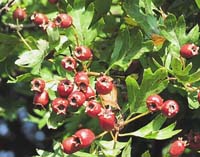 Not every garden is large enough to accommodate our larger native trees. But don’t be discouraged; there are many small trees and shrubs that are suitable for the smaller garden. Like September’s dog rose, there are numerous shrubs that are easy to manage, make the perfect living boundary and still provide a home for an amazing array of animals and insects. Photo: WTPL/Peter Paice from Belfast. Not every garden is large enough to accommodate our larger native trees. But don’t be discouraged; there are many small trees and shrubs that are suitable for the smaller garden. Like September’s dog rose, there are numerous shrubs that are easy to manage, make the perfect living boundary and still provide a home for an amazing array of animals and insects. Photo: WTPL/Peter Paice from Belfast.
This month, take a closer look with the Woodland Trust at one of our widespread and popular deciduous shrubs – Crataegus monogyna – better known as hawthorn. This bushy shrub, or small tree, can be found in woodland, particularly along woodland edges, but perhaps is most often associated with hedgerows where, if trimmed, the shrubs can form a thick, stock-proof boundary. 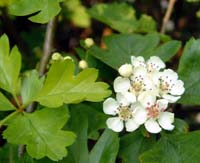 The distinctive toothed leaves appear in March and, if left untrimmed, are soon followed by a mass of white, scented blossom in May. A stunning display which is only matched by autumn’s show of fruit. Phenology recorders keep a look out for October’s wonderful display of ripe fruit! The fruit, known as haws, can vary in colour from bright to dark red and are an obvious favourite with our feathered friends. Blackbirds and mistle thrushes are just some of the birds that will thank you for choosing to add hawthorn to your garden. The distinctive toothed leaves appear in March and, if left untrimmed, are soon followed by a mass of white, scented blossom in May. A stunning display which is only matched by autumn’s show of fruit. Phenology recorders keep a look out for October’s wonderful display of ripe fruit! The fruit, known as haws, can vary in colour from bright to dark red and are an obvious favourite with our feathered friends. Blackbirds and mistle thrushes are just some of the birds that will thank you for choosing to add hawthorn to your garden.
Photo above: WTPL/Margaret Barton.
Did you know?
Some believe hawthorn to have mystic or sacred associations, and are reluctant to cut down the species for fear of the bad luck that may result. Often we find a single hawthorn remaining in a field as a ‘fairy thorn.’ Superstitions also persist about the hawthorn flowers, with some believing it bad luck to bring the blossom indoors. 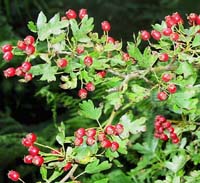 Whatever your view, you will be sure to adore the beautiful May blossom, stunning autumn haws and, of course, the variety of birds which will grace your garden. Plant your hawthorn between November and March and make a wonderful addition to your wildlife haven. Whatever your view, you will be sure to adore the beautiful May blossom, stunning autumn haws and, of course, the variety of birds which will grace your garden. Plant your hawthorn between November and March and make a wonderful addition to your wildlife haven.
Photo: WTPL/Peter Paice from Belfast.
Back to Terrific Trees homepage |