Rosa canina
Not every garden is large enough to accommodate our larger native  trees. But don’t be discouraged; there are many small trees and shrubs that are suitable for the smaller garden. Small trees and shrubs are easy to manage (they can be left to grow or cut back); they make the perfect living boundary and still provide a home for an amazing array of animals and insects. trees. But don’t be discouraged; there are many small trees and shrubs that are suitable for the smaller garden. Small trees and shrubs are easy to manage (they can be left to grow or cut back); they make the perfect living boundary and still provide a home for an amazing array of animals and insects.
(photo: WTPL/Peter Paice from Belfast) This month, the Woodland Trust invites you to take a closer look at a particularly pretty shrub – Rosa canina, better known as dog rose. This wild rose, usually associated with old hedgerows, is one definitely worth considering for even the smallest garden. It’s an upright shrub, with long and prickly stems. In May and June, the dog rose will brighten up the dullest of surroundings and will add colour to your garden with a mass of delicate flowers. These large, beautiful flowers are scented and can vary in colour from pink to white. 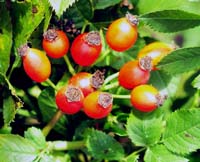 By September, the dog rose offers its ripe fruit – our well-known rose-hips. The scarlet rose-hips bring wonderful autumn colour. Phenology recorders look out for the first signs of the ripe, red berries! Small birds will thank you for the seeds contained within the rose-hips; they have an apparent ability to extract the seeds, despite the tiny, protective hairs within the hip. By September, the dog rose offers its ripe fruit – our well-known rose-hips. The scarlet rose-hips bring wonderful autumn colour. Phenology recorders look out for the first signs of the ripe, red berries! Small birds will thank you for the seeds contained within the rose-hips; they have an apparent ability to extract the seeds, despite the tiny, protective hairs within the hip.
(photo: WTPL/Peter Paice from Belfast)
Did you know that the rose-hip flesh is a good source of vitamin C? The more adventurous among us may wish to collect the hips to make syrup or wine. Plant your dog rose between November and March and ideally in a heavy soil. In return, you’ll be thrilled with the beautiful summer bloom and striking autumn fruit. A perfect and unquestionably pretty addition to your wildlife haven!
The BBC is not responsible for the content of external websites Back to Terrific Trees homepage |