Prune, Prune, Prune
8 January 2009  Winter is a busy time for the secateurs. There is so much pruning that must be carried out before growth recommences in spring. Winter is a busy time for the secateurs. There is so much pruning that must be carried out before growth recommences in spring.
Fruit trees need to be pruned to encourage the production of spurs that carry the apples and pears. With trained trees the previous year's growths are shortened back to two or three buds to help fat flowering buds to form. Bush trees need to be tackled to remove dead or diseased wood and any branches that are growing into the centre of the tree.
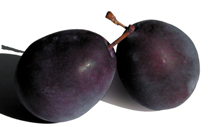 To reduce the risk of disease spores entering through open wounds fruiting cherries and plums are pruned in summer rather than during winter. To reduce the risk of disease spores entering through open wounds fruiting cherries and plums are pruned in summer rather than during winter.
All the fruit bushes such as blackcurrants, gooseberries and cranberries should be pruned now to keep the centre of the bush open and remove older, less productive branches. Cut them as close to ground level as possible to encourage strong, new shoots from the base.
Low branches on trees that make grass cutting difficult should be removed now before sap starts to flow. Where there are two upright branches forming a narrow angle then cut out one branch to prevent the branches splitting where they join. This should be carried out when the trees are young and before the branches become heavy and prone to wind damage.
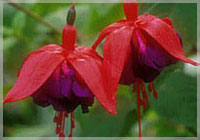 Big, old, neglected shrubs may be due to be completely removed but it is possible to rejuvenate some species. Escallonia, philadelphus, mahonia, rhododendron, fuchsia, buddleja and forsythia are just some of the shrubs that may be successfully cut hard into old wood and will produce new growth from dormant buds. Conifers are less likely to get a new lease of life but yew tree and juniper will re grow after a hard pruning. Big, old, neglected shrubs may be due to be completely removed but it is possible to rejuvenate some species. Escallonia, philadelphus, mahonia, rhododendron, fuchsia, buddleja and forsythia are just some of the shrubs that may be successfully cut hard into old wood and will produce new growth from dormant buds. Conifers are less likely to get a new lease of life but yew tree and juniper will re grow after a hard pruning.
There is often confusion regarding how and when to prune clematis so I am going to deal with that subject separately.
Related Links
Clematis
back to John's index page |