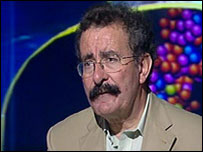
Professor Robert Winston is well-known for his acclaimed programmes on BBC One, and this Autumn he returns to our television screens in the landmark series A Child Against All Odds. Infertility is a growing problem in the UK and within a decade one in three couples is likely to be affected. Lord Winston draws on his 30 years of experience in the field to present this landmark series that follows the stories of couples desperate to conceive as they receive the newest treatments available. Whilst visiting the county as one of the guest speakers at the BA Festival Of Science 2006, he spoke to the BBC's Susie Fowler-Watt. SFW: How did you end up going into fertility as a specialisation?RW: At the time it was an under-researched area of medicine, but to me it seemed to have huge promise. It was a mixture of dealing with that very special area of peoples lives, a lot of social medicine and very serious science in the research. I think it was a wonderful area for a young scientist, medically qualified, as so much of reproductive medicine has lessons for the whole of biology and that's fundamental in cancer, in heart- disease and a whole range of other things. SFW: During the time you've worked in this field, fertility is now much more talked about. You hear celebrities talking about their IVF, stories in the press everyday – is that a good thing?RW: I think that when I started it was something that people didn't want to talk about. Of course, the focus on reproduction has gone too far. Now every half-baked story becomes front page news and that’s nonsense. It's become very commercial, I'm sad to say there’s a certain amount of exploitation of some people, but that doesn't detract from the fact it's a very important area of medicine. SFW: You working on exciting new research at the moment.RW: What we're trying to do is modify the genes of pigs. If we're successful, we'd be able to use pig organs for human transplantation. Every 15 minutes somebody is put on a transplant waiting list. If you accept it's ethical to eat animals, it much more ethical it seems to me to use them to save human life, so the potential for this work is massive. We need to change the genes to make certain the immune system doesn't attack the pig organ when it's transplanted and it looks as if we might be successful in that. I much emphasise that the pigs don't suffer in the slightest. The great thing about the kind of animal search I do is that we basically breed the animals after an injection so in fact, they live in very good surroundings for their entire lives. If the gene constructs that we're injecting at the moment work, you could see a plausible clinical application for some of this work quite soon. SFW: You're here for the BA festival. Do you think the public are as excited as they should be about science, or is there work to be done to get the public on board?RW: My view is the public have a huge degree of understanding of science. I think festivals like the BA do more than just promote understanding… it's also for the scientists to hear what the people think about their work and I'd like to see that engagement much more prominent in science generally. I think the great responsibility of the scientist today is to demonstrate that it's not the scientist who owns the science, but we're doing it on behalf of society. I think that requires us to show that we're doing stuff with absolute ethical probity and that has to be much more demonstrated. I think scientists do have ethical standards, very high ones, but that’s not always obvious to the public and I think the BA Festival does a lot to help that kind of thing. I also think that we need to be clear about conflicts of interest and I think we should be seeing science as part of the culture of society, just as Shakespeare is part of our culture. Britain is a very, very advanced country scientifically – it's only second to the United States. I think it's important for the public to understand that. But understanding the science isn't difficult as almost any scientific subject can be explained quite simply if needed. Lord Winston was speaking at the BA Festival Of Science on Tuesday, 5 September, 2006. | 







 Look East