BBC HomeExplore the BBC
This page has been archived and is no longer updated. Find out more about page archiving.

29 October 2014
NorfolkNorfolk

BBC Homepage
England
»Norfolk
News
Sport
Weather
Travel News

Entertainment
Features
In Pictures
Faith
Kids
Voices

Saving Planet Earth
How We Built Britain

BBC Local Radio

Site Contents

Contact Us

Voices: The way we speak


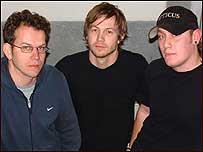
Norfolk rock band Crone
Crone were told their accent didn't fit

Norfolk dialect and identity

Unlike other regional accents, Norfolk's suffered little change over the generations because of the county's rural nature and its static population - but now some experts believe we are starting to lose our identity as our accent is ebbing away.


You only have to walk around any town or village in Norfolk to hear examples of the local accent. But to many people it's not as strong or as widespread as it once was.

That’s why the group FOND, Friends Of Norfolk Dialect, was formed in 1999 to record as many of the county's traditional words and sayings as possible.

Losing our accent

Dr Ken Lodge, a lecturer in linguistics at the University of East Anglia, thinks the rural nature of Norfolk has helped to preserve the accent because historically people tended not to leave the county and the number of those coming into the area was also quite small, although that’s now changing.

"As more and more people come in from other areas outside Norfolk they bring their own types of language and accent with them," he said.

"Dialects and people get mixed up more and more and so, of course, eventually it will have some kind of influence on the way Norfolk people speak as well.

"So over the years there will be a change and that’s quite normal and natural and has nothing to do with Norfolk specifically – it happens all over the place," he added.

He doesn’t believe local accents will ever disappear entirely because they are so strongly rooted in local communities and unless the fabric of society changes completely the accent will still be there.

But Keith Skipper, author, broadcaster and founder member of FOND, thinks more could be done to reduce the speed of change.

"I think there could be far more encouragement in our schools, especially in primary schools, and I think if they do it there it may help," he said.

Hindered by accent

To some, like the members of the Norfolk band Crone, a distinctive Norfolk accent was a bit of an issue.

It was suggested to them that they should lose their accent if they were really serious about progressing in the music business. Band member Jason Wick said it wasn't what they were expecting.

"Disappointed at first I suppose... and a little bit angry too but after that I guess we just sort of resigned ourselves to thinking well that’s their loss really," said Jason.

"We’ll just stick how we are and hopefully someone will take us on for how we are," he added.

Prejudices

Dr Ken Lodge, from the UEA, says this kind of prejudice based on an accent isn’t acceptable.

"I think people need to change their whole attitude to accents generally not to have some feeling of inferiority, not to be made to feel inferior," he said.

"The people who do that are actually wrong in their attitudes anyway and so a great deal of education needs to be done to make people's attitudes change.

"Sadly one would have hoped that had been happening over the last 40 to 50 years but it hasn’t happened enough, I think," he added.

Language trends

It's not just accents which change over time. The actual words we use to describe things evolve. Only in the last couple of years has the word 'chav' become part of everyday language to describe someone who wears too much cheap jewellery and fake designer labels.

Swear words, and words which people find offensive change too with time. To a Victorian gentleman it would have been considered an insult to be called a cad, but now it’s a word which is rarely used.

Claire Powell, from the BBC’s Editorial Policy Unit, says words fall in and out of favour from generation to generation.

"Casual terms of racist abuse and pejorative terms about people with disabilities were quite frequent even in the 1980s," she said. "Nowadays we simply wouldn’t broadcast that kind of language." 

BBC Radio Norfolk's Maggie Secker investigates the changes in use, and our attitudes towards, modern language.
audioPlay: The acceptable face of bad language >
audioPlay: The changing language of education >
audioPlay: The Norfolk accents in language >
audioPlay: The use of language in the media >
Audio and Video links on this page require Realplayer
The language of love >

Today women swear a lot more than they have ever done, and not everyone in Norfolk is happy about that, with some of the most conservative views coming from men. Listen to the Voices audio to hear more views about changing patterns and social norms which drive the evolution of our language.

last updated: 22/08/05
Have Your Say
Do you think the Norfolk accent has changed over the years?
Your name:
Your comment:
The BBC reserves the right to edit comments submitted.

John Langley
I've been coming to North Norfolk for 30 years since I married. Find the accent and word usage fantastic. My wife still buys railway tickets from the man behind the wicket. Our builder fills his van with daysal. John
Tue Oct 31 15:24:24 2006

Alun
I'm from Bedford but I do go on holiday to Gt Yarmouth quite often and I've notice the way the locals sound but thought nothing of it, it's just another accent to me. Has the Norfolk accent changed over the years? Yes, like all accents in the UK it's got diluted and is being influenced by London. The older people sound much broader than the young who now th-frontiing (they don't say th, so think becomes fink). This is no different than where I live or even Manchester or anywhere else for that matter. I don't mind the Norfolk accent and I'd strongly discourage anyone from speaking with a boring estuary accent because I find it almost impossible to understand. One day I was ringing round to get the best deal on car insurance, I spoke to two operators, one from Norwich and one from Essex, the former sounded pleasent and soft and easy on the ear but the latter was a horrible hard sounding accent far worse than any Norfolk accent I've heard. Anyway I think the Norfolk folk under-rate their accent, the BBC poll said: "UK respondents ranked accents including the Nottingham, Leeds, Norwich, Northern Irish and Lancashire accents ahead of the London accent in terms of pleasantness."
Mon Oct 2 01:59:44 2006

Marie
I find the norfolk accent audibly ugly. I think it has diminished over the years even within my generation and I can't say that I will miss it. I worked hard at losing my accent when I was a teenager. In fact, to be honest, I'm not even sure I 'had' a strong one but I was determined nonetheless to ensure I didn't. I heard the broad norfolk accent on TV, early on Sunday mornings, on the farming programs and I was traumatised and scared enough to make sure I 'never'sounded like that...ever. I used to read out aloud to myself and make sure that I was actually speaking English which was clear and understandable.
Sun Sep 3 23:25:00 2006

Kepton Troshin
Accents change. Languages change. Those are linguistic facts. Why does everyone bemoan the 'loss' of an accent when all it's doing is its natural linguistic evolution? We've more American and Northern slang here (Cromer) now than any 'authentic' naaarfuk (excepting a few of us locals) and do I care? Nar not likely. (Global situation, are accents becoming homogenised by the universal broadcast media, or is it giving play to local accents to spread, e.g. through heavily accented songs such as those by The Arctic Monkeys?) My accent was taken away by the schools system (elocution lessons at the age of 5), and it's been weird since then communicating with people who think I'm posh. Bor, I'm happy with my accent, all of them.
Wed Jul 26 11:00:54 2006

Mark
Often overlooked is the very distinct "Norwich" dialect which has it's own very different vocabulary from Norfolk and evolved from flemish/dutch immigrants.
Fri May 12 13:54:53 2006

Simon
As a young person who has lived in Norfolk I find it fine to have an accent until you mix with people from down South who make you feel inferior. We don't all work on the farm so why should we sound like it. I am trying to kick the accent.
Thu Oct 6 17:00:12 2005

Lynda Edwards
I am not a native of Norfolk but, during the past 40 years I have lived here, I have noticed there are many different Norfolk accents! I have observed the difference between the accents in North Walsham and Aylsham - Fakenham people speak differently to those in Cromer. As for South Norfolk - well that is a different county isn't it? I think that, as long as people speak clearly to outsiders in business, the Norfolk accents should stay alive and well.
Fri Aug 26 19:10:30 2005

Sarah
I was told by one teacher at primary school to talk properly, ie., without a norfolk accent. I ignored her, I was proud of the way I spoke! But I still lost most of my accent when i went away to university. The main change I notice now is the rise of "city" versions of the local accent, and the dwindling of rural dialect. I miss it.
Mon Aug 22 14:52:56 2005

Colin
Well I dont think the Norfolk accent has changed much, but the number of people using it has fallen. This is more to do with the accent not being acceptable to those employing people and not the attitude of most local Norfolk people. Most parents here seem determined to get rid of their childrens Norfolk accent, they teach them to speak in a neutral way or proper queens english. This is because its much easier to get jobs if you are a good communicator and speak with neutral accent. I think also the local population is now more mobile than used to be the case. With many people coming here to get jobs from London and other places, as well as local people migrating to other counties to get jobs elswhere. This all helps to lessen the voice of the Norfolk dialect and its accent.
Sun Aug 21 08:19:19 2005

Lesley Routhier
I left Norfolk in 1966 and have lived in Canada since that time. I return to see family quite frequently and I've noticed the accent is not so strong as it used to be. In my home town there are quite a number of residents now who have moved in from other parts of England, I think this is diluting the Norfolk accent.
Sat Aug 20 21:08:50 2005

Tom
It seems that, recently, younger people in Norfolk find it necessary to speak with a more 'estuarine' accent than with their native accent. I think this may be due to the influence of television and popular culture. However, it is still a shame that they cannot and possibly do not have pride in their native accent. Many people try to impersonate the Norfolk accent, but few succeed. People should realise that it is special.
Sat Aug 20 20:28:45 2005

SEE ALSO
home
HOME
email
EMAIL
print
PRINT
Go to the top of the page
TOP
SITE CONTENTS
SEE ALSO

Voices: be part of the biggest survey into how we speak. Tell us the words you use in your part of the Bristish Isles


About the BBC | Help | Terms of Use | Privacy & Cookies Policy