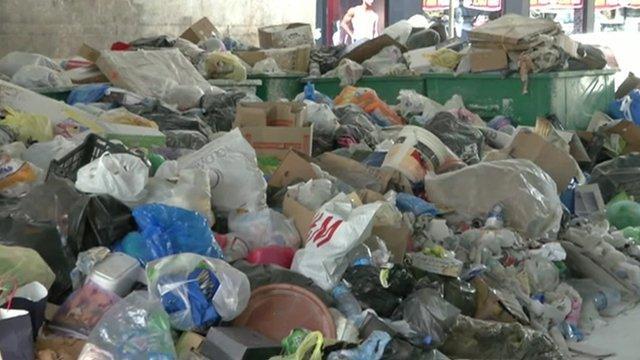
Protests show no sign of subsiding
Lebanese PM Tammam Salam has promised to take action against police who used force to disperse demonstrations against piles of uncollected rubbish.
He has warned that the country faces a political crisis and that there is no money to pay the salaries of a large number of public sector employees.
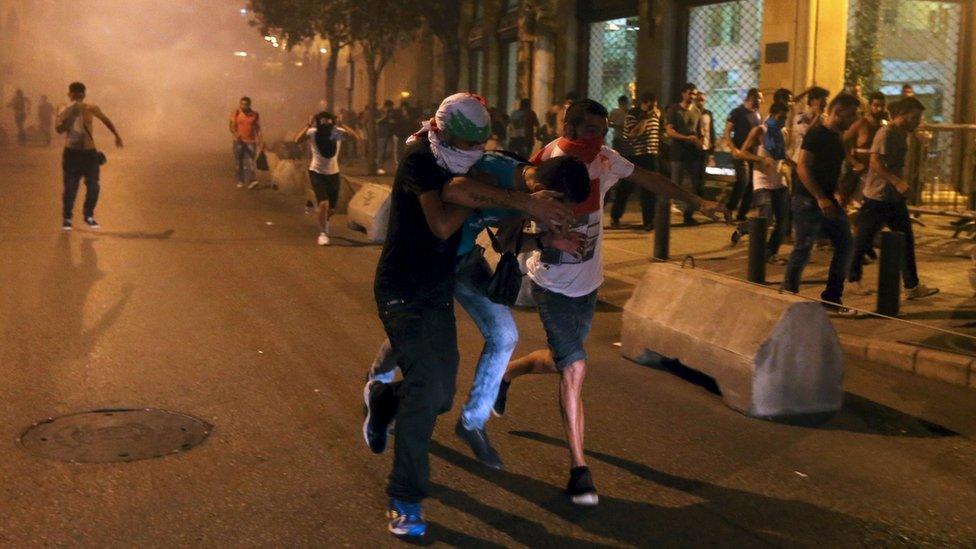
Police again fired water cannon at protesters in Beirut on Sunday after dozens were wounded on Saturday.
Lebanon does not have a president and parliament remains in a stalemate.
The Beirut protesters are venting their anger at Lebanese politicians, as Jim Muir reports
Saturday's protest was attended by thousands and the biggest to date over uncollected rubbish.
Mr Salam said that those security forces guilty of injuring demonstrators would be held accountable.
He told a news conference on Sunday that the right to demonstrate was protected by the constitution.

The protests against uncollected rubbish have been organised by an online group calling itself 'You Stink!' and other civil society groups

Protesters blame political paralysis and corruption for the failure to resolve the rubbish crisis

The protests have spread to other parts of Lebanon
On Saturday police fired tear gas, rubber bullets and water cannon against thousands of protesters in downtown Beirut. Gunfire echoed through the streets into the night.
At the same time Mr Salam has warned that the lack of a parliament may preclude the government from selling bonds, affecting the country's credit rating.
"The garbage crisis is what broke the camel's back, but the story is much bigger than this," Mr Salam was quoted by Bloomberg , externalas saying.
"Did you know that because of the failure to take decisions, we may not be able to pay the salaries of a large number of public sector employees?"
He warned that Lebanon's inability to service the public debt through bond sales could result in the country's credit rating falling down to the ranks of the "failed states".

Mr Salam has warned that Lebanon's credit rating was falling down to the ranks of 'failed states'
Protesters blame political paralysis and corruption for the failure to resolve the rubbish crisis.
It started after the closure of Beirut's main landfill site last month, and has spread to other parts of the country.
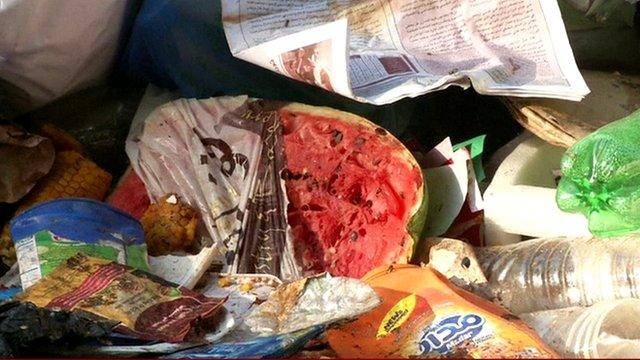
In recent weeks - during hot summer weather - piles of rubbish have grown so large that some residents resorted to burning rubbish on the streets, releasing toxic fumes.
Lebanon has been without a president for more than 450 days.
MPs have been unable to decide on a president, a mainly ceremonial role, reserved for a Christian in a sectarian power-sharing system.
They have extended their own terms twice, dismissing calls for elections and legitimate representation.
- Published22 August 2015
- Published19 August 2015
- Published28 July 2015
- Published26 July 2015
- Published21 July 2015