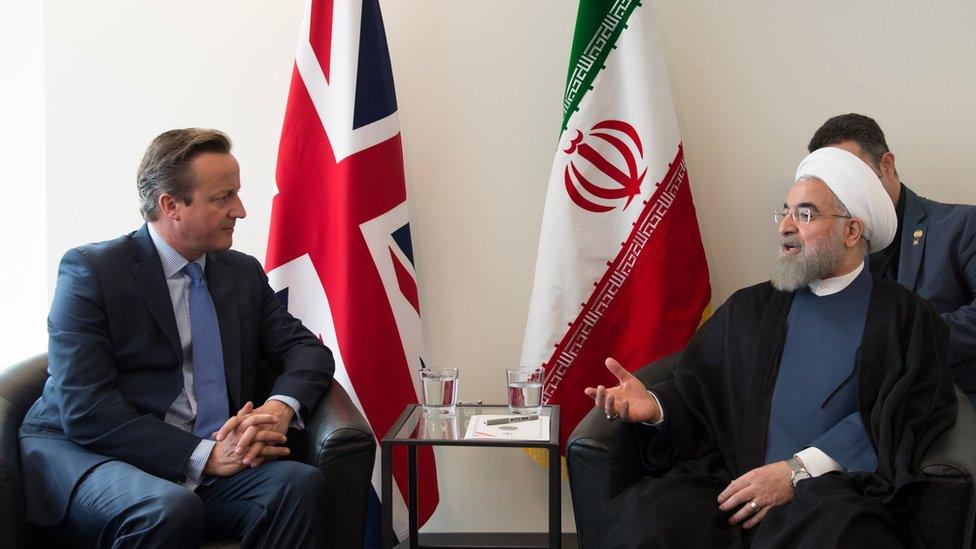
David Cameron has been meeting the Iranian leader Hassan Rouhani as he continues his efforts to inject new momentum into the efforts to find a political solution to the Syria conflict.
It is something of a side-show to the headline acts here in New York - President Obama and President Putin.
But the prime minister does believe Britain has a role to play. RAF Tornadoes are already carrying out airstrikes against IS targets in Iraq and Britain is carrying out surveillance and air-to-air refuelling in Syria.
Changing circumstances
Mr Cameron has said he believes there is a strong case for extending that action into Syria. But he has always stressed that he would not take action in Syria without parliamentary approval and has made it clear that he won't put it to a vote unless he is confident of winning it.
I understand the government has already been working to try to establish how many MPs across all parties might be prepared to support such action.
So when might it be put to a vote? David Cameron and his senior aides insist the position has not changed but it is clear that the circumstances certainly have.
Downing Street officials accept that the Russian build-up in Syria complicates the international picture. Russia's actions and attitude are now key to Syria's future.
President Putin has made it clear he wants to keep President Assad in power in order to defeat the bigger enemy - IS extremists.
David Cameron still insists Assad cannot stay in power. Last night he told me: "I don't believe Assad can play a role in the future of Syria. He's part of the problem, not part of the solution."
Corbyn opposition
But he also said: "You need to have a transition and the exact terms of the transition has to be worked out."
It is clear that Britain has had to accept that it may be necessary to allow Assad to stay on in some form of interim role if a longer term solution is to be achieved, not least because of the need to remain in step with the United States.
The other factor in all this is the election of Jeremy Corbyn as Labour leader. The anti-war veteran is opposed to extending military action, though the shadow foreign secretary Hilary Benn has said Labour would look at any proposal to do so.
David Cameron has not even discussed the matter with the new Labour leader yet.
The government is well aware of the potential risks and consequences of any military mission in the Middle East and it seems the prime minister is carefully assessing the rapidly shifting political and military picture before reaching any decision on what Britain should do next.
- Published28 September 2015