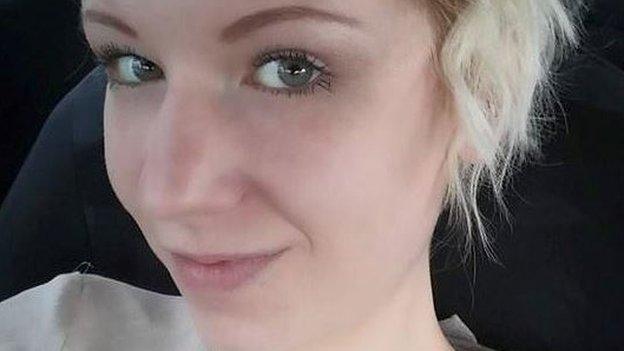
Eloise Aimee Parry, 21, from Shrewsbury, died in hospital on 12 April
A global distributor of "highly toxic" diet pills that killed a Shropshire student has agreed to stop selling them after being confronted by her mother.
Eloise Aimee Parry, 21, from Shrewsbury, died in hospital on 12 April after taking tablets believed to contain dinitrophenol, known as DNP.
Two websites that sold DNP were closed following her death but a BBC investigation found one had reopened under a different name.
The site has now withdrawn the pills.
Fiona Parry, seen here with BBC reporter Jonathan Gibson, said she was appalled the site had continued to operate
Although the website is not the one thought to have supplied Miss Parry, it was one of two closed by Interpol following her death.
An Inside Out investigation for the BBC found the business was still running with a new web address.
Eloise's mother, Fiona, said she was appalled the site had continued to operate.
'Happy to sell'
Together with Mrs Parry, the BBC confronted the man who runs the site from Turkey - Orhan Topcuer - who subsequently agreed to withdraw the pills.
In an online call with Mr Topcuer, Mrs Parry, a chemistry teacher, asked him: "It doesn't worry you that people die?"
Mr Topcuer replied: "If they don't know what they are using, they shouldn't use it."
Mrs Parry revealed: "The girl who died was my daughter and it bothers me that there are people like you out there who are quite happy to sell this stuff.
"There will be people who have died because of buying the stuff that you've sold."
She said she did not understand how "an industrial chemical, an explosive, can be made into tablets and sent around the world, keep killing people and not get stopped".
"I'm appalled and the fact that this stuff looks so professionally packaged may help to give it some legitimacy when we know what it really does."
'Global trade'
In July, an inquest ruled Eloise's death was caused by an accidental drugs overdose.
Coroner John Ellery heard the student, who studied at Glyndwr University in Wrexham, sent a text message in which she said: "I think I am going to die.
"No-one is known to survive if they vomit after taking DNP. I am so scared."
The sale of DNP is the subject of an ongoing investigation, named Operation Pangea, involving police, Interpol - the international police organisation - and the Food Standards Agency.
The Food Standards Agency said: "This is a global trade and that requires a global response which is why we're working with international agencies."
Interpol's executive director of police services, Tim Morris, said the organisation had made "significant progress" by shutting down, "illegitimate online pharmacies and seizing illegal and counterfeit pharmaceutical products".

What is DNP?
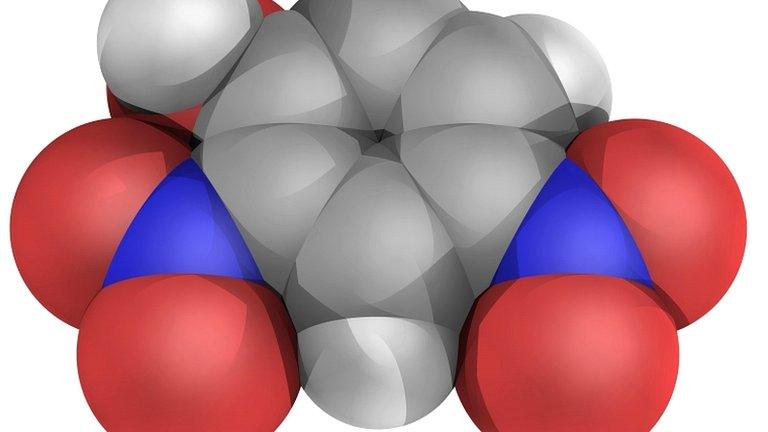
2,4-dinitrophenol or DNP is highly toxic and is not intended for human consumption
An industrial chemical, it is sold illegally in diet pills as a fat-burning substance
Users experience a metabolism boost, leading to weight loss, but taking even a few tablets can be fatal
Signs of acute poisoning include nausea, vomiting, restlessness, flushed skin, sweating, dizziness, headaches, rapid respiration and irregular heartbeat
Consuming lower amounts over longer periods could lead to cataracts and skin lesions and impact on the heart, blood and nervous system
Experts say buying drugs online is risky as medicines may be fake, out of date or extremely harmful
Inside Out is broadcast on BBC One West Midlands at 19:30 on Monday 7 September and nationwide for 30 days thereafter on the iPlayer.
- Published23 July 2015
- Published21 April 2015

- Published21 April 2015

- Published21 April 2015
- Published20 April 2015

- Published3 February 2014