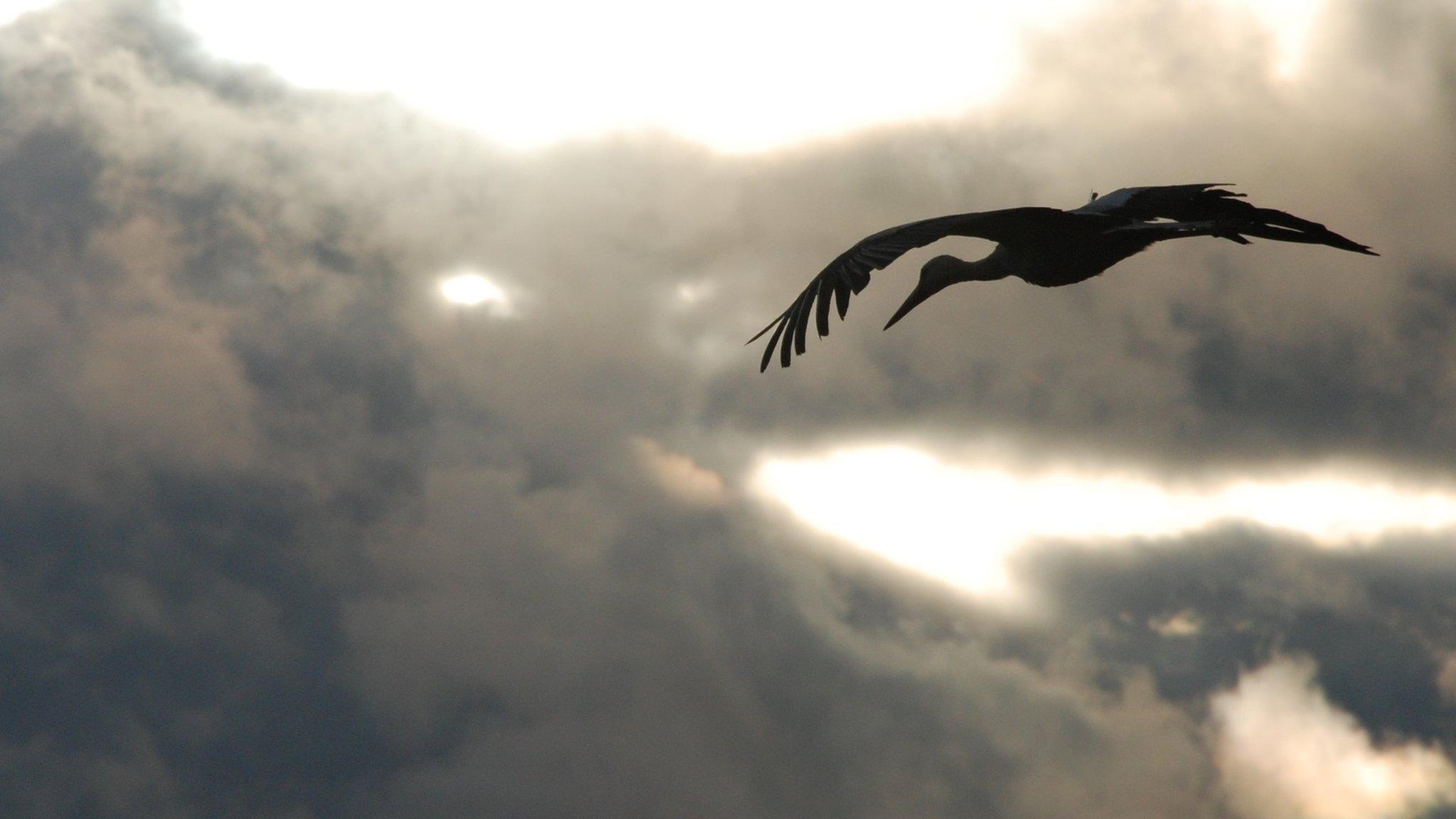
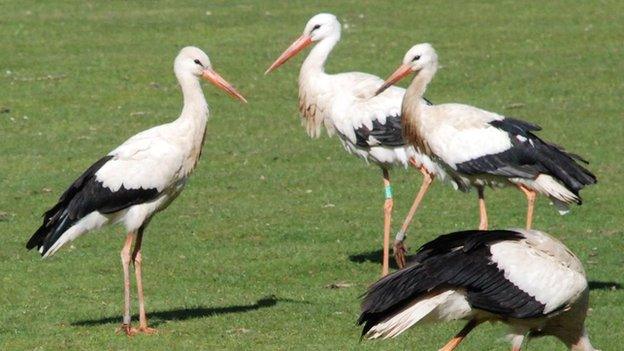
Three of the storks in Norfolk underwent surgery on their damaged wings and began flying again
A study of white storks in the UK is being carried out with a view to encouraging them to breed in the wild for the first time in centuries.
The last record of a breeding pair in Britain was in Edinburgh in 1416.
The historical survey is being carried out by teams in Devon and Norfolk.
David Gow, ecologist behind the project, said: "It's re-starting an old relationship which you can still see in Europe where people provide platforms for nesting on their roofs."
White storks in the UK
20
average annual sightings
1416 AD last record of a breeding pair
350,000 BC archeological records reveal evidence of white storks
Babies stork associated with birth and good luck
Chimneys medieval belief that nests were a sign of adultery
The Shorelands Wildlife Gardens near Diss is hoping some of its 22 injured storks, which were brought there after flying into power lines in Poland, could eventually breed.
Three of them had their broken wings fixed and recently began flying again.
'Common species'
Ben Potterton, from Shorelands, said: "We will now leave these ringed birds to see how they settle.
"These three may be the start to get these birds back into the river valleys where we hope they will return as a common species."

Chicks from Shorelands' existing captive pair were donated to a project in France
Natural England said any organisation wishing to release the birds should carefully consider their welfare and the likely impacts of the release on native species.
A spokeswoman said: "Although white storks are fairly regular visitors they have not bred for very many years in the UK."
Mr Gow, who has four captive storks on Dartmoor, said: "Storks feed largely on worms, frogs, beetles, small mammals and on rubbish tips - it's not a particular threat to fish, although it may eat them in very small numbers.
"We're at the early stages of gathering historical data and folklore to work out where the birds lived in the UK and if we get a licence, we will start looking at habitats in more detail."
- Published28 November 2015
- Published1 November 2015
- Published28 January 2015
- Published28 April 2015
- Published21 March 2015
- Published31 October 2014