Wendy Ritchie: Bailiff visit was "worst thing ever"
Sweeping changes to the way bailiffs can enforce debt repayments come into force in England and Wales on Sunday.
The new laws include a ban on bailiffs entering homes at night and from using physical force against debtors.
Bailiffs will also be prevented from entering homes when only children are present, and from taking household essentials such as washing machines.
Citizens' Advice Bureau said the rules needed to go further, and called for greater accountability in the industry.
Mandatory training
Bailiffs are estimated to collect four million debts a year in the UK.
The new changes will come into effect on 6 April and follow the Ministry of Justice consultation on the debt collection industry last year.
They are part of a wider package of reforms to the Tribunals, Courts & Enforcement Act 2007.
The new rules will also:
Ban landlords from using bailiffs to seize property for residential rent debts without going to court first
Introduce mandatory training and certification for bailiffs
Ensure vulnerable people get assistance and that bailiffs are trained to recognise them
Introduce clearer rules detailing when a bailiff can enter a property and what goods they can take
Bring in restrictions on when bailiffs can sell goods
Require bailiffs to tell the court the likely means of entry, goods involved and amount of force required before a warrant is granted to force entry, as well as provide details of how the premises will be left in a secure state afterwards
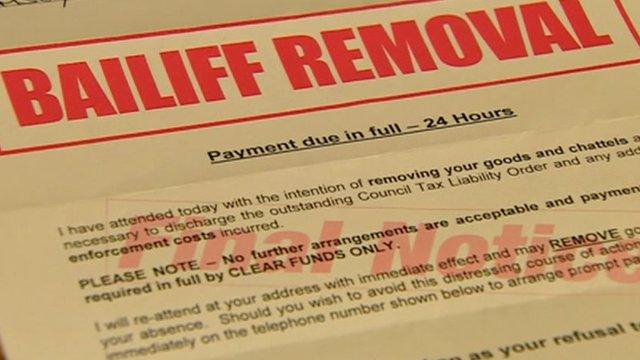
Force bailiffs to give seven days' notice before taking possessions, unless they have specific permission from a court
Introduce fixed fees, ending the ability of bailiffs to add excessive charges to the amount debtors had to pay
'More professionalism'
Karen Dyson from the Citizens' Advice Bureau told the BBC: "Citizens' advice bureaus across the country deal with over a thousand inquiries about bailiff problems every a week.
"Obviously this is not the majority of bailiffs, but it is a significant minority.
"We are really pleased to see these new rules. It's a real chance for bailiff companies to review the way their staff are operating."
She added that the Citizens' Advice Bureau would ideally like the rules to go further and see a "licensing system" introduced, which would see firms struck off, if bailiffs break the rules.
Steve Everson from the Civil Enforcement Association - which represents bailiffs in England and Wales - added: "It's a tidying up, and a tightening up, of regulations and legislation that has built up over hundreds of years.
"The whole thing is designed to get more professionalism within the industry."
'Desperation'
Resident Spike Watson of Weybridge said she believed the law needed to change, and told the BBC how she was currently being hounded by bailiffs for debts, which she claims do not belong to her.
She said bailiffs had been wrongly chasing her money ever since she had sold her camper van. She believes the debts they are chasing are that of the camper van's new owner.
Steven Everson, Civil Enforcement Association: Bailiff regulations 'more professional'
"It is still ongoing despite me sending them more recorded delivery of evidence. I believe in paying tickets when they are genuinely issued but these are not my fines," she said.
Some bailiffs' organisations have previously welcomed the legal changes, saying reforms were overdue and the problem of aggressive bailiffs needed to be tackled.
Commenting on the changes, Justice Secretary Chris Grayling said: "Aggressive bailiff activity is unacceptable and it is high time that the cowboys out there are stopped from giving the rest of this important industry a bad name.
"People will still have to face up to their debts, but they will no longer need to fear their home being raided at night, the threat of violence or having their vital household equipment seized."
- Published25 January 2013
- Published25 January 2013
- Published14 March 2014

- Published30 January 2014
- Published13 March 2014