'The explosions keep going' - how air strikes paved the way for US Maduro raid
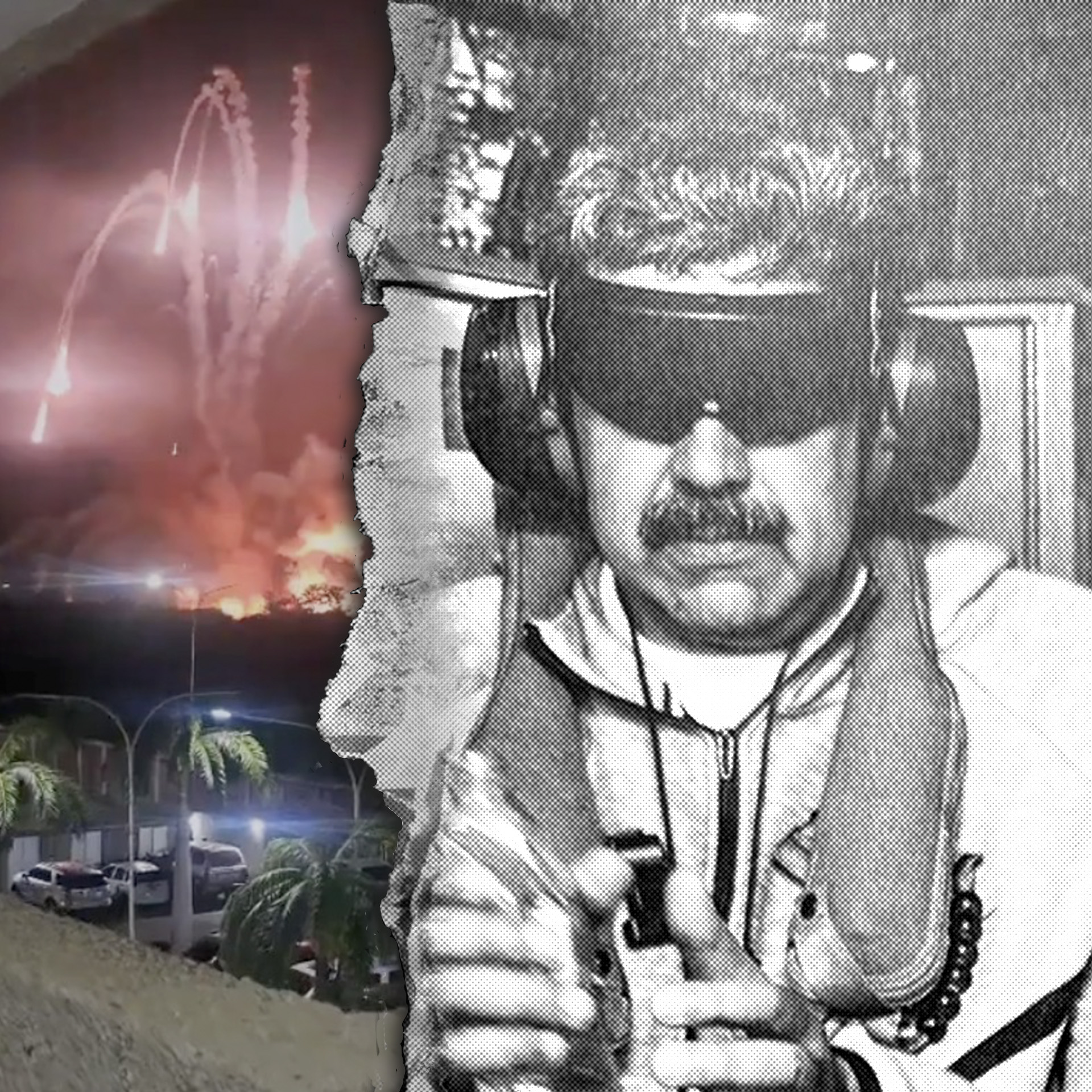
For those still awake in the dead of night in Caracas, the first sign that something was amiss was the low rumble of aircraft approaching Venezuela’s sprawling capital.
Above them, at around 01:55 local time (05:55 GMT) on 3 January, dozens of US aircraft were approaching the city under darkness, highlighted only by a full moon.
Moments later, flames and thunderous explosions broke out around the city. One of America’s most audacious military operations was under way.
For months, Venezuelans had lived under the shadow of a growing US military threat, as jets flew up and down the coast.
But text messages exchanged between two locals that night and shared with BBC Mundo show their shock at being awoken by rolling air strikes.
02:07
Hey, is something happening?
02:07
I don't know... but I'm here at home
02:08
It sounded really loud
02:08
Here we can hear the planes
02:08
OK, we’ll stay alert here
02:09
Here the planes are intense and the explosions keep going
02:10
OK, anything at all, let me know
US bombers unleashed their opening salvo around 01:57, one eyewitness told the BBC.
“The windows on my door shook,” one of them told the BBC. “I got up to see from my window, thinking something heavy had fallen in my backyard… and immediately I heard the second explosion of what I think was a missile, impacting. I could see the reflection of the flames.”
Footage confirmed by BBC Verify showed strikes at seven sites around Caracas and the neighbouring states. The bombardment reportedly lasted for around 30 minutes, though secondary explosions continued until shortly before 04:00, a Caracas resident said.
“All of us were scared and distressed,” one young mother told the BBC. “We were watching the sky to see if anything was approaching our home.”
More than 150 aircraft were involved in the operation, according to US officials, including fighter jets, bombers and helicopters.
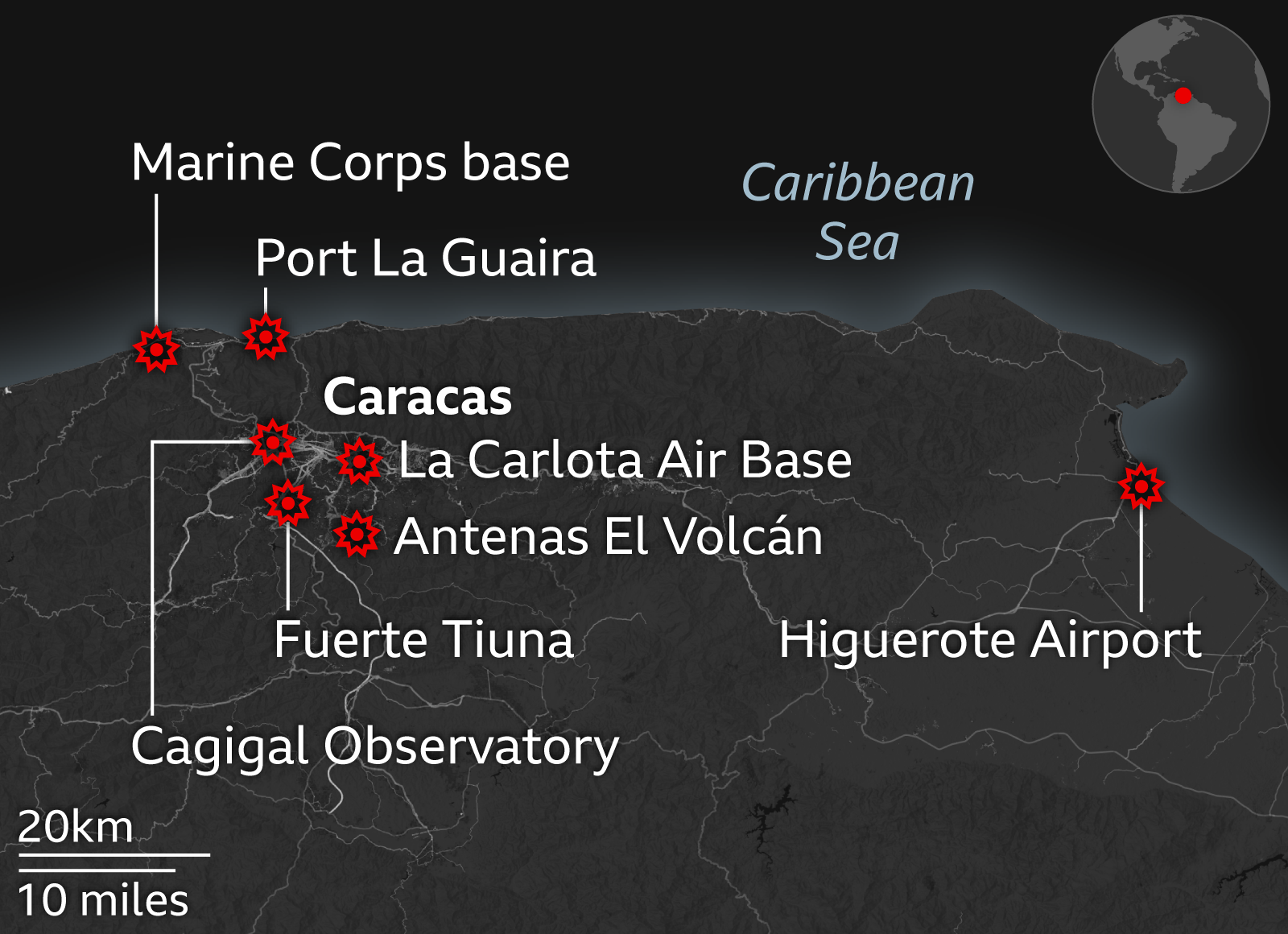
At least three military bases - Catia La Mar, La Carlota and Fuerte Tiuna - were hit in the US strikes. Dramatic footage reviewed by BBC Verify also showed massive explosions and a huge blaze at the coastal Higuerote Airport.
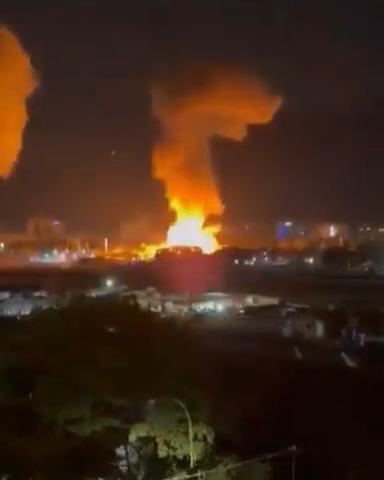
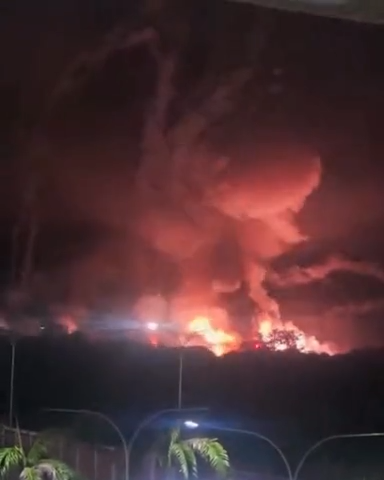
Justin Crump, CEO of the risk consultancy Sibylline and an ex-British army officer, said US forces may have also wanted to confuse Venezuelan forces and delay any response.
The port of La Guaira - the country’s second largest container terminal - was heavily targeted.
Venezuelan officials have said at least 100 people were killed in the operation, including at least 23 military personnel.
Rosa González - a 80-year-old civilian woman - was killed in her apartment in Catia La Mar when US strikes blew out the exterior wall of the three-story building near Caracas airport.
A 45-year-old woman was also reportedly killed in the El Volcán area, south east of Caracas.
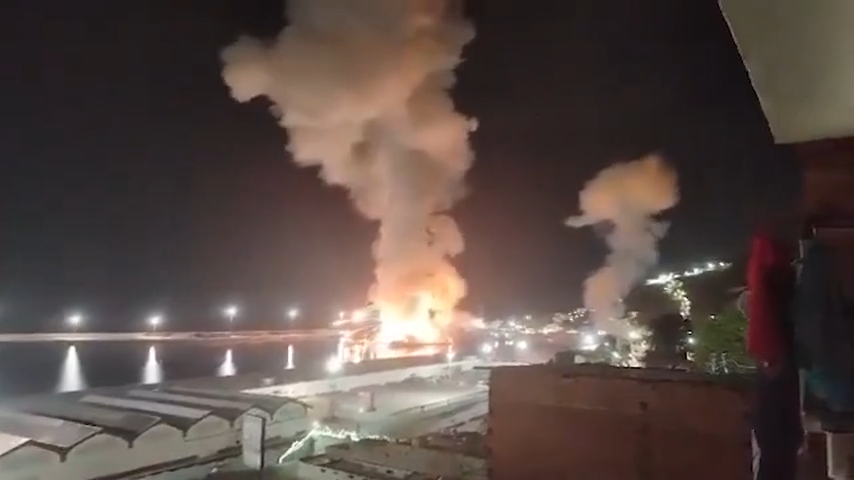
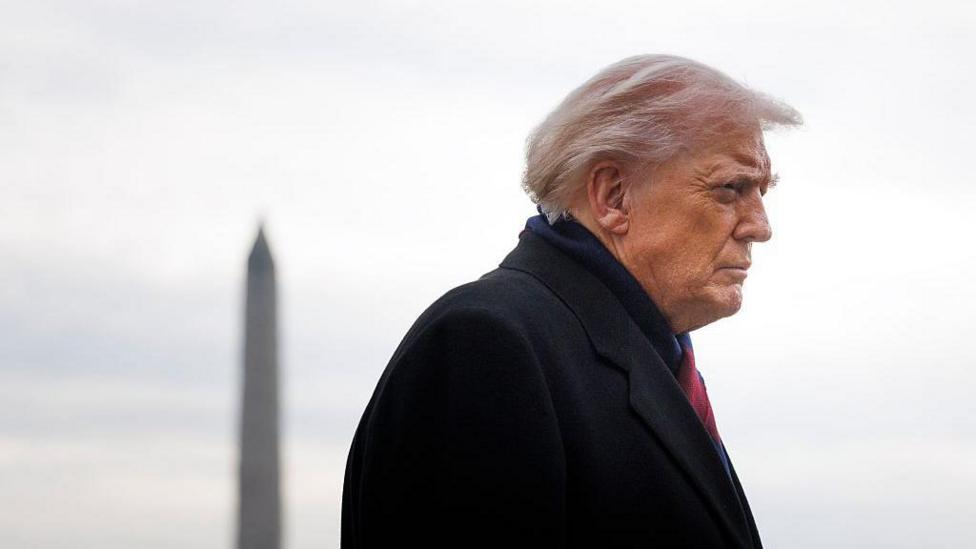
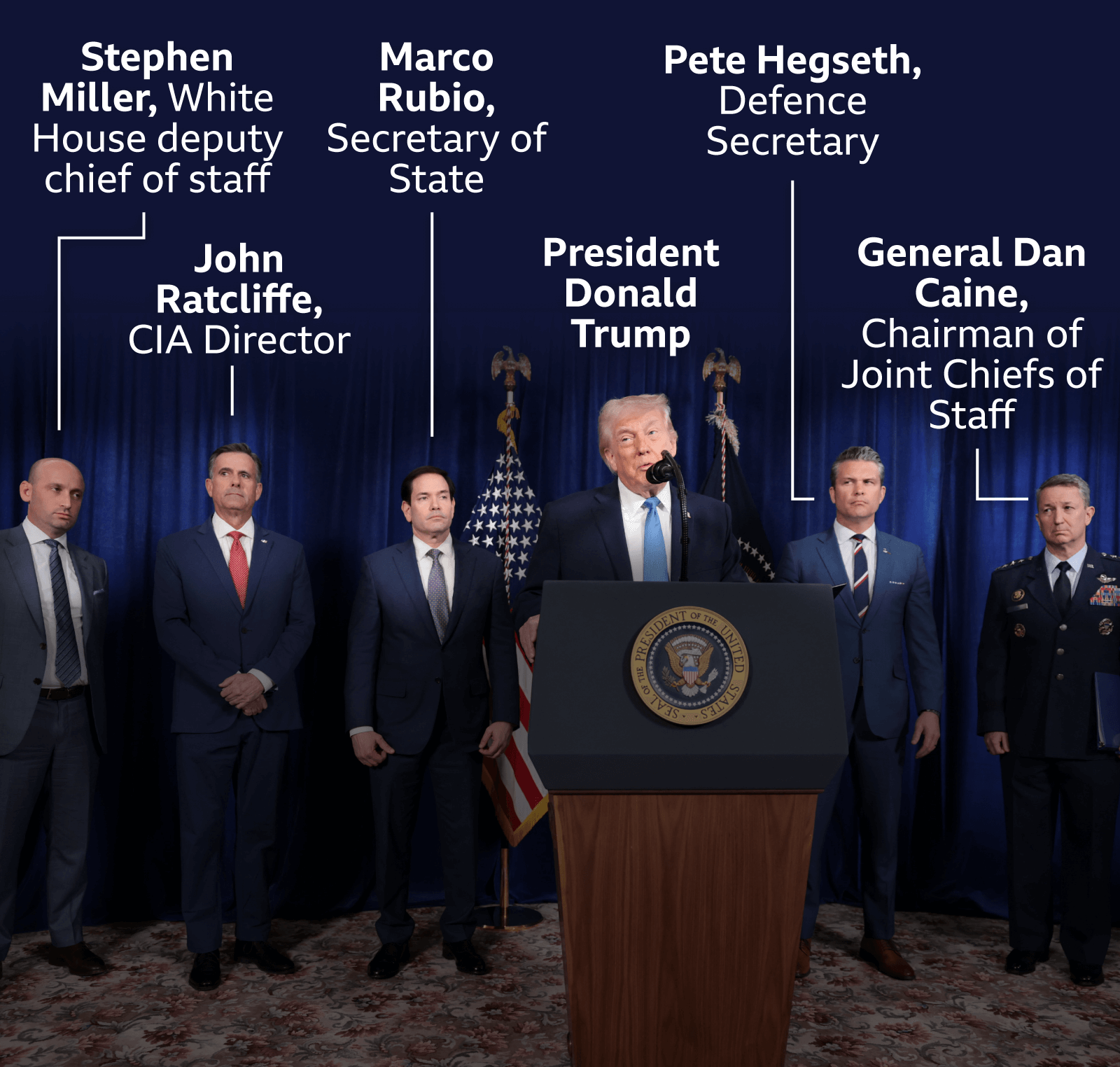
Hours later US President Donald Trump appeared surrounded by military commanders and top advisers at his Mar-a-Lago resort. He said that cutting electricity to the city enabled the devastating strikes that followed.
Unusually, the strikes appear to have taken place under a full moon, with US officials saying the weather broke “just enough” to allow the operation to take place.
NR Jetzen Jones, director of private intelligence company ARES, said Western forces prefer to conduct these sorts of raids in total darkness.
He said it “strongly suggests that the timing of the raid was dictated by other factors, most likely access to the target”.
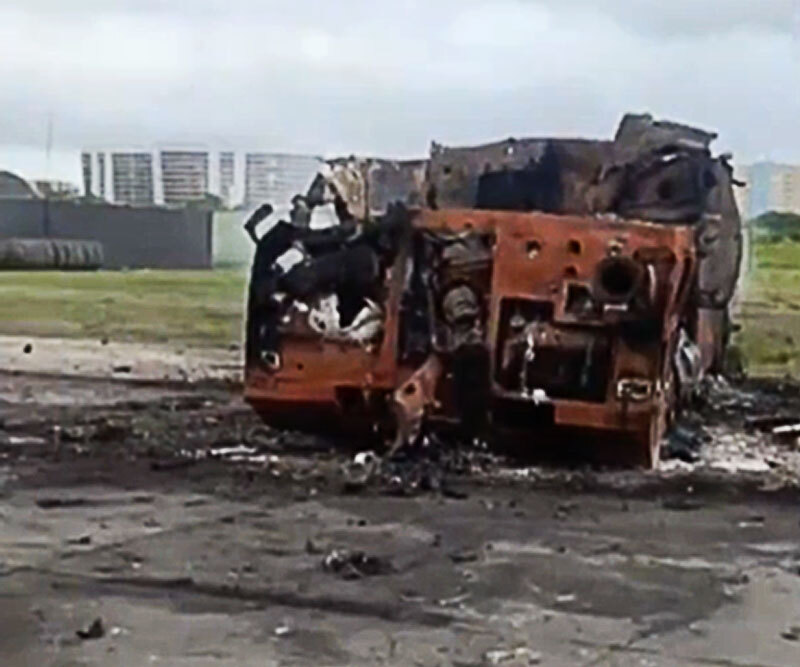
Analysts who spoke to BBC Verify said the blasts were almost certainly designed to wipe out Venezuela’s air defence systems.
Venezuela had spent billions on Russian-made systems, but verified images show the smouldering remains of launchers. At Higuerote Airport one image showed the shredded hulk of what is alleged to be a Buk-M2E SAM system.
As the attack began, President Nicolás Maduro was sheltering with his wife, Cilia Flores. The socialist leader had been rotating his location for months.
But a small CIA team had been inserted into Caracas months earlier. The officers monitored how Maduro “moved, where he lived, where he travelled, what he ate [and] what he wore” US Joint Chiefs chair, Gen Dan Caine, said.
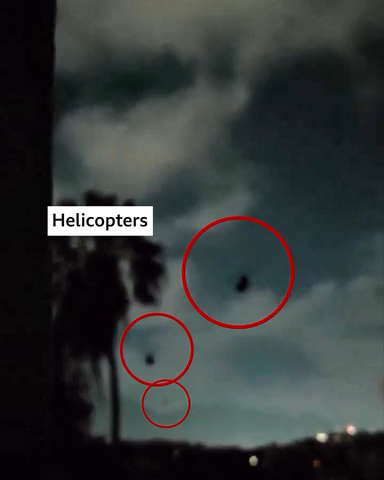
At around 01:58, verified footage showed three helicopters - including one Chinook widely used by the US military - were filmed approaching the base. Multiple fires can be seen in the clip.
Three other clips reviewed by BBC Verify showed an attack helicopter opening fire on a target on the ground near the base.
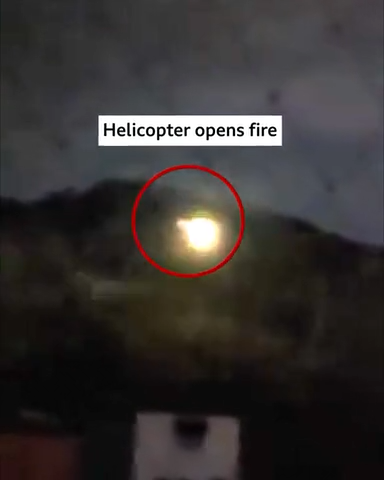
The residents at Fuerte Tiuna reported being awoken by loud explosions.
“I carefully looked out the window and saw the missiles,” they recalled. “They were like laser beams exploding on the mountain of Fuerte Tiuna. At that moment, I counted about four or five points of impact.”
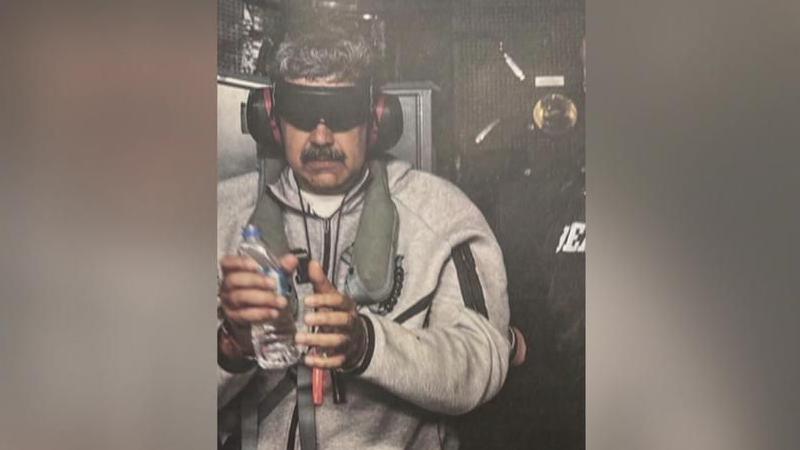
At 02:01 US troops landed and raided the base and seized Maduro, Gen Caine said. He did not specify what part of the base Maduro was sheltering in, and officials have not released footage of the raid.
Trump said in the aftermath of the raid that Maduro had tried to flee to a safe room within the Fuerte Tiuna complex, but was prevented by Delta Force troops.
Gen Caine told reporters that US forces had exited Venezuelan airspace by 03:29 local time. The US forces suffered no deaths in the raid, though one helicopter was hit by fire.
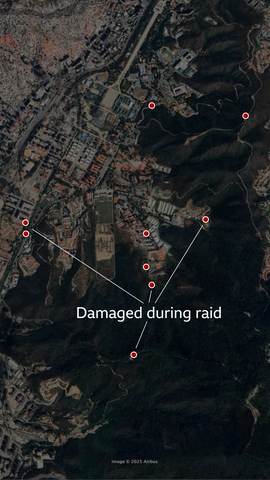
Satellite images taken on Sunday show extensive damage to Fuerte Tiuna, with many buildings reduced to rubble.
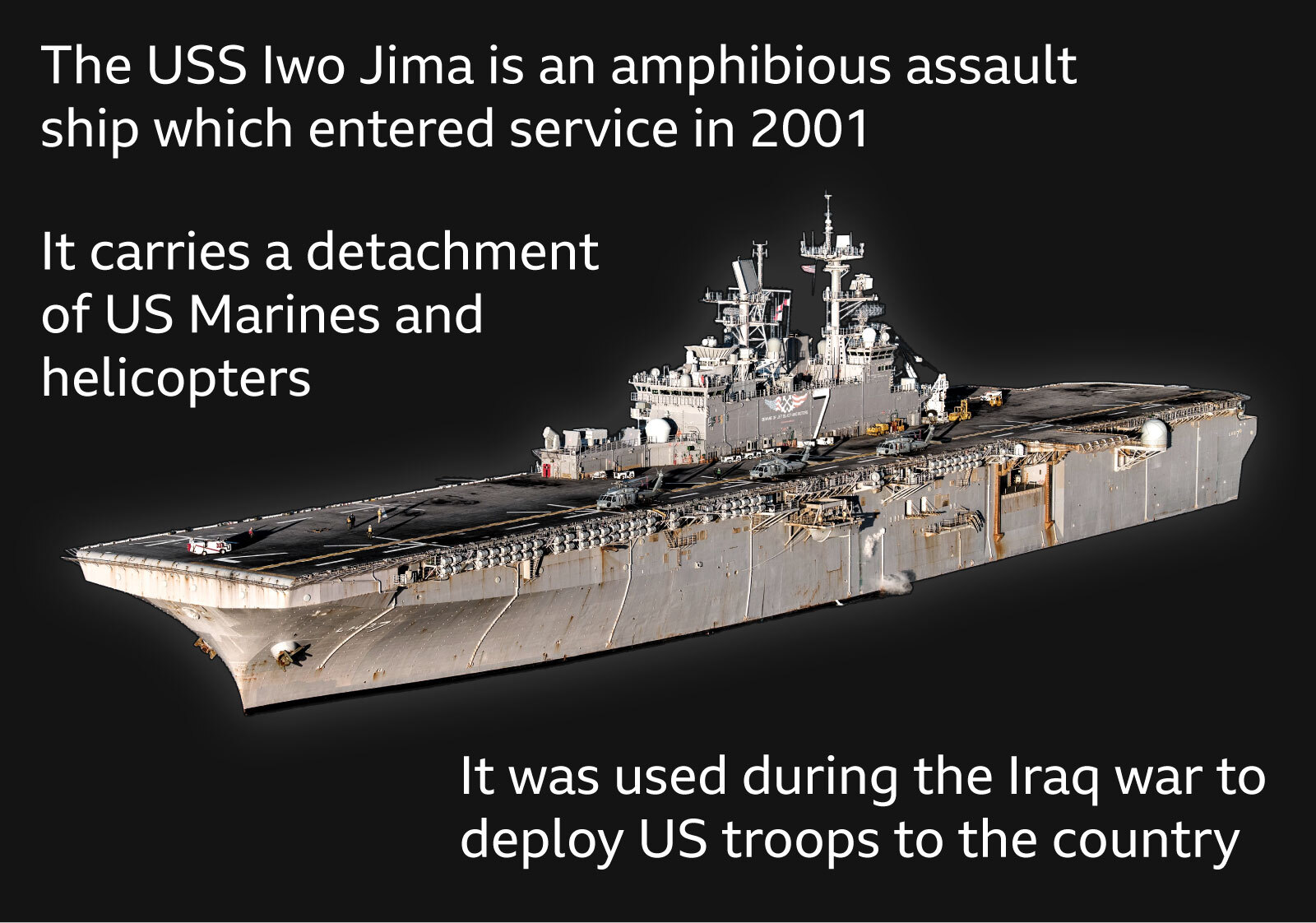
Once Maduro was in custody, he was bundled on to US helicopters and taken to the USS Iwo Jima - an assault ship which has been operating in the Caribbean for months.
President Trump described the operation as an "amazing military achievement".
Some residents in Caracas, who spent the night sheltering from the US bombardment, have reacted with anger at the US raid. But others who may have welcomed the removal of Maduro from power were afraid to speak out due to years of repressions.
“You feel joy because you see the light at the end of the tunnel, that Venezuela will have a change for the better,” one said.
“But not being able to express it or shout it, celebrate… because you can be arrested.”
Photo credits
Truth Social, @venezuelaextraoficial, @michaelh992, @Osinttechnical, Reuters, @abelandia, BBC Mundo, X/@Weather Monitor, X/@SA_Defensa, Getty Images