Summary

  • The day for MPs began with justice questions; followed by a ten minute rule bill on reporting the living wage.

  • Following that, MPs debated the Insurance Bill at all remaining stages.

  • Next, MPs debated a money resolution and considered Lords' amendments to the National Insurance Contributions Bill.

  • After that, there was a debate on the motion to approve a statutory instrument relating to mitochondrial donation.

  • Peers met at 14.30 GMT and after oral questions, then debated the Deregulation Bill at report stage.

  • Peers also held a short debate on the growth of small businesses in the UK.

  1. Goodnightpublished at 21:33 GMT 3 February 2015

    And that brings an end to the day in parliament.

    Peers will be back tomorrow at 15.00 GMT to debate the Counter-Terrorism and Security Bill.

    MPs will be in at 11.30 GMT ahead of the weekly duel between David Cameron and Ed Miliband at Prime Minister's questions.

    Join us then.
  2. 'Not the place'published at 21:28 GMT 3 February 2015

    House of Lords
    Parliament

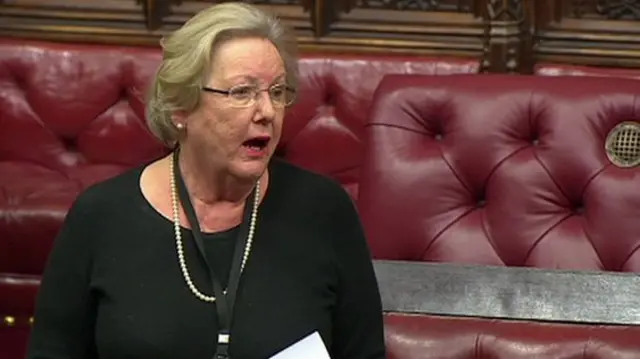
    Lord Wallace of Saltaire tells peers that while the government recognises the argument for minimum alcohol pricing "this is not the place for it."

    In July 2013 the government shelved plans to introduce a minimum price for a unit of alcohol in England and Wales, over fears there was not enough "concrete evidence" on the subject.

    Since then the Welsh Assembly has unveiled proposals for a minimum 50p unit price for alcohol in a public health white paper that is expected to become law later this year.

  3. Minimum pricing costpublished at 21:05 GMT 3 February 2015

    House of Lords
    Parliament

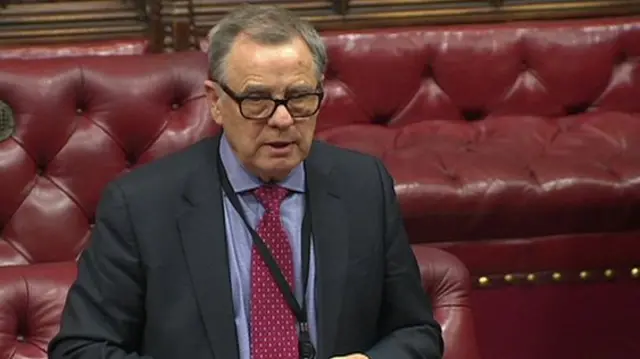
    Lord Brooke of Alverthorpe

    Labour peer Lord Brooke of Alverthorpe is arguing in favour of introducing a minimum pricing for alcohol so that it cannot be sold for less than 50p per unit.

    Lord Brooke tells peers the move could:

    • minimise alcohol's harm to people's health

    • reduce NHS costs

    • cut public disturbances

    • reduce the costs to the criminal justice system

    • reduce domestic violence

    • reduce the number of accidents at work, and

    • help tackle obesity.

  4. Guidance givenpublished at 20:52 GMT 3 February 2015

    House of Lords
    Parliament

    Government spokesman Lord Wallace of Saltaire, says the government considered similar proposals to Lord Clement-Jones' but instead decided on providing guidance to schools on their impact on tourism instead.

  5. Schools outpublished at 20:42 GMT 3 February 2015

    House of Lords
    Parliament

    Peers return to the Deregulation bill

    First up: Liberal Democrat peer Lord Celment-Jones tables an amendment to require schools to consult with local businesses when seeking to change the dates of school holidays, in order to maximise local tourism industries.

    Reducing holiday dates can "devastate" tourism while staggering school holidays between schools simply "spreads out the same trade while increasing operating costs" he argues.

  6. Late paymentpublished at 20:02 GMT 3 February 2015

    House of Lords
    Parliament

    Many peers are highlighting the late payment of supplier by large companies as the biggest problem facing SMEs.

    David Cameron has announced a consultation aimed at helping small businesses get paid on time.

    The prime minister's move follows YouGov research showing 85% of small firms had experienced late payment over the last two years, despite an existing government-backed scheme.

    Collectively, small and medium-sized firms are owed £30.2bn, data from electronic transfer firm BACs suggests.

  7. Overlooked SMEspublished at 19:54 GMT 3 February 2015

    House of Lords
    Parliament

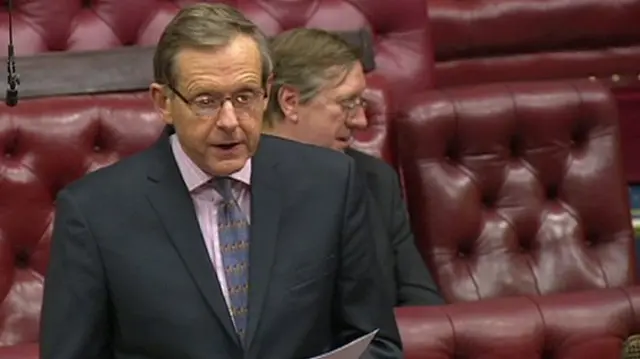
    Lord Risby

    Lord Risby tells peers that the increase in employment in the UK has been driven by small and medium-sized enterprises (SMEs), the number of which has increased by 40% in recent years.

    Despite this, the needs of SMEs are often neglected, he argues.

    As an example Lord Risby claims that the average speeds for broadband in SMEs is half that of the London average as telecoms companies overlook their needs.

  8. Dinner break debatepublished at 19:42 GMT 3 February 2015

    House of Lords
    Parliament

    Peers are now holding a short debate on steps being taken to encourage the growth of small businesses in the United Kingdom, led by the British trade envoy to Algeria, Lord Risgby.

  9. Co-operative schoolspublished at 19:41 GMT 3 February 2015

    House of Lords
    Parliament

    Labour is arguing for greater freedom to be given to co-operative schools and nurseries.

    These maintained schools, supported by a charitable foundation, currently have to work around legislation as "no provision was made for schools to establish formally", Labour education spokeswoman Baroness Thornton argues.

    Co-operative schools and nurseries should be allowed to use current legislation set up for other co-operative organisations, she says, to provide "a level playing field and more understanding legal framework".

  10. Goodnight from the Commonspublished at 19:31 GMT 3 February 2015

    House of Commons
    Parliament

    And that brings business in the Commons to an end for another day.

    MPs will meet again from 11:30 GMT tomorrow. Prime Minister David Cameron will come to the House for his weekly question time at noon.

    There will also be debates on apprenticeships and electoral registration, before former Prime Minister Gordon Brown leads a short debate on Scottish representation in the Union.

    Meanwhile today, the House of Lords continues its debate on the Deregulation Bill.

  11. 'Distressing'published at 19:26 GMT 3 February 2015

    House of Commons
    Parliament

    Environment Minister George Eustice says he became aware of the footage from Bowood Lamb in Thirsk in January.

    "I found the films distressing and gave my immediate support to the enforcement action that was being taken," he says.

    One man has been sacked and three others at a North Yorkshire slaughterhouse have had their operating licences suspended after hidden cameras filmed alleged mistreatment of animals.

    The minister argues that CCTV alone does not necessarily stop acts of cruelty.

  12. Lower London thresholdpublished at 19:24 GMT 3 February 2015

    House of Lords
    Parliament

    Environment Minister Lord De Mauley argues that Baroness Hanham's proposed changes would allow residents in London to be punished for lesser crimes such as leaving a bin lid open.

    The government's reforms will implement a nationwide scheme that ensures only people causing "real problems to their communities" are punished, he says.

    If London were to be exempted a lower threshold would be in place, he says.

  13. Footage of animal crueltypublished at 19:15 GMT 3 February 2015

    House of Commons
    Parliament

    Footage of extreme animal cruelty has recently emerged from a slaughterhouse in Yorkshire.

    Animal rights group Animal Aid smuggled cameras into the site and filmed footage over three days in December.

    Abattoirs serving the major supermarkets already have CCTV systems to safeguard animal welfare.

  14. Picture: Henry Smithpublished at 19:15 GMT 3 February 2015

    House of Commons
    Parliament

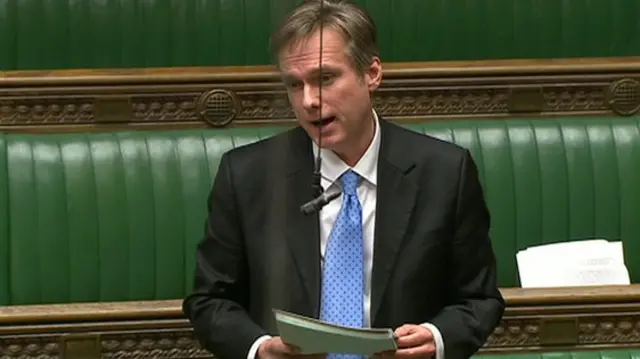
    Henry Smith
    Image caption,

    Conservative Henry Smith tells MPs he has been a vegetarian for 25 years

  15. Adjournment debatepublished at 19:06 GMT 3 February 2015

    House of Commons
    Parliament

    The rural broadband debate is over and Lib Dem MP Tim Farron presents a petition from his constituents about the closure of bank branches.

    The final, adjournment debate in the Commons is led by Conservative MP Henry Smith, who is calling for the introduction of mandatory CCTV in slaughterhouses.

    He says he has seen evidence of "casual, routine violence" towards animals in one slaughterhouse.

  16. Increasing bureaucracypublished at 19:05 GMT 3 February 2015

    House of Lords
    Parliament

    Baroness Hanham

    Conservative peer Baroness Hanham is arguing that parts of the Deregulation Bill are in fact creating more bureaucracy.

    Clauses on reforming the penalty scheme on waste collection include "four pages of legislation to tell enforcement officers how to issue a penalty charge".

    The reforms will also "unnecessarily" bring London into a scheme it has been running "perfectly happily for years".

  17. 'Unequivocal success'published at 18:53 GMT 3 February 2015

    House of Commons
    Parliament

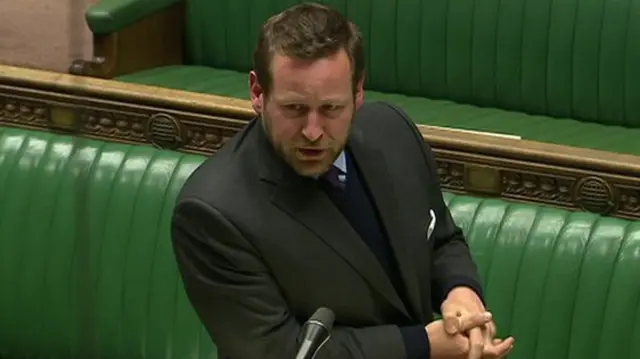
    Communications Minister Ed Vaizey claims the debate was dominated by Conservatives because "only one Labour backbencher showed up to make a contribution".

    He says the government has "every chance of meeting" its target for rural broadband rollout.

    "This broadband rollout campaign is an unequivocal success," he proclaims.

    Ed Vaizey
  18. Picture: Chris Bryantpublished at 18:42 GMT 3 February 2015

    House of Commons
    Parliament

    Chris Bryant
  19. 'Vote Labour'published at 18:42 GMT 3 February 2015

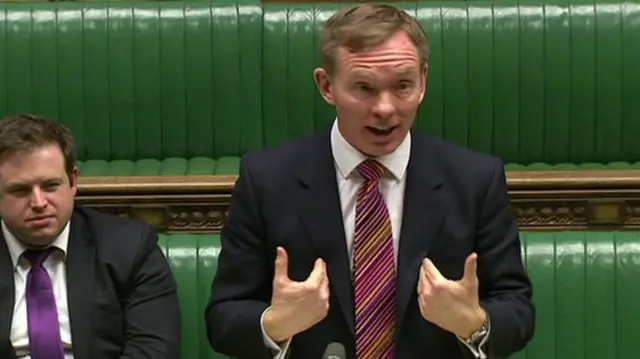
    Shadow culture, media and sport minister Chris Bryant is summing up for Labour in the debate on rural broadband.

    Referring to the high number of Conservative MPs representing rural constituencies - and speaking in the debate - he jokes that he feels "like I've walked into a meeting of the 1922 committee this afternoon".

    The 1922 committee, external is an influential body of backbench Conservative MPs.

    Mr Bryant says to the MPs' constituents: "I recommend you to vote Labour at the general election because that's the only way you're going to sort this out."

  20. 'Economically viable'published at 18:26 GMT 3 February 2015

    House of Commons
    Parliament

    Robert Jenrick, the Conservative MP for Newark, says there are villages in his constituency that are virtually "suburbs of Nottingham".

    He says he does not accept that it is "not economically viable for BT to be able to supply them".