Summary

  • BBC Democracy Day celebrates democracy with a day of live events, discussions and debate.

  • Today marks 750 years since the Simon de Montfort parliament (20 January 1265) and this year also marks 800 years since the sealing of Magna Carta (15 June 1215).

  • Here, we're unfolding the march of democracy through history: from the first steps back in 1215 to today.

  • You can take part by tweeting your questions to @bbcdemlive using #BBCDemocracyDay.

  1. Thank you for followingpublished at 16:11 GMT 20 January 2015

    That brings us up to date. Who knows what changes will occur in the future - but for now, we'll leave the story of democracy there.

    You can continue to follow events on the BBC for Democracy Day here.

    Remember, you can catch up on Twitter with #BBCDemocracyDay

    Thank you for reading and you can now follow BBC Democracy Live's usual service - coverage from the House of Commons and House of Lords - until late tonight.
  2. Franchise extended againpublished at 16:06 GMT 20 January 2015

    The Scottish independence referendum extends the franchise to 16 to 17-year-olds for the first time in the UK.

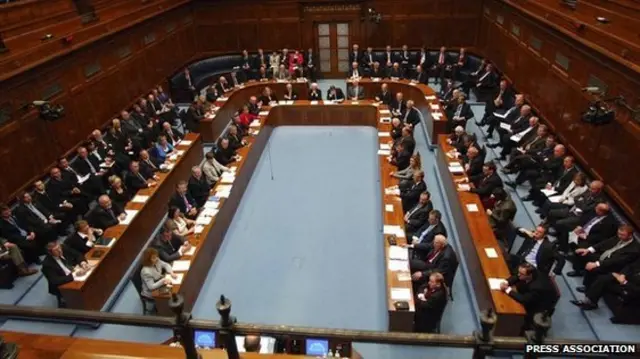
  3. NI Assemblypublished at 15:47 GMT 20 January 2015

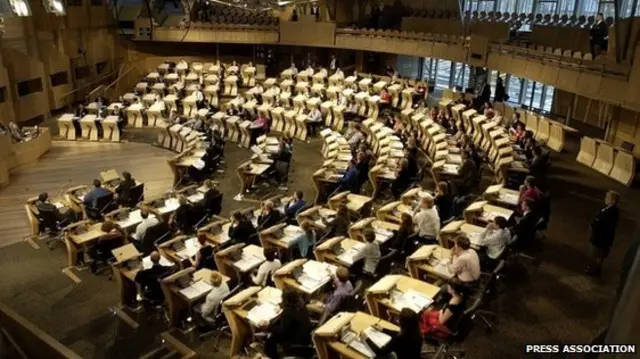
    Northern Ireland AssemblyImage source, Press Association
    Image caption,

    The Northern Ireland Assembly sits in the Parliament buildings in Stormont

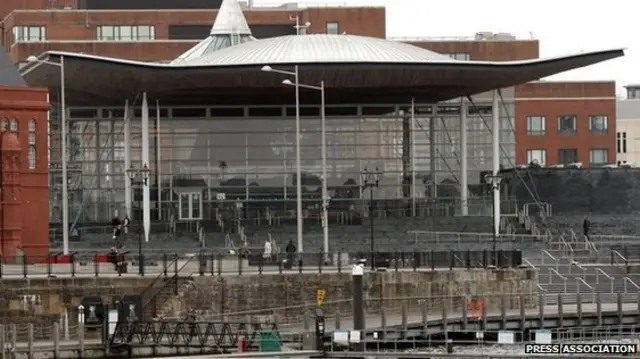
  4. Devolved powerspublished at 15:44 GMT 20 January 2015

    Welsh AssemblyImage source, Press Association
    Image caption,

    The Welsh Assembly has been responsible for devolved powers since 1999

  5. First woman PMpublished at 15:16 GMT 20 January 2015

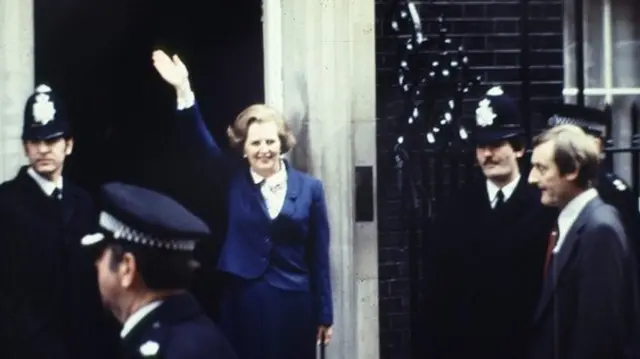
    Margaret Thatcher becomes the first female prime minister of the UK.

    Margaret Thatcher
  6. Younger and youngerpublished at 15:12 GMT 20 January 2015

    Representation of the People Act 1969 passed, which lowers the voting age from 21 to 18.

  7. Analysis: the 1928 Equal Franchise Actpublished at 14:48 GMT 20 January 2015

    Dr Emma Peplow, History of Parliament Trust

    "In 1928 the UK finally became a full parliamentary democracy.

    "Women gained electoral equality with men and in fact they became the majority of the electorate.

    "This was the culmination of a long campaign for suffrage rights for women and it is fitting that the suffragist leader Millicent Garrett Fawcett was alive to see it pass.

    "However, despite nearly 90 years of electoral equality, women still make up under a quarter of sitting MPs."

  8. Life baroniespublished at 14:47 GMT 20 January 2015

    Life Peerages Act passed, which authorised the creation of life baronies - the right to sit in the House of Lords - but without the title or right being passed to the holder's children on their death.

  9. Analysis: the 1918 Representation of the People Actpublished at 14:25 GMT 20 January 2015

    Dr Emma Peplow, History of Parliament Trust

    "The 1918 Representation of the People Act made Britain into a democratic country, nearly 90 years after the 1832 Reform Act had begun to move it away from its old voting system, based on property and privilege.

    "The previous reform acts had extended the electorate and made parliamentary constituencies more representative, but had always included property qualifications of some kind. For the first time the principle of 'one man, one vote' irrespective of financial situation, called for by the Chartists amongst others, was the basis of the male franchise.

    "Of course, women were also first given the vote in parliamentary elections - but not on the same terms as men."

  10. Irish Free Statepublished at 14:23 GMT 20 January 2015

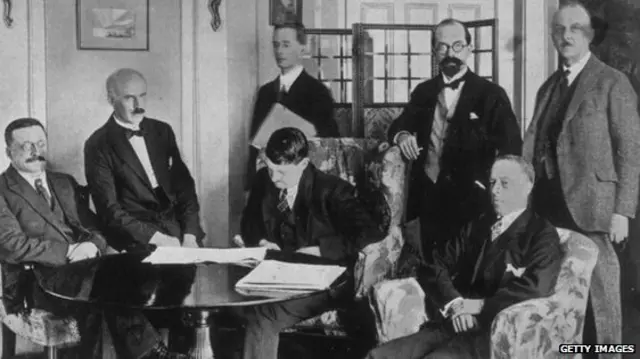
    Government of Ireland Act 1920 and the Irish Free State Agreement Act 1922 creates the Irish Free State and reduces the number of seats for Irish constituencies at Westminster from 105 to 13 constituencies in Northern Ireland.

    Signing of the Irish Free state treaty 1921Image source, Getty Images
  11. Analysis: the 1911 Parliament Actpublished at 14:14 GMT 20 January 2015

    Dr Emma Peplow, History of Parliament Trust

    "The 1911 Parliament Act established the superiority of the elected House of Commons over the House of Lords.

    "Beforehand the Lords - then made up entirely of hereditary peers - had the power to veto bills passed in the Commons. They did so in 1909 when the Liberal government tried to pass the 'People's Budget', and in the constitutional crisis that followed David Lloyd George dubbed the Lords 'a body of 500 men chosen from the unemployed'.

    "After 1911 the Lords only had the power to delay legislation, and could no longer veto the budget, ensuring that the Upper House could no longer derail the will of the elected government."

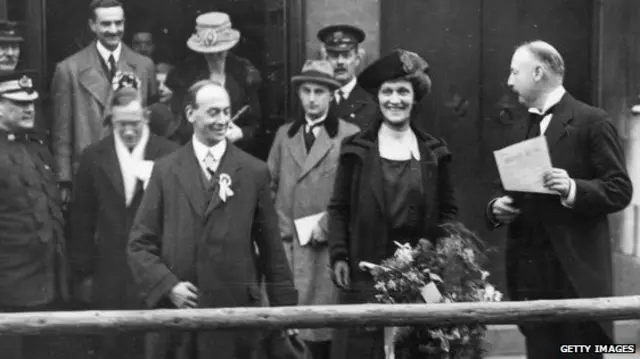
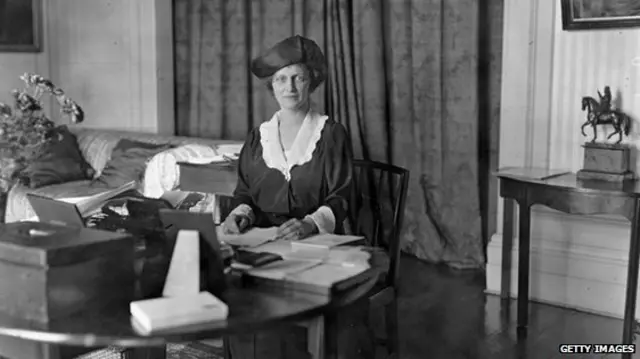
  12. Elected!published at 14:13 GMT 20 January 2015

    Nancy Astor 1919 - at the result of the pollImage source, Getty Images
    Image caption,

    Nancy Astor in 1919 - beaming at the result of the poll which saw her elected

  13. Franchise extendedpublished at 13:55 GMT 20 January 2015

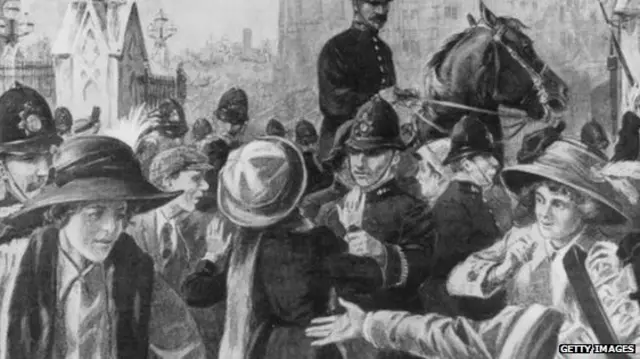
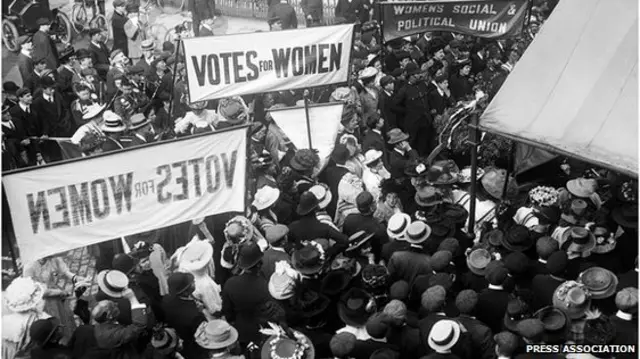
    Representation of the People Act 1918 passed, external, extending the franchise to women for the first time - but only those over the age of 30 (roughly 8.5 million women or 40% of the female population at the time).

    Votes for womenImage source, Press Association

    The Act also abolished property and other restrictions for men, and extended the vote to all men over the age of 21. The electorate increased from eight to 21 million, but there was still huge inequality between women and men.