Summary

  • The Commons day began with questions to ministers from the Northern Ireland Office at 11.30 GMT.

  • At noon, the prime minister answered questions from Labour leader Ed Miliband and MPs.

  • Labour MP Andy Sawford's ten minute rule bill on the renationalisation of the railways was approved at first reading, after a vote

  • The day's main business was the second reading of the Taxation of Pensions Bill, followed by an adjournment debate on Callum Wark and sentencing of foreign drivers.

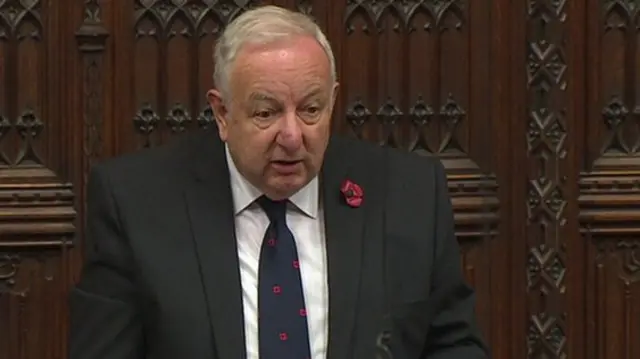
  • The Lords began at 15.00 GMT as Lord Goddard of Stockport was introduced as a new peer.

  • Following questions, peers debated devolution following the independence referendum in Scotland.

  1. Conclusion in the Lordspublished at 21:52 GMT 29 October 2014

    Lord Wallace winds up the debate on devolution following the Scotland referendum, which brings an end to the day in the House of Lords.

    Peers will be back at 11.00 BST on Thursday with a trio of debates on the situation in the Middle East and North Africa, giving football fans a greater say in the running of clubs and combating slavery in supply chains.
  2. Government responsepublished at 21:39 GMT 29 October 2014

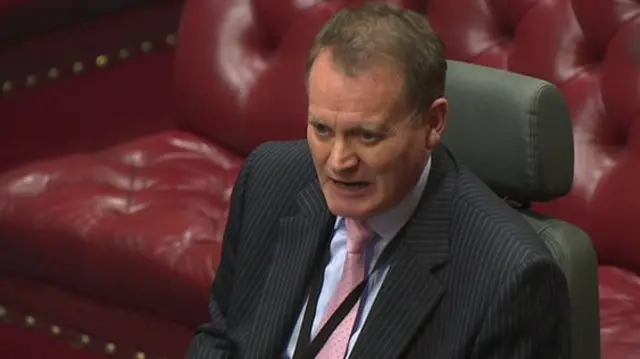
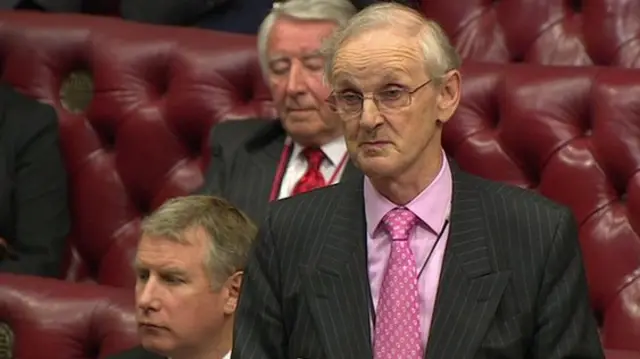
    Scottish Office Spokesman and the Advocate General for Scotland Lord Wallace of Tankerness is tasked with responding to the mammoth debate for the government.

    Just under 50 peers have spoken in the five hour debate so far.

    Lord Wallace of Tankerness
  3. Forsyth criticismpublished at 21:36 GMT 29 October 2014

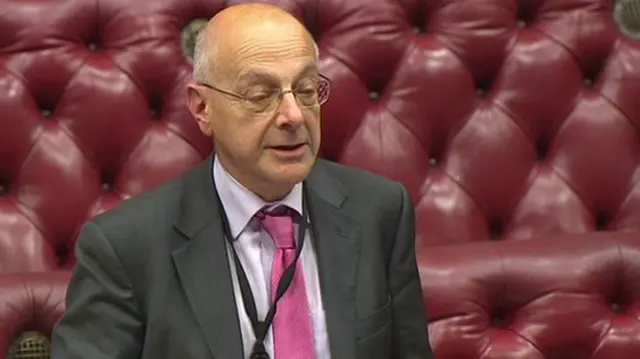
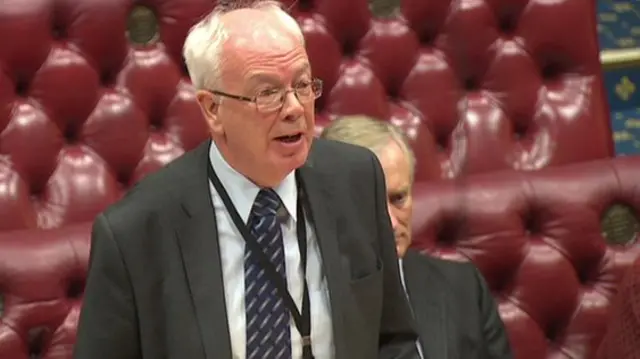
    After attacking many people involved in the Scottish independence referendum - "the Prime Minister was weak, Labour were wrong, Alex Salmond was cynical" - the former Scotland Secretary Michael Forsyth accuses the government of "playing into the hands of the separatists" by rushing to offer greater powers to Scotland when it looked like Scotland may have voted to leave the UK.

    The remedy to the problems around devolution "cannot be left in the hands of political parties" and cannot be rushed through by a commission, external, Lord Forsyth of Drumlean, as he is now known, tells peers.

    Calling for a constitutional convention involving people from all parts of the UK and all levels of government to be established Lord Forsyth says Scottish devolution is not "just a matter for Scotland but a matter for the British People as a whole if the UK is to be secured on a sound foundation for the next 300 years."

    Lord Forsyth of Drumlean
  4. Devolution structurepublished at 20:59 GMT 29 October 2014

    While Westminster continues to be the supreme lawmaker in the UK, governments in Scotland, external, Wales, external and Northern Ireland , externalhave had varying degrees of power transferred to them.

    While a greater amount of power has been devolved to the Scottish Government - which had agreed to new powers to set a Scottish rate of income tax before the independence referendum - all three are responsible for issues including health, education, culture and parts of the economy.

    All three are still funded by central government through a system known as the Barnett Formula.

    Though they do not have an upper chamber i.e. a House of Lords, all three legislatures largely mirror Westminster with elected members passing legislation on devolved matters, and holding the Ministers to account through committees and debates.

    In a similar vein some powers have been devolved to the Mayor of London, though on a smaller scale.

  5. Welsh devolutionpublished at 20:48 GMT 29 October 2014

    Former Leader of Plaid Cymru Lord Elis-Thomas says the discussion around devolving powers to Scotland should be used to widen the debate about devolution of powers to Wales and "sharpen up" the wording of the Wales Bill, external - which sets out the latest round of powers to be devolved to the Welsh Assembly.

    The bill implements recommendations contained in the first Silk Commission report, external on devolution in Wales including new borrowing powers. If passed, several tax and borrowing powers will be devolved to the Welsh Assembly, including stamp duty, land tax and landfill taxes, and a referendum on the devolution on income tax will be established.

    Lord Elis-Thomas
  6. Political gamesmanshippublished at 20:05 GMT 29 October 2014

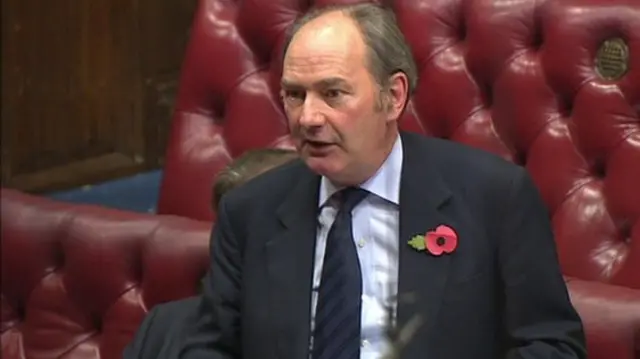
    Speaking from the backbenches, and thus in a personal capacity, Labour's shadow communities and local government minister Lord Beecham tells peers that decentralisation of power and resources to local government, not the "political gamesmanship of English votes for English laws", is the answer to the issues raised by the devolution debate.

    Giving greater powers to pre-existing local and regional government's would "redress the profound inequality which disfigures our society" and would "restore hope to the community, where too many lives have been stunted by poverty and a sense of being neglected."

    Change could only occur if greater funds were transferred with them to bolster unpredictable income from tax, Lord Beecham says.

    Despite the serious content of Lord Beecham's speech it began with laughter from around the chamber when he was unable to remember the of new peer Lord Lennie, despite being sat next to him.

    Lord Beecham
  7. Motion detailspublished at 19:18 GMT 29 October 2014

    Peers are debating a motion "to move that this House takes note of devolution following the Scotland referendum". While this give peers the opportunity to state their opinions on devolution to the government, pronouncements today will not change government policy.

  8. Lessons learnedpublished at 18:59 GMT 29 October 2014

    Labour peer Lord Foulkes of Cumnock accuses party leaders of "learning nothing" from the result of the Scottish independence referendum.

    "Whitehall doesn't seem to realise how close we came to disaster, we were at the edge of a precipice and we nearly went over" he tells peers.

    If parliament doesn't come up with "credible and stable" proposals for greater devolution in Scotland "we'll be back to the precipice sooner rather than later" Lord Foulkes warns.

    Lord Foulkes of Cumnock
  9. Regional devolutionpublished at 18:42 GMT 29 October 2014

    Former Scottish Conservative MP David Maclean, now Lord Blencathra, tells peers the answer to the infamous West Lothian Question is "English votes for English Laws" in the House of Commons.

    Since the formation of the Scottish Parliament in 1999 Scottish MPs have been able to vote on English laws but English MPs have not had the right to vote on all Scottish matters, making English MPs "second class citizens" Lord Blencathra argues.

    The "inequity" in a "two tier House of Commons" must be tackled first Lord Blencathra says, adding there is no appetite for "piecemeal regional devolution" in England.

    Lord Blencathra,
  10. Smith Commissionpublished at 18:41 GMT 29 October 2014

    Following its first full meeting, the Smith commission agreed a set of principles for the cross-party talks, including a commitment that the outcome of talks would not be "conditional on the conclusion of other political negotiations elsewhere in the UK".

    In a debate on devolution in the House of Commons earlier this month, William Hague said the "legitimate expectations" of the English people must be recognised when more powers are given to Scotland.

    Labour has said it will boycott a body set up by the Conservatives to examine the role of English MPs in Parliament.

    Labour say such fundamental decisions should be delayed until after the 2015 election for consideration as part of a wide-ranging constitutional review

  11. Metropolitan elitespublished at 18:41 GMT 29 October 2014

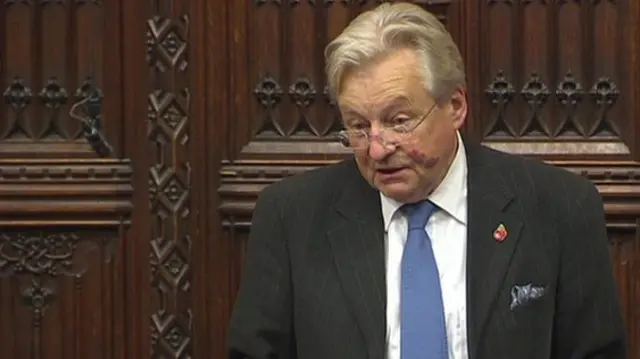
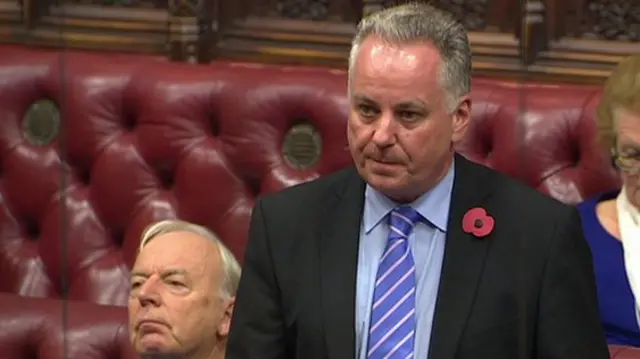
    Former Scottish First Minster Lord McConnell of Glenscorrodale says that current plans from Labour and Conservative parties for further tax powers are insufficient and calls for a UK wide change in policies and institutions to address the gap between the "metropolitan elites" and the people of the UK.

    Though unhappy about the devolution promises made by the three main Westminster party leaders Lord McConnell says the Smith commission on Scottish devolution must be "driven on the principles" of subsidiarity, mutual respect, fiscal responsibility and a commitment to doing nothing to damage the UK's single market.

    The closeness of the Scottish independence referendum should make "politicians sit up and take notice" of the message that voters are unhappy and see that "a political elite are just in it for themselves."

    Scottish First Minster Lord McConnell of Glenscorrodale
  12. Maiden speechpublished at 18:07 GMT 29 October 2014

    Former Deputy Secretary General of the Labour Party, Lord Lennie, makes his maiden speech in the House of Lords.

    Devolution means "government done at a lower cost, with clear benefits to the electorate" but it was up to politicians to make the case for devolution to the public, Lord Lennie said.

    Devolution "mustn't be something that politicians do to the voters" but a "change determined with, by and for the people" he warned.

    In the House of Lords a Member making a maiden speech have to do so in a debate with a speakers' list - like today . The maiden speech is expected to be short and uncontroversial and would not express views that would provoke an interruption.

    Former Deputy Secretary General of the Labour Party, Lord Lennie,
  13. Smith Commissionpublished at 17:39 GMT 29 October 2014

    The Smith Commission met for the first time last week, for what its chairman, Lord Smith called a "constructive" meeting.

    Lord Smith said representatives of Scotland's main political parties had "committed to work together to achieve a positive outcome".

    The commission is expected to reach an agreement by 30 November.

    Following its first full meeting, the commission said it had agreed a set of principles for the cross-party talks, but added there would be no agreements announced in any policy area until it had considered submissions from the public.

    Members of the public and Scotland's civic bodies have until 31 October to submit their views.

  14. Devolved power in England?published at 17:36 GMT 29 October 2014

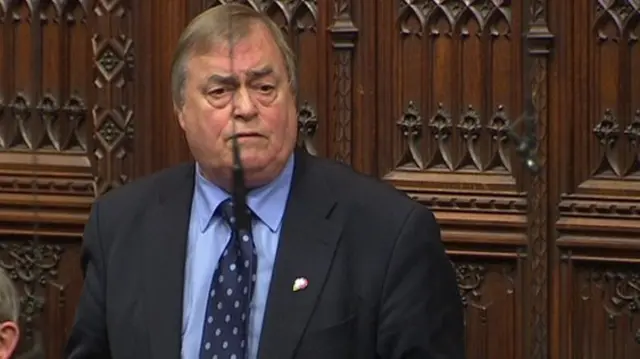
    Former deputy prime minister John Prescott says he believes the result of the Scottish independence referendum shows there is a need to take a look at solutions for devolution in England - like his unsuccessful North East Assembly proposals.

    In a 2004 referendum, 696,519 (78%) voters rejected plans for a North East Assembly, championed by Mr Prescott. But given the intensity of the debate on Scottish independence Lord Prescott, as he is now known, says that English regions are "entitled to have" similar discussions to see how power could be devolved in England.

    Former Deputy Prime Minister John Prescott
  15. Lord Steel's 'federal' approachpublished at 17:11 GMT 29 October 2014

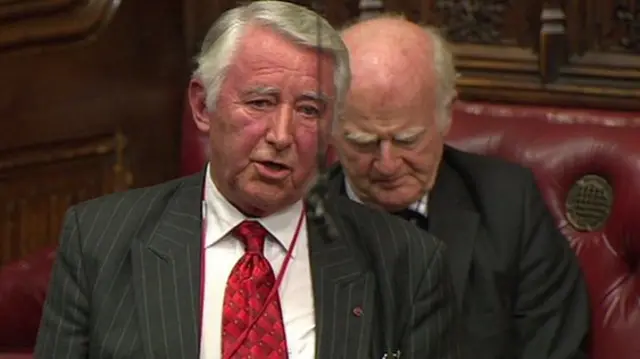
    Former Liberal Democrat party leader David Steel, now Lord Steel of Aikwood, says that he is "optimistic" about the work of the Smith commission , externalon Scottish devolution, chaired by Lord Smith of Kelvin, who Lord Steel calls "very able".

    But he warns there will be "no quick fixes" if the long term changes that are needed are to be properly worked through.

    Coming out in support of a more "federal" approach to the UK, Lord Steel says turning the House of Lords into a senate, elected by the component parts of the UK would help create a "proper United Kingdom Parliament ...[that] really does represent the United Kingdom."

    Lord Steel of Aikwood,
  16. Bishop's interventionpublished at 16:56 GMT 29 October 2014

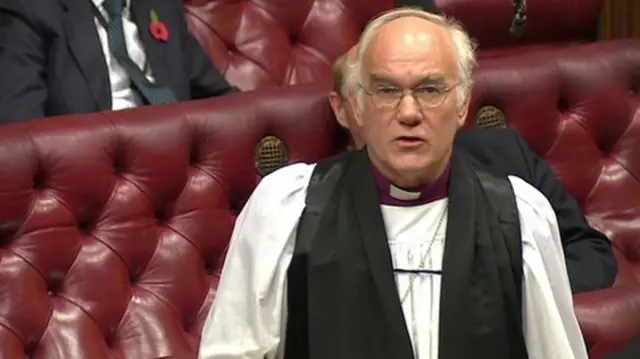
    The only Bishop down to speak in today's debate, the Bishop of Chester, says that the Union with Scotland needs to be "nurtured on a new basis" following the Scottish independence referendum, and warns England to end its "patronising" view of Scotland.

    The Bishop of Chester says that he found the recent 'No' campaign in Scotland "disturbing to the point of embarrassment" conducted largely in negative terms - "worse apart, rather than better together" - before changing tack to "promises and inducements".

    The Bishop of Chester
  17. Commons adjournspublished at 16:31 GMT 29 October 2014

    That brings an end to the debate, and the House of Commons adjourns for the day.

    MPs will be back at 09.30 GMT on Thursday to discuss, among other things, drug policy in the UK.

  18. Commons debatepublished at 16:29 GMT 29 October 2014

    Justice Minister Andrew Selous emphasises the government's commitment to ensuring foreign national offenders are removed from the UK "whenever possible".

    He tells MPs a review of the sentencing framework for driving offences is currently underway, and focuses on the maximum penalties and gaps in the current offences. It will take into account the views of victims, families of victims, road users and criminal justice professionals.

    Mr Selous says he does not want to pre-empt the review's findings but hopes it will lead to recommendations that can be acted on in the next parliament.

    He agrees in principle that co-operation between EU member states over driving disqualifications is "desirable", but cautions that such a move would require the ratification of all member states.

  19. English and Welsh devolutionpublished at 16:28 GMT 29 October 2014

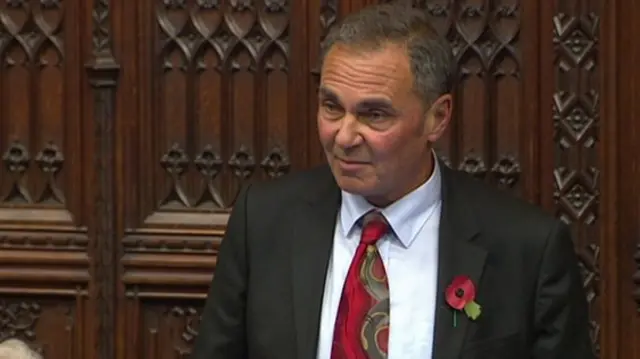
    Former Liberal Democrat MP Lord Tyler calls for greater devolution to be made available to Wales - even further than presented in the Wales Bill - and to the areas in England that want it: such as London, Cornwall and Yorkshire.

    Lord Tyler tells the House that an "English only" parliament-based solution to the English question does not deal with over-centralisation of England. Instead devolved legislatures within England, predicated on proportional representation, should be the focus, he says.

    Former Liberal Democrat MP Lord Tyler
  20. Independence referendumpublished at 16:20 GMT 29 October 2014

    Ahead of the 18 September referendum, Labour, the Conservatives and the Liberal Democrats, who had campaigned to keep Scotland in the UK, set out proposals to deliver more powers for the Scottish Parliament.

    After voters had rejected independence, Prime Minister David Cameron announced the establishment of a commission, chaired by Lord Smith of Kelvin, to look at these proposals and those of the pro-independence SNP and Scottish Green Party.

    The three main UK parties backed a timetable to deliver new powers, set out by former Prime Minister Gordon Brown, as polls in the last days of the referendum campaign suggested the result was too close to call.