Summary

  • Hull Zeppelin raid: 6/7 June 1915

  • Casualties: 24 people dead and 40 wounded

  • About 40 bombs dropped on the city

  • The midnight raid lasted 30 minutes

  1. Thank you and goodbyepublished at 16:00 BST 6 June 2015

    Trevor Gibbons
    BBC News, Yorkshire

    Well that's the end of the live page in which we've been remembering the first Zeppelin raid on Hull exactly 100 years ago. Thank you for all your contributions.

    We hope we have shed some light on the fortitude of the Hull citizens and remembered the unfortunate victims.

    Don't forget to listen to the programme on BBC Radio Humberside from 22:00 BST, with the specially-written drama starting at the same time as the first bomb fell towards the city late one Sunday night in June 1915.
  2. BOMB!published at 15:59 BST 6 June 2015

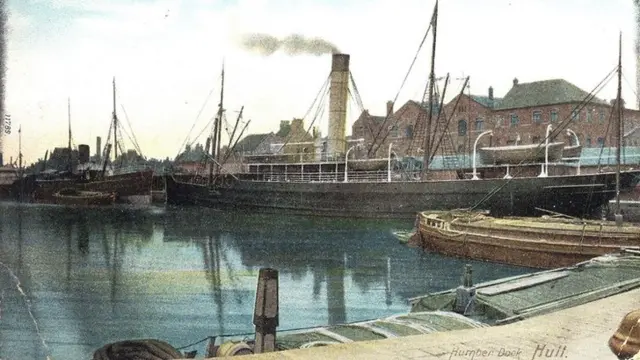
    The final bomb from the Zeppelin fell on Humber Dock (pictured here in 1913) at 00.15 on Monday 7 June.

    Humber Dock in 1913Image source, Hull History Centre

    It hit the bulwarks of the cargo lighter Crocus. The side of ship was shattered and many holes made through its steel plates.

    The raid had lasted 30 minutes and then the Zeppelin headed home.

  3. 'Setting towns on fire'published at 15:57 BST 6 June 2015

    Earlier we featured an extract from a letter written by Zeppelin pilot Heinrich Mathy to his wife only hours after returning from the bombing raid.

    In the same letter we can see his determination to press on the German fight, but he admits he'd rather attack a submarine than a settlement.

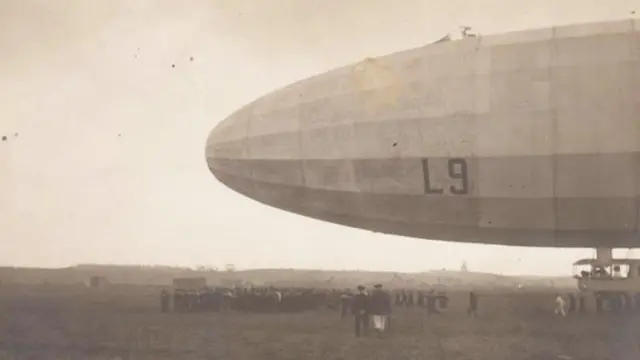
    L-9 back on the groundImage source, Nordholz Aeronauticum

    "...War is war, they've shot at me and it's a nasty fire, and yet fighting submarines is nicer than setting towns on fire. But we'll always give them all we have, the harder [we attack] the earlier they will crumble...

    "Farewell for today. Very deeply kisses you

    "Your Henner".

  4. Coroners' reportspublished at 15:55 BST 6 June 2015

    It wasn't just explosion and fire that killed people during the raid according to coroners' reports. Several deaths were attributed to shock, fear and stress.

    Coroners' reports on several people aged from 36 to 67 included one which noted "fatty degeneration of heart, accelerated by shock of German Zeppelin Air Raid".

    One person - the unfortunate Alfred Wonnison (or possibly Morrison), of Market Place - had his death attributed by the coroner to "shock after his wrongful arrest for being a German spy".

    It was noted he died of cardiac failure, accelerated by shock through being wrongfully arrested by two gunners.

    Jane Ann Booth, 51, died at 2 Alma Street on the 24 July 1915. The coroner noted "vascular and cardiac disease present, accelerated by shock and fear of Zeppelin raid".

  5. Hull's death toll mountspublished at 15:48 BST 6 June 2015

    June 1915 was the first of eight Zeppelin raids on Hull and by the armistice of 1918, 57 people had been killed and a further 151 injured in raids.

    During World War One there were 51 raids on the UK that dropped an estimated 200 tonnes of bombs that killed 557 people with 1,358 people injured.

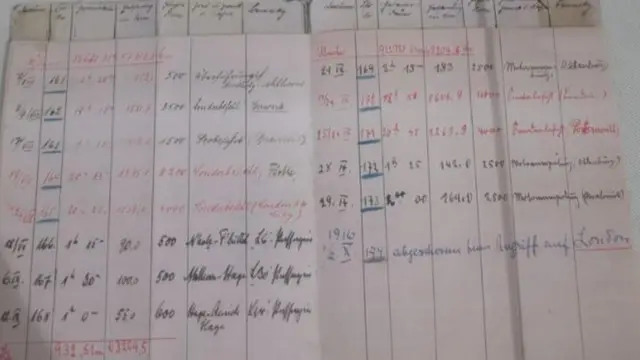
    Heinrich Mathy's log book of his Zeppelin flightsImage source, Nordholz Aeronauticum

    Here we can see details of various Zeppelin flights in the log book of L-9's pilot Heinrich Mathy.

  6. Listen; 'Unprecedented warfare'published at 15:42 BST 6 June 2015

    Dr Nick Evans, University of Hull

    Dr Nick Evans tells us why the use of Zeppelins in bombing raids against the civilian population was "unprecedented warfare" and how it led to the Germans being vilified.

  7. City's German community suffers retaliationpublished at 15:37 BST 6 June 2015

    Dr Nick Evans, University of Hull

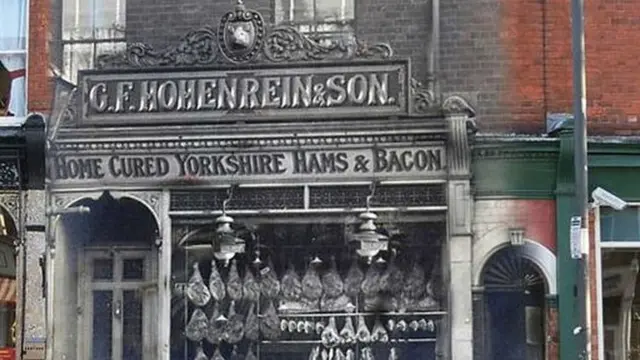
    Following the raid, German pork butchers' businesses across the city, like this one in Princes Avenue, were targeted by people seeking revenge.

    A butcher's shop in Princes Avenue

    Shop windows were smashed and families were terrorised, threatened personally and often possessions were stolen in a response by the citizens of Hull to the horror they had witnessed.

    At the outbreak of war in 1914 there was a vibrant community of about 1,000 Germans but many left and by the end of the war it had dwindled to a few hundred people and the German community in Hull was damaged forever.

    Listen also: A German butcher's fate

  8. Deadly raidpublished at 15:30 BST 6 June 2015

    As the Zeppelin made its way back to its base in Germany the city of Hull started to count the cost of the deadly raid.

    During the 30 minutes of the attack 24 people had been killed and 40 injured. There were no casualties among the attackers.

    In all 40 houses were destroyed.

  9. BOMB!published at 15:14 BST 6 June 2015

    Other bombs were recorded at:

    Bright Street - the premises of Palmer's grocers was destroyed.

    Dansome Lane - a saw mill and timber yard destroyed.

    Milton Street - incendiary fell in St Mary's Roman Catholic school yard.

    Danson Lane - burned out Lear's Stables with a "considerable fire".

    Clarence Street - incendiary burned out, no damage.

    East Street - explosive bomb demolished two houses. It killed Edward Jordan (10) in number 11, his parents were seriously injured and taken to Naval hospital. Mr and Mrs Hill killed at Number 12.

    Victoria Dock - an incendiary in Victoria Dock fell on Swedish ship lying in river basin. Ship's deck slightly damaged.

    Tower Street - Wade's Timber Yard bomb severely damaged railway line and bashed holes in the walls of neighbouring warehouses.

  10. BOMB!published at 15:04 BST 6 June 2015

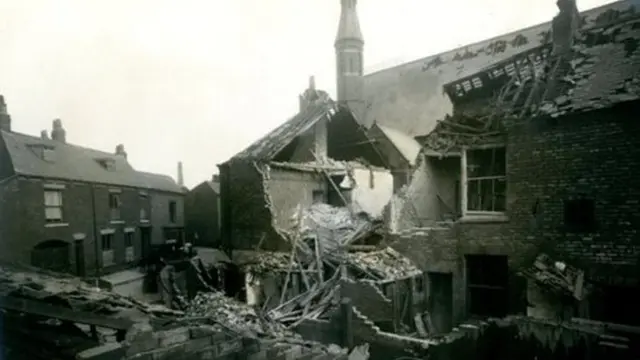
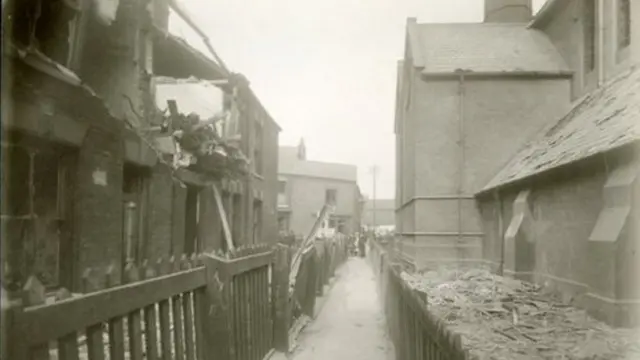
    The effects of an explosive Zeppelin bomb are clear in these pictures.

    St Thomas' Terrace with the church behindImage source, Hull Museums

    It shows 1, 2 and 3 St Thomas' Terrace, off Campbell Street.

    The gap in the centre was house number 2 in which William Walker (60) was killed along with his daughters Alice (32) and Millicent (17). A third daughter May (18) was seriously injured.

    Alice's body was blown onto the aisle roof of St Thomas's Church, a distance of 30 feet (9m) Millicent's was blown into a yard at the rear of the house.

    Rear of St Thomas' TerraceImage source, Hull Museums

    Mr Hatfield of the railway police lived in number 3 and although it was badly damaged and almost demolished he, his wife and four children escaped alive.

  11. BOMB!published at 14:56 BST 6 June 2015

    Constable Street - bomb number 27 hit lower floor of No 109½ Constable Street. Two cars burned out and garage was almost burned out.

    Coltman Street - incendiary at number 153 fell through roof on to partition wall and through floor of landing. Fire extinguished by neighbours, not much damage.

    South Parade - incendiary at number 50 fell through roof and ceiling, setting room on fire and burning to death Maurice (11) and Violet aged (8).

  12. Roll up, roll up!published at 14:46 BST 6 June 2015

    Life in the city during war-time continued with a version of normality. During that summer weekend for instance the picture houses were open for business.

    The Majestic was advertising a daily continuous programme of "various subjects judiciously selected" until 10:45.

    "Justifies its name to its fullest limit. Once come always come," the slogans declared in the local papers.

    At the Hessle Road Picture Palace adjoining West Dock Avenue there was a two-part drama called For Her Sake and a Keystone film called All at Sea.

    Prices were 2d, 4d and 6d (2.5p) - but soldiers and sailors were admitted for half-price.

  13. BOMB!published at 14:33 BST 6 June 2015

    An incendiary bomb hit 102 Great Thornton Street, the home of Harris Needler.

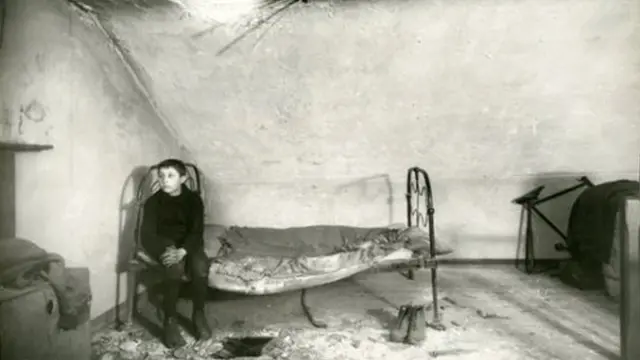
    In one of its rooms five boys were sleeping, two of them in a bed that was struck by the bomb. In this remarkable photograph you can see the iron of the bedstead is bent and one of the boys is sitting at the scene of their lucky escape.

    102 Great Thornton StreetImage source, Hull Museums

    The hole caused by the device is immediately above him. All five boys escaped unhurt.

    However, the bomb penetrated the floor and landed on on a bed in the room below occupied by Mrs Needler, who survived despite suffering serious burns.

    All five boys escaped unhurt.

  14. Yearning Hearts: Zeppelin raids dramatised on radiopublished at 14:25 BST 6 June 2015

    To commemorate the centenary of Hull's first Zeppelin raid a special radio play on the events has been commissioned.

    Yearning Hearts is to be broadcast in a programme from 22:00 BST on Saturday by BBC Radio Humberside.

    You can hear an extract from the play here.

    Produced by David Reeves and writer Dave Windass the programme is to cover the bombing as it happened exactly 100 years on.

  15. Watch and listen: Zeppelin raidspublished at 14:17 BST 6 June 2015

    BBC Look North

    BBC Look North has broadcast a report on the deadly 1915 Zeppelin raid and its aftermath for the citizens of Hull.

    And don't forget tonight at 22:00 there is a programme on BBC Radio Humberside on the night's events featuring a specially-commissioned drama, Yearning Hearts by playwright Dave Windass.

  16. Eyewitness accountpublished at 14:10 BST 6 June 2015

    Florence Dee (nee Mawer) went to see the wreckage at Edwin Davis' drapery store after the raid.

    "I remember going there with my brother and sister, " she said in Keep The Home Fires Burning by local historian John Markham.

    "There were rolls of cloth, all smoking and rolls of ribbon. There was a policeman on duty and we asked if we could have some ribbon.

    "He said yes and he'd reach it down for us. We got ever so much ribbon. It was all debris, really, and the policeman let us take some."

  17. BOMB!published at 14:02 BST 6 June 2015

    What the bomb near the church did was set fire to Davis's drapery store and the nearby Fleece Inn.

    Demetrius Franks, the licensee, and his family were in the cellar when the bomb struck and escaped injury.

    It was initially thought there had been no loss of life, but 10 days after the fire a woman's body was found under the debris. She was not identified nor did anyone report her missing.

    Damage seen from the roof of Holy TrinityImage source, Hull Museums

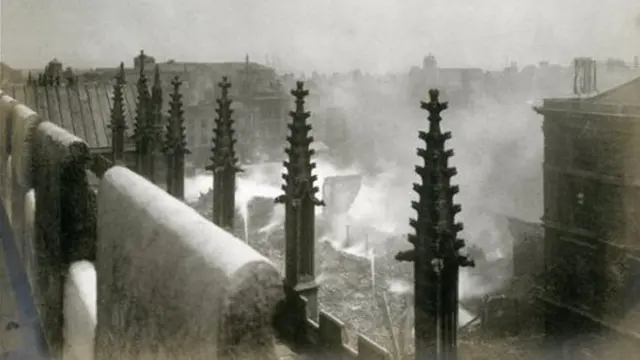
    When a photographer captured the scene from the church roof at 10:00 on Monday 7 June the ruins were still on fire.

    Then the wind began to gently veer round to the opposite direction causing the smoke to blow up at the camera.

    "Thus a fire six or seven hours later would have probably consumed this large and historic building," he concluded.

    As it was the damage was estimated at £34,000.

  18. BOMB!published at 13:53 BST 6 June 2015

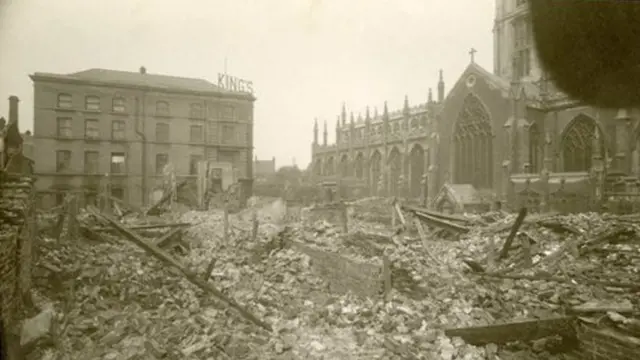
    An incendiary bomb (and possibly an explosive device as well) fell near to Holy Trinity Church where the people of Hull had worshipped for more than 600 years.

    Damage outside Holy TrinityImage source, Hull Museums

    The incendiary started a fire and it was reported that the heat within the church during the blaze "was terrific and the lead of some of the stained glass windows melted".

    Fortunately, during the raid the wind blew from the north west - away from Holy Trinity - thus saving both the church and the neighbouring King's building (now home to the Lizard Lounge nightclub).

  19. BOMB!published at 13:44 BST 6 June 2015

    Bomb number 19 was an explosive device that landed in the Old Town's High Street.

    It blew a hole 6ft (2m) deep in the centre of the street and the explosion ruptured an hydraulic pressure pipe carrying the water and gas mains.

    The gas main caught fire but it was extinguished by one of the raid's heroes - Mr G Penrose, a Hull Corporation pipe layer, stopped the breach by using wet clay!

  20. Interactive map: Where the bombs fellpublished at 13:37 BST 6 June 2015

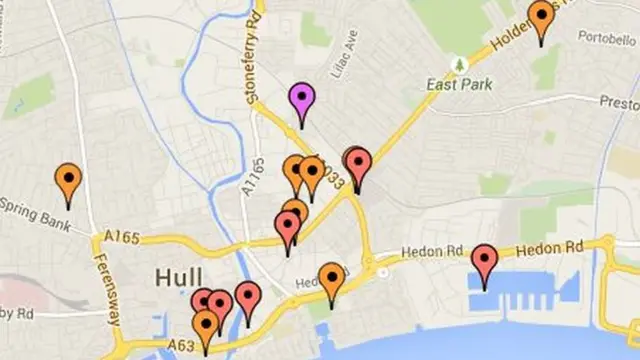
    A map tracking the bombs, external that fell during the city's first and worst Zeppelin attack has been produced overlaying a modern map of the city.

    Map of the bombsImage source, Google Maps/Zee Maps

    Dr Nick Evans, a history lecturer at the University of Hull, says "For Hull, one could suggest, the deaths caused by the Zeppelin attack in June 1915 were the single most deadly moments of the conflict at that time.

    "It would of course be dwarfed by the later (post 1915) losses but these losses all drove the then voluntary recruitment."