Summary

  • UK Prime Minister Boris Johnson says the government will launch a public inquiry next spring, in a statement to the Commons

  • He said "we should learn lessons", adding the UK's devolved administrations would be consulted on the inquiry

  • Labour welcomed the inquiry but said it should begin as soon as possible

  • Meanwhile, an independent report into how the world handled the pandemic finds the current system failed to protect us

  • The report, from a panel appointed by the World Health Organization, finds serious failures from the WHO and individual governments

  • People aged 38 and 39 in England will be called to have their Covid vaccine from Thursday

  • The UK economy shrank by 1.5% in the first quarter of 2021, amid a lengthy winter lockdown

  • Up to six people from different households will be able to meet indoors at pubs, cafes and restaurants in Wales from Monday

  • Monday was already due to be the reopening date for indoor hospitality in England and Scotland

  • Dua Lipa demands a pay rise for NHS workers as she wins at the Brits - the UK's first major in-person ceremony of the pandemic

  • Confirmed Covid-19 deaths in India pass a quarter of a million

  1. Thank you and bye for nowpublished at 17:30 BST 12 May 2021

    Thanks for joining us, that's all from the live team today - but we will be back again tomorrow.

    Bye for now from Becky Morton, Claire Heald, James Clarke, Jennifer Meierhans, Katie Wright and Robert Greenall, who've brought you today's updates.
  2. Today's headlines around the worldpublished at 17:27 BST 12 May 2021

    And here's a recap of the main stories around the world today:

    • A report from an independent panel appointed by the World Health Organization criticises the slow response to the pandemic by both the WHO and individual governments
    • India's death toll passes 250,000, and hits another 24-hour record high as large areas of the country continue to struggle with shortages of beds, oxygen and medical supplies
    • France is opening up vaccinations for all over-18s, as it tries to boost vaccination rates. Meanwhile MPs have approved a controversial "health pass"
    • Spain launches its summer promotional campaign for tourism, predicting 45 million visitors this year - more than half the pre-pandemic number
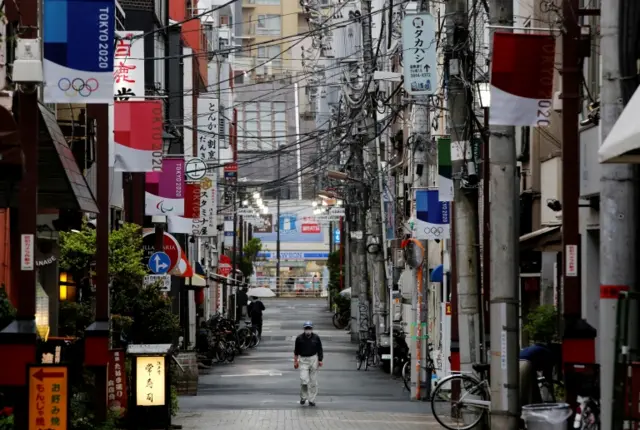
    • Japan widens its state of emergency to cover one-third of the country's population as hospitals continue to deal with a rise in severe Covid cases, with just over 10 weeks to go to the Tokyo Olympics.
    A man wearing a protective face mask walks in a local shopping street decorated with Tokyo 2020 Olympic Games flagsImage source, Reuters
  3. What's been happening in the UK?published at 17:25 BST 12 May 2021

    We are going to be bringing our live coronavirus coverage to a close soon so here's a recap of the day's events in the UK:

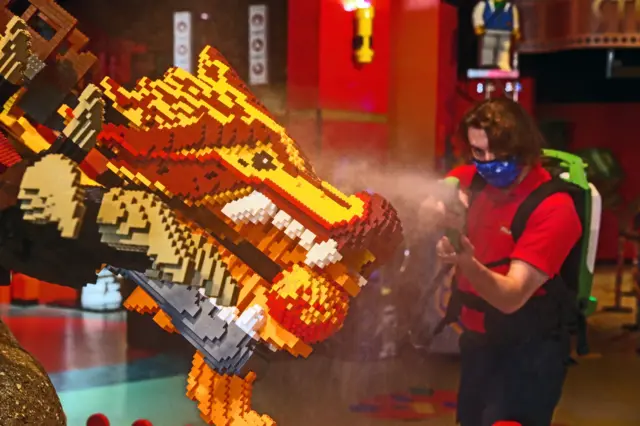
    Dylan Sinnott guest experience team leader at the Legoland Discovery Centre in Manchester sprays the rides and models with disinfectant as they make final preparations for re-opening on May 17Image source, PA Media
  4. PM arrives at service to honour nursespublished at 17:21 BST 12 May 2021

    Prime Minister Boris Johnson has arrived at Westminster Abbey for a service to honour the contribution of nurses during the pandemic.

    The service, which takes place annually to mark Florence Nightingale's birthday on 12 May - now known as International Nurses' Day - is this year recognising the sacrifice of nurses and midwives since the outbreak of Covid-19 in the UK.

    Health Secretary Matt Hancock and actress Helena Bonham Carter, who is a relative of Nightingale, are also at the service.

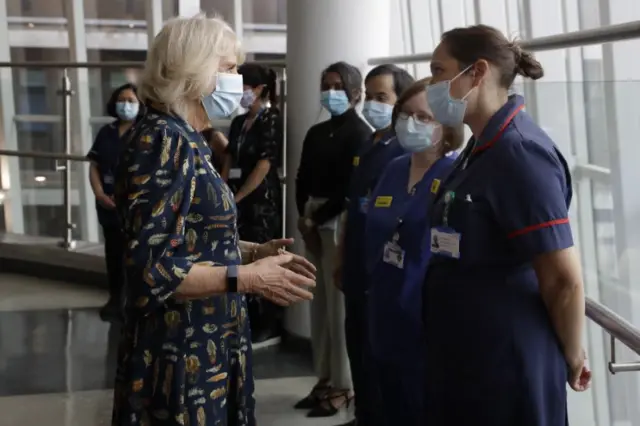
    Earlier, the Duchess of Cornwall met nurses, patients and staff on a visit to the Whittington Hospital, in London.

    The Duchess of Cornwall talking to nursesImage source, PA Media
  5. Scotland's school assessments 'exams in all but name' - Labourpublished at 17:18 BST 12 May 2021

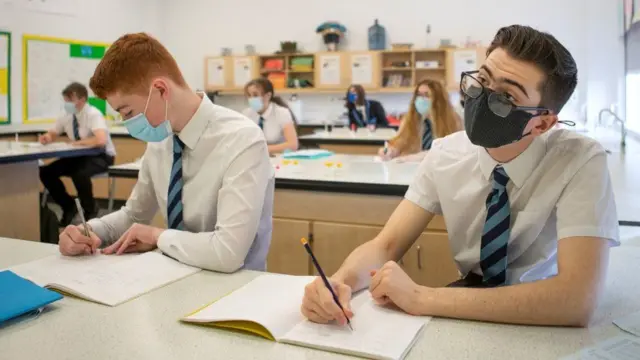
    Students taking examsImage source, PA Media

    Exams in Scotland have been cancelled as the Covid-19 pandemic forced pupils into extended periods of learning from home, but the alternative arrangements are "exams in all but name", Labour's education spokesman has said.

    Michael Marra has written to Education Secretary John Swinney calling for greater clarity in the system, claiming there is inconsistency in this year's process, a lack of planning and a lack of information about appeals.

    He wrote: "Lessons must be learned from last year's unfair appeals process, where young people had no ability to have their teacher estimate scrutinised, even where they felt evidence existed."

    He went on: "Young people in Scotland are right now sitting exams in all but name, they need clarity and certainty about the process they are undertaking."

    Some pupils told the BBC they were at "breaking point" over school assessments.

  6. Nepal faces its own Covid crisispublished at 17:08 BST 12 May 2021

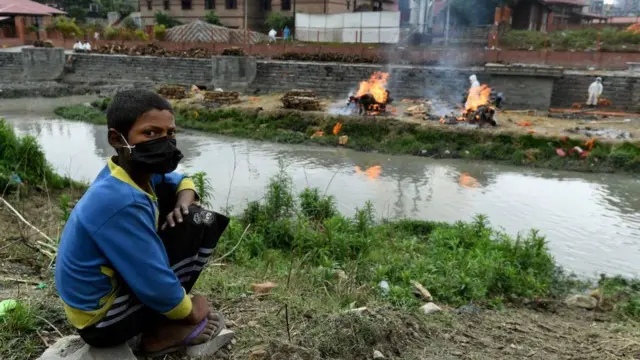
    A boy watches funeral pyres of people who died due to CovidImage source, AFP
    Image caption,

    More than 4,000 people have died so far in Nepal with cases rising

    While much of the world's attention in recent weeks has been focused on India's Covid plight, its small northern neighbour Nepal has been facing its own crisis.

    The Himalayan nation of about 30 million people is one of the least developed countries in the world, and it relies on India for supplies of medical equipment and oxygen.

    And as India stops exports, Nepal is struggling to find alternatives. Meanwhile nearly one in two of its citizens are testing positive for the virus.

    More than 4,000 people have died and many more deaths are expected.

    Read more here from the BBC's Ambarasan Ethirajan on the tragedy of Nepal's second wave.

  7. Trafalgar Square to host key workers for Uefa matchespublished at 16:58 BST 12 May 2021

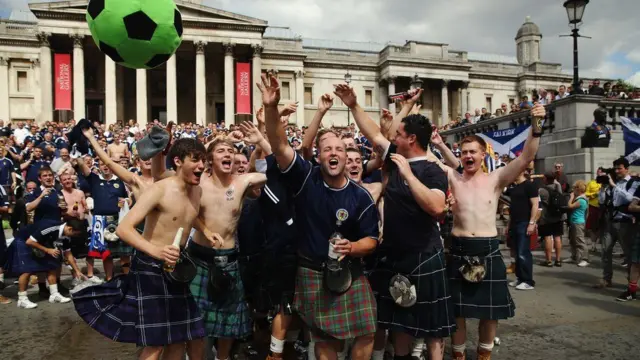
    Scotland fans in Trafalgar SquareImage source, Getty Images
    Image caption,

    England play Scotland at Wembley Stadium on 18 June

    Key workers have been offered exclusive access to watch the Uefa Euro 2020 matches in London's Trafalgar Square.

    The capital will be one of 12 cities hosting the European Championship, which has been delayed by a year because of the pandemic.

    Police, transport workers, NHS and ambulance staff will be given the chance to watch the first two England games in the square's fan park.

    Wembley Stadium will stage eight games during the tournament, which runs from 11 June to 11 July, all of them to be shown on giant TV screens in London.

    Mayor Sadiq Khan said it was hoped up to 9,500 people could be hosted in the Fan Zone

    Under the Prime Minister's roadmap out of lockdown, social distancing measures and limits of people gathering outdoors will still be in place for England's first two games.

    Read more.

  8. Winner-takes-all scramble marred Covid responsepublished at 16:51 BST 12 May 2021

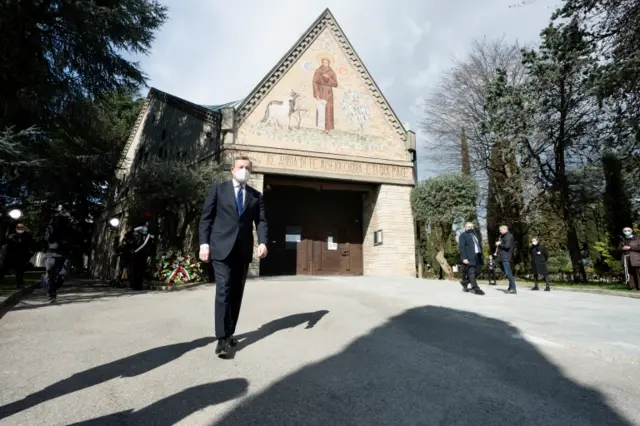
    Italian Prime Minister Mario Draghi remembers Covid victims on its first National Day - 18 March 2021Image source, Reuters
    Image caption,

    Italy's prime minister remembers Covid victims in Bergamo, one of the first European cities to be ravaged by the virus

    Some more now on the independent report published today which highlights serious flaws in the world's initial response to the pandemic.

    We've already mentioned criticisms aimed at the World Health Organization. But the report says that when combined with the actions of individual governments, these failures created a "toxic cocktail". So what did governments do wrong?

    The panel says US and European countries wasted the entire month of February when the virus was advancing across the world, and only acted when their hospitals began to fill up.

    And when countries should have been preparing their healthcare systems for an influx of Covid patients, much of the world descended into a "winner takes all" scramble for protective equipment and medicines, the report says.

    Read more about the report here.

  9. Covid inquiry: What is it and how will it work?published at 16:38 BST 12 May 2021

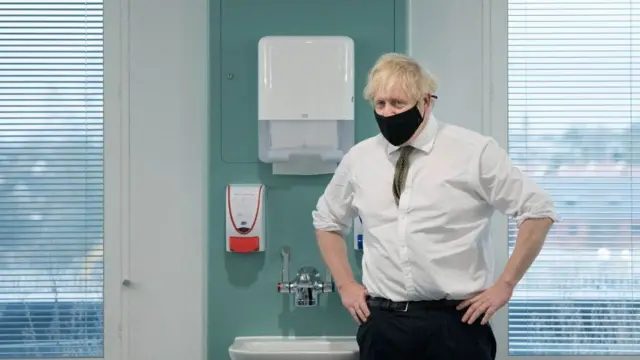
    Boris JohnsonImage source, Getty Images

    Boris Johnson has announced an independent public inquiry into the government's handling of the coronavirus pandemic.But what does this mean?

    A public inquiry is a major investigation, launched by the government.

    Its job is to respond to "public concern" about a particular event or set of events - such as the pandemic.

    According to a leading specialist lawyer, it must ask three questions:

    • What happened?
    • Why did it happen and who is to blame?
    • What can be done to prevent it happening again?

    An inquiry has the power to make people appear as witnesses, and to provide documentation and material evidence.

    At the end, the public inquiry usually draws up a report and makes recommendations to the government.

    Previous high-profile public inquiries have included the Chilcot investigation into the UK's role in the Iraq war - which took seven years - and the events of "Bloody Sunday" in Northern Ireland - which took 12 years.

    Here's everything we know about the Covid inquiry so far.

  10. Concern grows over rising cases in Glasgowpublished at 16:30 BST 12 May 2021

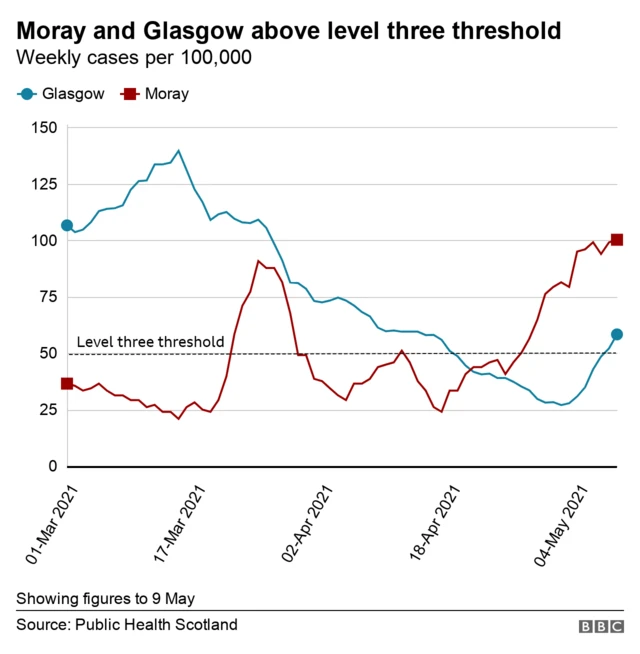
    Graph showing Moray and Glasgow Covid rates

    Concern is growing about a rising number of Covid cases in Glasgow as the area prepares to ease restrictions.

    The latest published case rate is 58.3 per 100,000 population - well above a key threshold for moving from level three to level two in the roadmap out of lockdown.

    A senior health official said there were clusters of high infection rates in parts of the city.

    The variant first identified in India is suspected to be involved, although this has yet to be confirmed.

    All mainland council areas with the likely exception of Moray are due to move to level two on Monday, allowing people to meet indoors in groups of up to six people from up to three different households.

    Meanwhile, Rangers fans are being warned to think of their families before gathering in crowds to celebrate their league win.

  11. India death toll passes quarter of a millionpublished at 16:22 BST 12 May 2021

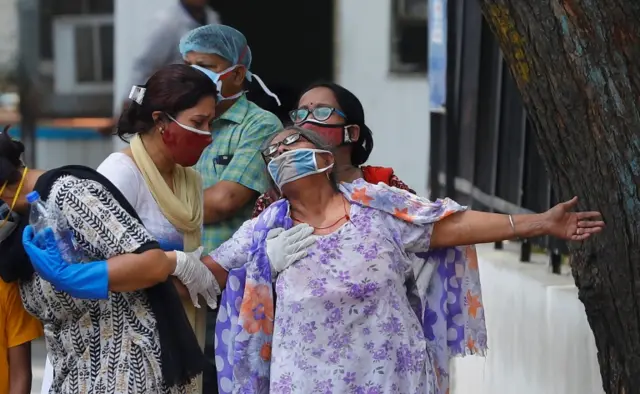
    A Delhi woman mourns after seeing the body of her sonImage source, Reuters
    Image caption,

    A woman mourns her son's death in Delhi as fatalities continue to rise

    India has seen its deadliest 24 hours of the pandemic yet, as the country's total number of Covid fatalities passed 250,000.

    Deaths increased by a record 4,205 while infections rose 348,421 to more than 23 million. Experts believe the death toll could actually be much higher.

    A second wave of the virus is ravaging parts of the country, with deaths rising significantly in recent weeks. There are shortages of medicines, hospital beds and oxygen, and most of the country's crematoriums have run out of spaces.

    Watch the BBC's Vikas Pandey's journey through the capital Delhi in the throes of the pandemic:

    Media caption,

    India coronavirus: 'My city is under siege from Covid'

  12. How many Covid vaccinations have been given in the UK?published at 16:14 BST 12 May 2021

    A total of 54,160,993 coronavirus vaccinations have been given in the UK, according to the government's daily figures., external

    That's 35,722,461 first jabs and 18,438,532 second dose total.

    About a million 38 and 39-year-olds in England will be able to book an appointment for a vaccine from 07:00 on Thursday on the NHS website.

    And you can find out when you should be due a vaccination here.

  13. UK records 11 coronavirus deathspublished at 16:04 BST 12 May 2021
    Breaking

    A further 11 people have died with coronavirus in the UK, the government's daily figures show., external

    The total number of people to die within 28 days of a positive Covid-19 test is now 127,640.

    There were also 2,284 new infections recorded today.

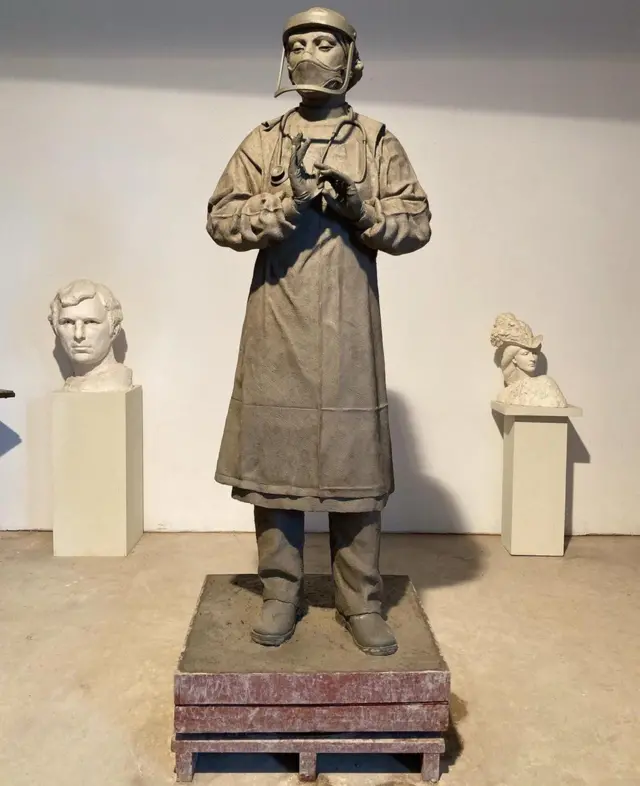
  14. Covid medic memorial statue unveiledpublished at 15:58 BST 12 May 2021

    Statue of medic in PPE for National Emergency Services Memorial

    Medics in PPE have become one of the defining images of the pandemic - and are now a subject for a monument planned in central London.

    The National Emergency Services Memorial was devised before Covid but later adapted to recognise the efforts of NHS staff.

    The BBC has been given an exclusive view of the first of six statues to be completed.

    The female medic stands 8ft (2.5m) tall and has been been meticulously carved in clay by sculptor Philip Jackson at his West Sussex studio ahead of a final finish. Dressed in full PPE, only her eyes are visible behind a visor and mask.

    "She's had a 12-hour stint on the ward. She's fatigued, she's tired," Jackson says. "She's taking off her gloves for the last time during the day and all that she has seen during the day is seen in her eyes."

    Read more here.

  15. Unison backs Scotland's 4% pay offer for most NHS workerspublished at 15:50 BST 12 May 2021

    Ambulance workerImage source, PA Media

    Members of the Unison trade union have voted to accept the Scottish Government's 4% pay offer for most NHS workers.

    Unison, Scotland's largest public sector union, had campaigned for the previous three-year deal to be renegotiated in light of the pandemic.

    In March, Health Secretary Jeane Freeman set out the pay rise of at least 4% for staff with contracts under the Agenda for Change system.

    Almost 50,000 Unison members were balloted on the proposal and 35% voted, with 84% accepting the pay deal.

    Union officials say they will now push for the deal to be implemented as soon as possible.

    In England, the government recommended in March that NHS staff should receive a 1% pay increase this year.

    Pop star Dua Lipa called for NHS workers to be paid more as she won two major awards at the Brits last night.

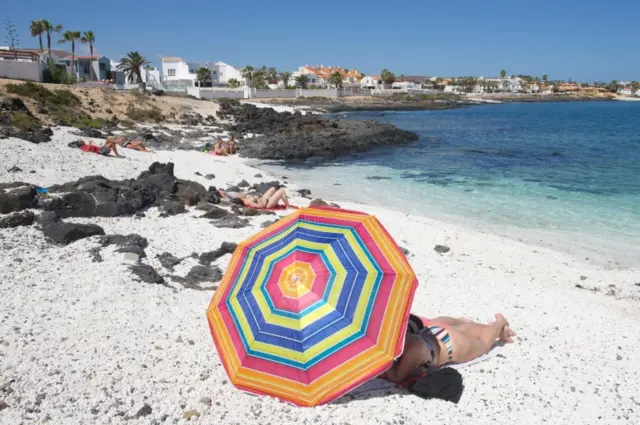
  16. Spain confident of tourism revivalpublished at 15:42 BST 12 May 2021

    Tourists enjoy April sun in Fuerteventura, Canary IslandsImage source, EPA
    Image caption,

    The Canary Islands have seen few tourists so far this year

    Spain is expecting as many as 45 million foreign visitors this year, more than half pre-pandemic levels, its tourism minister says.

    "International tourists can start planning their Spanish vacations now," Reyes Maroto said at the launch of Spain's summer promotional campaign, describing the forecast as "cautious but realistic".

    The European Union is expected to update its restrictions on non-essential visits from outside the bloc on 20 May, just three days after the UK - Spain's biggest source of tourists - allows international travel to resume.

    But Spain will remain on England and Scotland's amber list of countries, meaning people should not be travelling there for leisure and should quarantine on their return home.

    Spain is making a major push to boost tourism after last year's numbers collapsed by nearly 80% compared with 2019. French and German visitors are also being targeted.

    Earlier we reported that Foreign Minister Arancha González Laya was urging the UK to consider a regional approach to easing restrictions, as many Spanish regions had similar case numbers to Britain.

  17. Right to wait until after winter for Covid inquiry - No 10published at 15:31 BST 12 May 2021

    Downing Street has defended the timescale for starting the public inquiry into the handling of the pandemic, after a group for bereaved families said it was beginning too late.

    The prime minister's official spokesman said: "We're about to take one of the biggest steps forward in step three, which will involve a lot of unlocking, and that needs to be monitored carefully as we know variants are still an issue of concern and, of course, we will then be going into winter and the usual pressures that places on our NHS.

    "Therefore it is right to wait until we are out of certainly winter time and hopefully due to the vaccine rollout globally... we will be in a better position to take this forward.

    "Because these sorts of inquiries do require a great deal of government time with officials who are currently working on our Covid response."

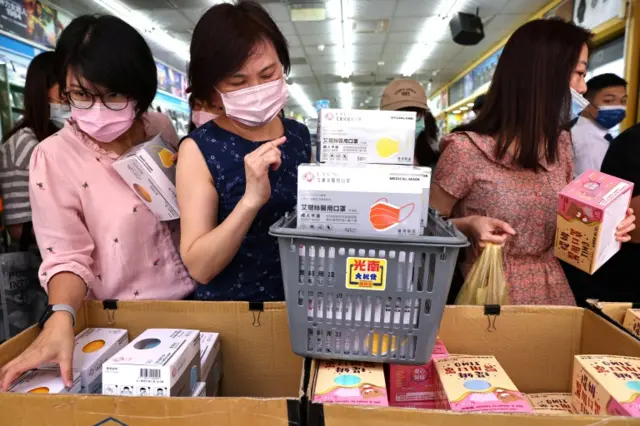
  18. Record cases as Taiwan heads for near lockdownpublished at 15:22 BST 12 May 2021

    Kerry Allen
    BBC Monitoring, Chinese Media Analyst

    People buying masks in TaipeiImage source, Reuters
    Image caption,

    Masks could become mandatory in Taiwan if restrictions are further tightened

    Taiwan could be heading for a near lockdown, as a result of numerous outbreaks on the island over the last couple of weeks.

    There have been a spate of cases in Yilan County and the city of Taipei, linked to an arcade and an airport hotel respectively.

    Yesterday, Taiwan increased its alert level from Level 1 to 2, meaning that large-scale indoor and outdoor activities are now banned.

    President Tsai Ing-wen called on citizens to follow the rules in a tweet., external

    However, according to Focus Taiwan, Taiwan’s Central Epidemic Command Centre “appears ready to further raise the alert level to Level 3”, external, in light of Taiwan confirming 16 cases in a single day, “the highest number reported… since the outbreak began”.

    Taiwan has four Covid-19 response levels, and a Level 3 alert would “stop short of a lockdown”. Masks would become mandatory, and all but essential businesses would close. Gatherings would also be restricted.

    This would be unprecedented, as Taiwan has not had to resort to a Level 3 lockdown throughout the pandemic. It has been something of a success story, having only recorded 1,210 Covid-19 cases throughout. It has a population of 23.8 million.

    The majority of these cases were reported very early on in the pandemic, peaking in April 2020. However, swift travel bans and strict quarantine measures led to Taiwan subsequently being able to go 253 days without reporting a single case of Covid-19 in 2020.

  19. Analysis

    Covid report: All countries agree 'never again'published at 15:12 BST 12 May 2021

    Naomi Grimley
    BBC News

    The most eye-catching lines of the report by the Independent Panel for Pandemic Preparedness and Response are that the pandemic was the 21st Century's "Chernobyl moment" and its assertion that the world wasted time in February 2020 while the virus took hold.

    The panel calls for better processes and structures to spot the next highly infectious pathogen. As well as better funding for the World Health Organization to make it stronger and give it more teeth.

    After the worst shock to the global economy since World War Two, all countries will agree that it's a case of "never again". But will meaningful reform be possible when so much of the current response is still about putting national interests first? The panel has called for rich countries to share one billion doses of vaccine by September, for example. Yet still many nations with large stockpiles remain reluctant to declare their hand.

    There are some issues the panel didn't have time to consider in depth. The most fundamental one remains our relationship with the animal world to stop viruses jumping to humans in the first place.

  20. Vaccines are our way out - Hancockpublished at 15:02 BST 12 May 2021

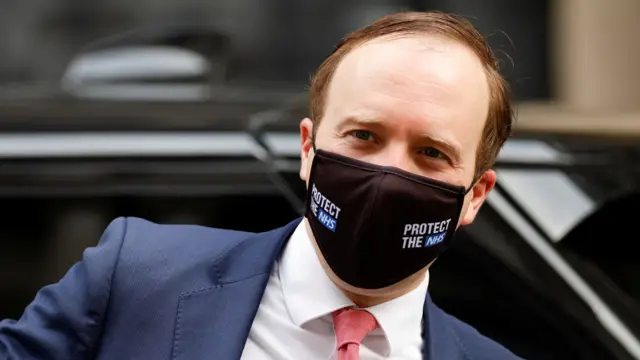
    Matt HancockImage source, Reuters

    As jabs in England are extended to those in their late 30s, Health Secretary Matt Hancock urged those eligible for the coronavirus jab to come forward, describing vaccines as "our way out of the pandemic".

    "Our incredible vaccination programme has already saved thousands of lives and has helped to significantly reduce hospital and infection rates, allowing us to begin safely easing restrictions," he added.

    NHS national medical director Professor Stephen Powis said the success of the programme was "not by accident but down to the careful planning and precision of NHS staff".