Summary

  • India will be on the UK international travel red list from 04:00 BST on Friday

  • Delhi begins week-long lockdown after a weekend curfew failed to halt record spike in cases overwhelming health services

  • India has had over 200,000 cases a day since 15 April - with 1,620 new deaths reported on Sunday

  • Health officials investigating whether India variant might spread more easily and evade vaccines

  • 103 cases of the variant have been found in the UK, Health Secretary Matt Hancock said

  • UK PM Boris Johnson has cancelled his planned trip to India next week

  • More than 10 million UK adults have had two doses of a vaccine

  • UK records its lowest number of daily Covid deaths since 7 September - four - and 2,963 new confirmed cases

  1. Goodbyepublished at 19:55 BST 19 April 2021

    We're bringing our live coronavirus coverage to a close. We'll be back tomorrow with more developments.

    Monday's live coverage was edited by Martha Buckley and George Bowden, and written by Doug Faulkner, Alexandra Fouché, Lauren Turner and David Walker.
  2. Scotland also adds India to 'red list'published at 19:50 BST 19 April 2021

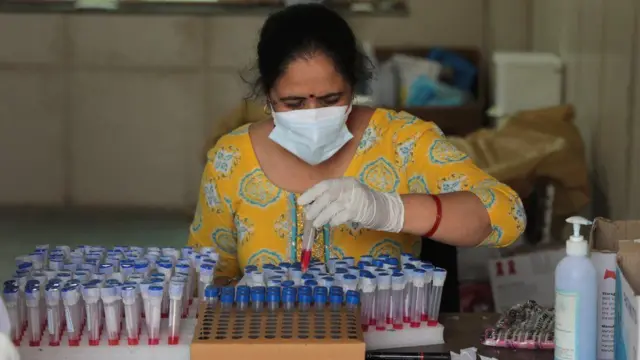
    Tests are screened in IndiaImage source, EPA

    The Scottish government has confirmed that India will be added to its travel "red list".

    The UK government made the same decision earlier today for England, meaning anybody who is not a UK or Irish resident or British citizen cannot enter the UK if they’ve been in India in the last 10 days.

    UK and Irish residents or British citizens arriving in Scotland and England from India will need to complete a 10-day quarantine in an approved hotel.

    There are currently no direct international flights from India to Wales or Northern Ireland.

    The Scottish Transport Secretary Michael Matheson said international travel required a “cautious approach, on a four-nation basis”.

  3. Re-cap: What were today's main developments?published at 19:40 BST 19 April 2021

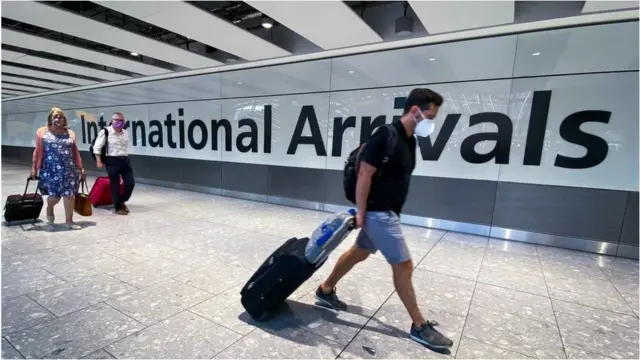
    People arriving at an airportImage source, PA Media

    It's time to re-cap some of the main developments from the day:

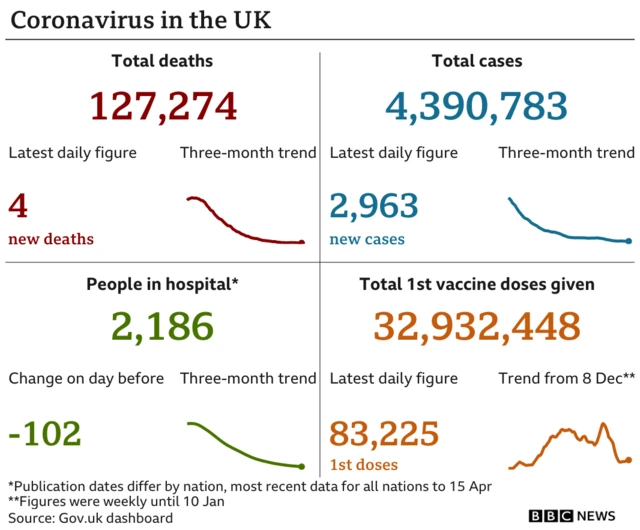
    A graphic showing the number of cases, deaths and vaccinations in the UK
  4. Vaccine passports increase inequality - WHOpublished at 19:30 BST 19 April 2021

    Imogen Foulkes
    BBC News, Geneva

    In this photo illustration a symbolic Covid health passport seen displayed on a smartphone screen in front of the flight information panelImage source, Getty Images

    The World Health Organization (WHO) is advising countries not to demand proof of vaccination as a requirement before travelling.

    The WHO’s emergency committee said vaccine passports would simply increase inequality, and might not help reduce the spread of Covid-19.

    Many European countries are already planning to demand proof of vaccination from arriving holidaymakers.

    But with widely different levels of vaccination between rich and poor countries, the organisation says vaccine passports will contribute to inequality, allowing those who have been vaccinated first, such as older people from wealthy countries, more freedom of movement than others.

    And there is only limited evidence, so far, to suggest that those who have been vaccinated cannot transmit the virus.

    Instead, the WHO is calling, again, for a global commitment to vaccine equity, in which the elderly, the chronically ill, and health workers in all countries are prioritised.

    It’s not just the fairest thing to do, the WHO believes, but also the fastest way to reduce the number of hospitalisations and deaths.

  5. What are the exemptions for quarantine hotel stays?published at 19:15 BST 19 April 2021

    Caroline Davies
    BBC transport correspondent

    With all British and Irish nationals and those with residency rights soon to be subject to mandatory hotel quarantine on arrivial into England from India, what are the exemptions?

    Well, if you travel to England and have been in a red listed country in the last 10 days, in most circumstances, you will have to stay in a government-approved hotel at your own cost.

    A few of the jobs that do not have to do so include: aircraft pilots and crew; seamen, masters, inspectors and surveyors of ships; those with border security duties; defence personnel, visiting forces and government contractors; diplomatic missions and international organisations and conferences.

    There are also some exemptions, such as for some unaccompanied minors attending boarding school who might be able to quarantine at their boarding school.

    As well as some people attending someone who is dying or a funeral - if it is a close family member - although this is limited and requires requesting permission and they cannot use public transport to get there.

    More details on exemptions can be found here, external.

  6. Has this been the worst year for deaths since 2008?published at 19:00 BST 19 April 2021

    Robert Cuffe
    BBC head of statistics

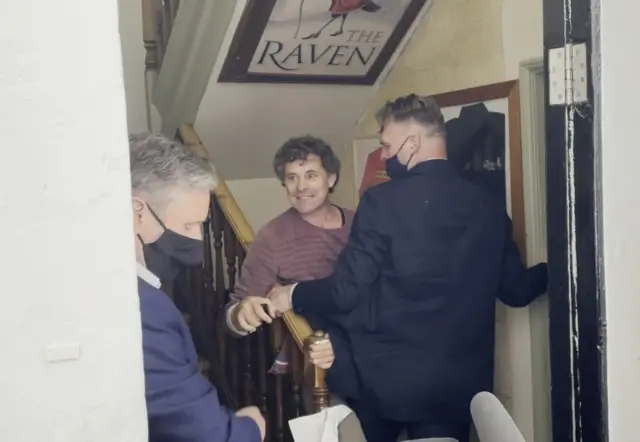
    Keir Starmer and Rod HumphrisImage source, PA Media
    Image caption,

    Keir Starmer was confronted by a pub landlord earlier

    Earlier today - as seen in the picture above - Labour leader Keir Starmer was confronted by a pub landlord in Bath who made a series of Covid claims.

    Rod Humphris said “the last time we had this much death was 2008” and noted that the average age of death for people with coronavirus was over 80.

    The figures are right but there are some health warnings that come with them.

    Last year’s Covid epidemic brought the UK’s death rates back to where they stood 13 years before, in 2008.

    Death rates are supposed to get better every year. Undoing more than a decade’s worth of progress in one fell swoop just doesn’t happen in ordinary times.

    It’s like losing 13 years’ GDP growth in a single year: it would be a national economic emergency, even if it only brought the UK’s economy back to where it was in 2008.

    Onto the second claim: most people who die with Covid are elderly - three-quarters of Covid deaths have been in those over 75.

    But that doesn’t mean they were all on death’s doorstep. Even if you’re an 80-year-old, overweight man with diabetes who smokes, your life expectancy is around four more years, external. So, many of the 150,000 people who have died with Covid have likely lost years of life.

  7. Mass cancellations predicted after India 'red list' decisionpublished at 18:45 BST 19 April 2021

    Saajan Radia
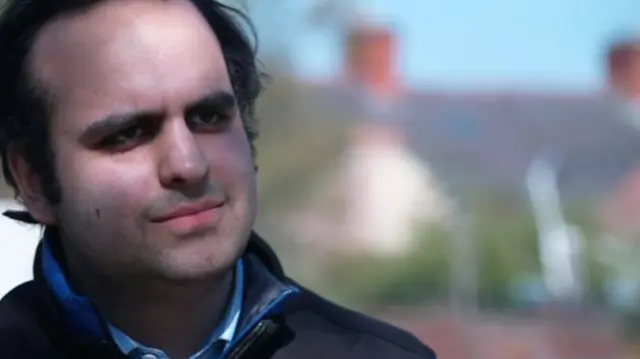
    Image caption,

    Saajan Radia said he would be unable to visit his wife's family

    People in Leicester have been giving the BBC their reaction to India being added to the UK travel "red list".

    Travel agent Nisha Ganatra, of Citibond Travel, said she was braced for the cancellation of trips to India.

    "Most of the people, 99% will cancel now," she said. "It is quite difficult for us - there is no money for us. We're not making anything at all."

    And Saajan Radia, also from Leicester, said as his wife's family is in India, they usually visit at least once a year.

    "Since last year we've not been able to go," he said, adding how difficult it was for the family to have "that uncertainty of not being able to see my kids' grandparents".

  8. Explained: The Indian Covid variant that's under investigationpublished at 18:30 BST 19 April 2021

    World and variants illustrationImage source, Getty Images

    BA.4 and BA.5 Omicron: How worried should we be?

    Surges of Covid are happening again around the world, driven by some new subvariants of Omicron.

    Read More
  9. Hancock urged to fix Ramadan hotel food concernspublished at 18:15 BST 19 April 2021

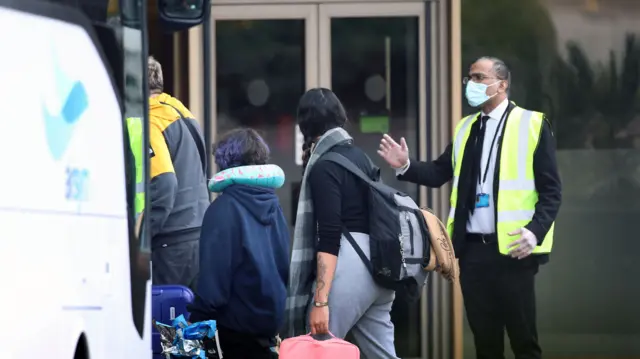
    People arriving at a quarantine hotelImage source, PA Media

    Matt Hancock has been urged to resolve concerns about food provision for people in quarantine hotels, particularly for those who are fasting during Ramadan - which is currently being observed.

    Labour MP Imran Hussain called on Hancock to "urgently resolve this frankly absolutely shambolic situation with the booking system" and to ensure food "meets the faith and dietary requirements of travellers particularly those fasting during Ramadan".

    Hancock said the government was "very careful" to ensure the majority of those who have to go through managed quarantine have a good experience and said he would make sure public health minister Jo Churchill met with Hussain to hear about individual concerns.

    He added that "making sure that food provision is appropriate for those fasting at Ramadan" was "very important".

  10. Why was India not already on the 'red list'?published at 18:05 BST 19 April 2021

    Reality Check

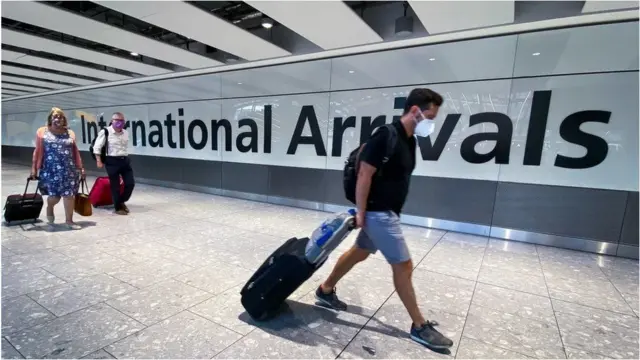
    Arrivals at HeathrowImage source, PA Media

    As we've been reporting, India will be added to the UK's so-called red list - meaning there will be strict restrictions on travel between the countries from Friday.

    It has been reporting more than 200,000 cases daily since 15 April, and near neighbours Pakistan and Bangladesh have both been on the red list since 9 April.

    Criteria for being added to the list include how good a country's testing is, how many cases have been identified, and whether the country has exported new variants of concern.

    As of 13 April, Bangladesh, which had the South Africa variant but not the Brazil variant, and Pakistan, which had neither, were on the list.

    But India, which had both, was not added for another two weeks.

    "Nobody knows the full criteria - but there may be a political element because the UK wants a trade deal with India," Dr Simon Clarke, associate professor in cellular microbiology at the University of Reading, says.

    Read more here.

  11. Everything to know about surge testingpublished at 17:50 BST 19 April 2021

    A woman receives a testImage source, Getty Images

    Where are people being asked to do surge testing?

    People who live, work or travel in various parts of the UK are being urged to get a Covid test.

    Read More
  12. India red list delay questioned in Commonspublished at 17:33 BST 19 April 2021

    Yvette CooperImage source, HoC

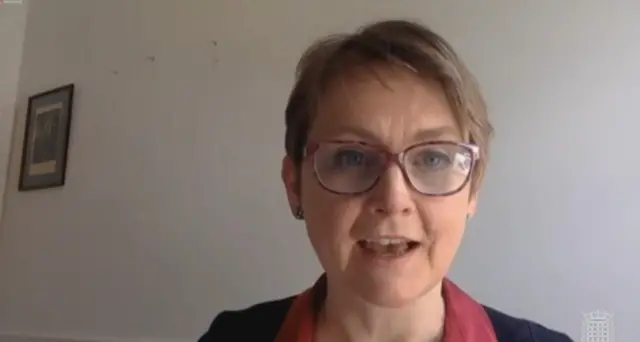
    During the health secretary's appearance in the Commons earlier, Labour's Yvette Cooper, chairwoman of the Home Affairs Committee, questioned why India was not put on the red list sooner.

    She said: "Hong Kong this week have identified 47 Covid cases just on a single Delhi flight and we have still 16 more direct flights, many more indirect flights from India to here before Friday alone."

    Matt Hancock said decisions on each country were "kept under constant review".

  13. Pandemic could be under control 'in months', says WHO, as Thunberg donates to Covaxpublished at 17:21 BST 19 April 2021

    The world has the means to bring the pandemic under control within months, the head of the World Health Organization (WHO) has said.

    "We have the tools to bring this pandemic under control in a matter of months, if we apply them consistently and equitably," Tedros Adhanom Ghebreyesus is quoted by Reuters news agency as saying at a daily news briefing.

    Teenage climate activist Greta Thunberg, who joined the briefing from Sweden as a guest, condemned what she said was the "tragedy" of vaccine inequity as she donated €100,000 ($120,000) from her foundation to Covax, the scheme aiming to give global access to Covid-19 vaccines.

    This X post cannot be displayed in your browser. Please enable Javascript or try a different browser.View original content on X
    The BBC is not responsible for the content of external sites.
    Skip X post

    Allow X content?

    This article contains content provided by X. We ask for your permission before anything is loaded, as they may be using cookies and other technologies. You may want to read X’s cookie policy, external and privacy policy, external before accepting. To view this content choose ‘accept and continue’.

    The BBC is not responsible for the content of external sites.
    End of X post

    "We have the means at our disposal to correct the great imbalance that exists around the world today in the fight against Covid-19. Just as with the climate crisis, we must help those who are the most vulnerable first," the 18-year-old added.

  14. How does travel red list work for different UK nations?published at 17:08 BST 19 April 2021

    India is being added to the red list of countries from which travel is banned, we heard in the House of Commons this afternoon.

    It means Britons arriving from India will have to quarantine in a hotel for 10 days when they get back. Anyone who is not a UK or Irish resident or a British citizen will be banned from entering if they have been in India in the previous 10 days.

    But is that new rule for England, or is it the whole of the UK?

    Well, technically, as public health is determined by individual nations, it only concerns England.

    As there are no international flights into Wales or Northern Ireland however, they tend to fall into line with England's decisions. And there are no quarantine hotels in Wales or Northern Ireland either.

    Scotland currently requires hotel quarantine for all international arrivals at the moment anyway, so today's announcement makes no difference to anyone landing there.

    Here's an explainer on which countries are currently on the red list and exactly what it means for travellers.

  15. Virgin to continue India flights until Fridaypublished at 16:59 BST 19 April 2021

    A Virgin Atlantic aircraftImage source, PA Media

    Airline Virgin Atlantic says it will continue to operate its flights to India until the country officially joins the UK travel red list at 04.00 BST on Friday.

    "Our flights between London Heathrow and Delhi and Mumbai will be departing as scheduled until 23 April, with all customers arriving in England subject to a pre-departure Covid-19 test and 10-day self-isolation at home, with two further PCR tests," it says.

    The airline is reviewing its schedule of India operations from Friday and says customers should check their flight status.

    Virgin is due to operate one flight from Mumbai and one flight from Delhi to the UK before Friday's change.

  16. More than 200,000 second doses given on Sundaypublished at 16:53 BST 19 April 2021

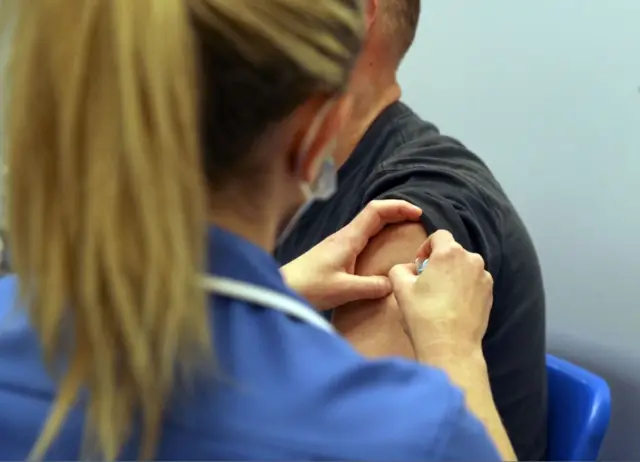
    A man receives a vaccinationImage source, PA Media

    As has been mentioned by Matt Hancock, the government data, external shows more than 10 million people have now received two doses of a Covid-19 vaccine.

    The figures show that up to Sunday 32,932,448 first doses had been given in the UK - a rise of 83,225 on the previous day.

    There have also been 10,152,039 second doses, an increase of 221,193.

  17. Delhi prepares to lock downpublished at 16:44 BST 19 April 2021

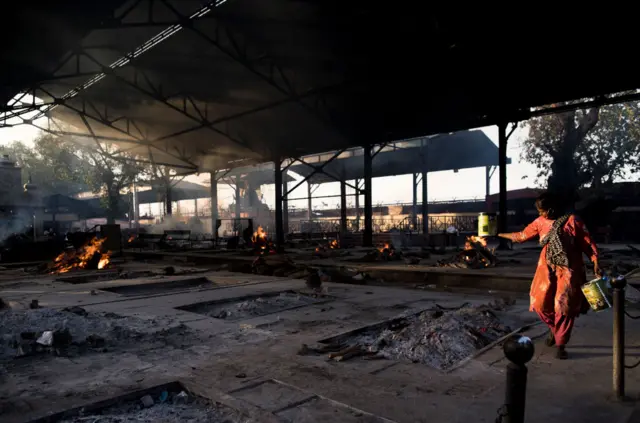
    Multiple burning pyres of patients who died of the Covid-19 coronavirus infections at a crematorium on 17 April 2021 in Delhi, IndiaImage source, Getty Images

    As we reported earlier, the Indian capital, Delhi, is due to go into lockdown for a week after a record spike in cases overwhelmed the city's healthcare system.

    The city had imposed a weekend curfew, but reported its highest single-day spike so far on Sunday - 24,462 cases.

    It has almost run out of beds at hospital intensive care units and oxygen is in short supply, the city's chief minister said earlier. Crematoriums in the area are also overwhelmed.

    One in three people in Delhi is testing positive, the BBC's Rajini Vaidyanathan reports from the city.

    Separately, the Indian government has said all adults will be eligible to get a coronavirus vaccination from the start of next month.

    India has been reeling from a deadly second wave since the start of April.

    Read more here.

  18. Hancock says 'international collaboration' neededpublished at 16:38 BST 19 April 2021

    Back to the Commons, where SNP health spokeswoman Dr Philippa Whitford asked if Matt Hancock recognised the need for a "more coordinated global response" to allow a safer return to international travel and business.

    Hancock replied he agreed on that, saying international collaboration was something he, along with the foreign secretary and prime minister, were working "incredibly hard" on.

    He said they were using the presidency of the G7 and the "enthusiasm of the new administration" in the US, under President Joe Biden, to "try to drive that".

    Hancock said in particular, they were looking for collaboration "amongst like-minded democracies in favour of an open and transparent science-led response to pandemics".

  19. Reported deaths at lowest level since Septemberpublished at 16:30 BST 19 April 2021

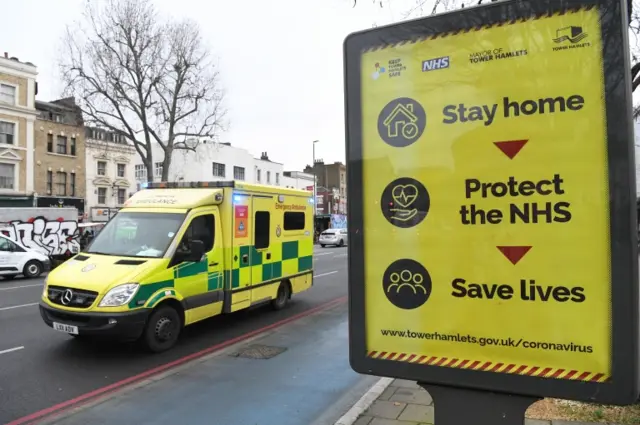
    A file image of an ambulance being driven past a Covid signImage source, EPA

    The UK has reported four new deaths within 28 days of a positive coronavirus test, the lowest figure since September, external.

    You have to go back to 7 September for a day when fewer deaths, three, were reported across the country.

    Due to lags in reporting, figures are often lower at the start of the week, and some deaths which have occurred in the past 24 hours may not yet have made it into the daily figures.

    Wales has begun to report on a six-day basis with Monday's figure covering a 48-hour period.

    The UK has recorded 127,274 Covid deaths within 28 days of a positive test since the start of the pandemic.

  20. Re-cap: India to be added to travel red list, Hancock confirmspublished at 16:23 BST 19 April 2021

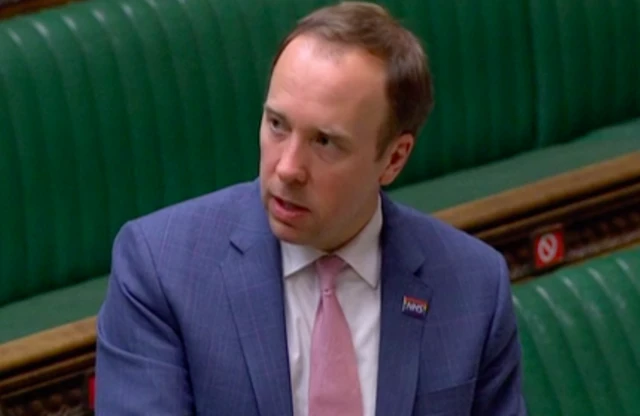
    Matt Hancock

    Health Secretary Matt Hancock has finished updating MPs on coronavirus developments. Here's a summary of what he said:

    • Hancock revealed 103 cases of a new virus variant first found in India have been discovered in the UK, with the "vast majority" linked to travel
    • A new Covid test is being developed that can identify whether a positive result is of a known variant - this could reduce the time taken to identify new unknown variants, Hancock said
    • In a broad update on the UK's vaccine programme, Hancock said 98% of adults aged 70 to 84 had Covid antibodies
    • Demand for jabs was so high among those in their late 40s last week that the government website crashed, he said
    • Meanwhile, he confirmed ministers were working with drug firms to develop Covid "booster" jabs for later in the year - as part of efforts to ward off new variants