Summary

  1. UK considers sending HMS Duncan to Mediterranean after base in Cyprus targeted by dronespublished at 11:44 GMT

    Jonathan Beale
    Defence correspondent

    The UK government is considering sending HMS Duncan to the Mediterranean - but defence sources say a final decision has not yet been made.

    HMS Duncan is being prepared for a possible deployment.

    The type 45 destroyer is primarily used to provide air defence. It could be used to increase security around RAF Akrotiri in Cyprus, which has already been targeted by Iranian drones

  2. Why did US and Israel attack Iran, and how long could the war last?published at 11:35 GMT

    We're now in the fourth day of the US-Israeli war with Iran.

    US President Donald Trump has said the aim of the operation is to "ensure that Iran does not obtain a nuclear weapon", and has urged the Iranian people to overthrow the clerical regime.

    The strikes on Saturday, which killed Iran's Supreme Leader Ayatollah Ali Khamenei, followed weeks of threats from Trump that he would order military action if Iran did not agree to a new deal over its nuclear programme - which Iran insists is entirely peaceful.

    Iran responded by launching missiles and drones across the region while the Lebanon-based and Iran-backed Shia Muslim militia group Hezbollah joined the fighting, launching rockets into Israel from its bases. Israel in turn hit Hezbollah targets and announced earlier that ground troops would "advance and seize additional strategic areas in Lebanon".

    Netanyahu has said the "campaign will continue as long as it is needed", but US Defense Secretary Pate Hegseth said on Monday the war with Iran would not be "endless".

    • To keep reading about how we got here, and what impact the war is having on the region and the wider repercussions on the world, read our explainer
  3. Gaza crossing reopens for first time since US-Israeli attack on Iranpublished at 11:21 GMT

    Yolande Knell
    Middle East correspondent, in Jerusalem

    Israel says it has reopened its main crossing point with the Gaza Strip - a crucial route for humanitarian aid to enter the war-torn territory - for the first time since it carried out air strikes on Iran.

    The UN and aid agencies had warned that the closure of crossings meant Gaza was rapidly running out of stocks of food and fuel. Panic buying sent prices soaring on local markets.

    The Israeli defence body Cogat, which controls the crossings, said that the closure of Kerem Shalom was due to “the missile threat” endangering both Israeli and Palestinian workers. It previously insisted that existing supplies would “suffice for a while”.

    Local sources tell the BBC that Palestinian aid trucks were sent to Kerem Shalom this morning but are yet to return with any goods.

    At this stage, the Rafah border crossing with Egypt - the main exit for medical evacuations - remains closed. Cogat said this “will reopen as soon as the security situation allows”.

    Iranian rockets heading toward Israel are seen crossing the sky over Gaza City on March 3, 2026Image source, Getty Images
    Image caption,

    Iranian rockets were earlier pictured crossing the sky over Gaza City

  4. Israel working to 'intercept threat' of new Iranian strikespublished at 11:09 GMT

    Earlier, the Israeli military said Iran had launched fresh missile strikes at Israel.

    It said its defensive systems were operating to "intercept the threat", and advised that residents enter shelters and remain there "until further notice".

    Warning sirens were reported to have been heard across the nation, including in Tel Aviv.

  5. Israel issues more evacuation warnings to parts of Lebanonpublished at 11:05 GMT

    In a post on X, the Israeli military's Arab media spokesperson Avichay Adraee gives a long list of towns and cities where Lebanese residents have been warned to leave. "And we ask you not to return to them", Adraee says.

    The advice says residents should evacuate their homes and travel at least 1,000 metres away from any of the named places.

    Adraee also warns that anyone near Iran-backed Hezbollah "elements [and] facilities" exposes their life to danger".

    There are more than 80 towns and villages on the evacuation list, including Al Bayada and Al Mansouri in Tyre and Yatar in the Bint Jbeil district.

    It follows several other warnings since the Middle East conflict intensified over the weekend.

  6. BBC Verify

    Satellite images show Iranian nuclear complex damagedpublished at 10:53 GMT

    By Paul Brown

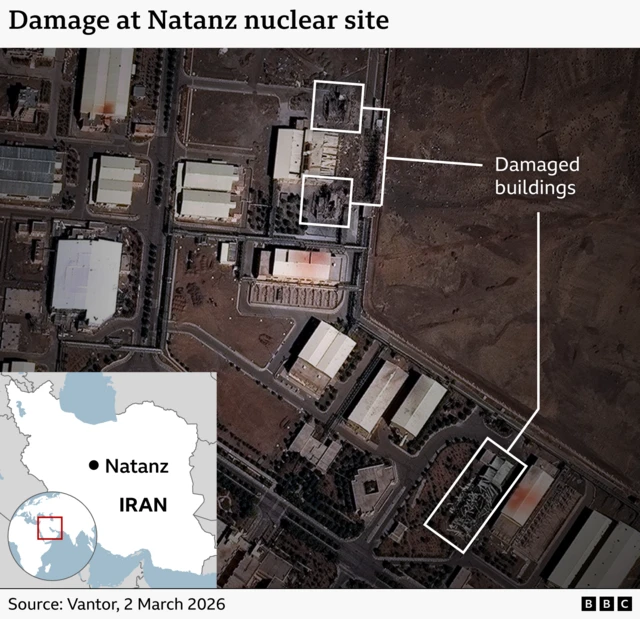
    BBC Verify has reviewed satellite imagery of new damage to Iran’s nuclear complex at Natanz.

    The images, published by intelligence company Vantor on Monday, show three buildings within the complex in central Iran have been hit.

    Vantor’s analysis states they were linked to "personnel and vehicle entrances to the underground fuel enrichment complex".

    The International Atomic Energy Agency (IAEA) has made a similar assessment, adding that "no radiological consequence [is] expected".

    The latest imagery also shows existing damage from a US air strike last year when several Iranian nuclear sites were targeted in a US operation called Midnight Hammer.

    A satellite image highlighting three damaged buildings
  7. Stocking up on essentials and concerns about price rises - life inside Tehranpublished at 10:37 GMT

    Ghoncheh Habibiazad
    Senior reporter, BBC Persian

    People I'm speaking to in Tehran are saying that, in terms of attacks, parts of the Iranian capital seemed to be calmer on Tuesday morning compared to Monday.

    Some people, though, are worried about groceries and price increase as the war continues.

    "We need to stock up because we don’t know for how long it’s going to continue. We’re worried that we might run out of essentials if we don’t", one resident tells me.

    Another says: "The prices have increased for essentials, including potatoes."

    It’s very difficult to get a clear picture of what’s going on inside the country due to internet outages. People I'm speaking to manage to get connection, but only momentarily.

  8. US must work with opposition inside Iran - former Trump adviserpublished at 10:18 GMT

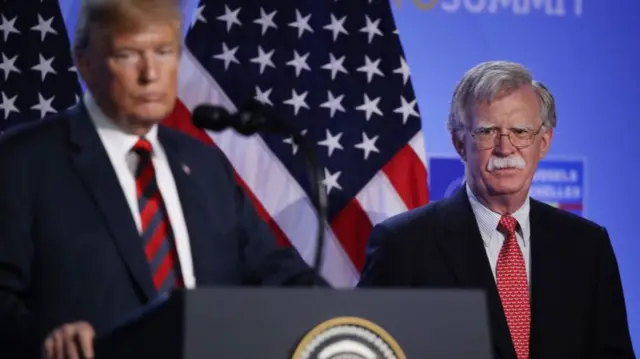
    President Donald Trump, flanked by National Security Advisor John Bolton, speaks to the media at a press conference on the second day of the 2018 NATO Summit on July 12, 2018 in Brussels, BelgiumImage source, Getty Images

    A little earlier, John Bolton, Donald Trump's national security adviser during his first term as president, told the BBC World Service it is "critical" for the US to work with opposition inside Iran.

    Nobody can hand the people of Iran "freedom on a silver platter", they are "going to have to help get it", he says.

    Bolton says this should involve identifying generals who "might come across to their side", as well as providing opposition figures with resources and communication capabilities.

    "The real question is whether President Trump has the patience and persistence to see this thing through," Bolton adds.

  9. Israeli military says it has hit Iran's presidential officepublished at 10:07 GMT
    Breaking

    We're seeing an update from the Israeli military, which says its air force has struck the Iranian regime's leadership compound.

    In a statement on Telegram, the IDF says "numerous munitions" were dropped on the Presidential Office and the Supreme National Security Council.

    It adds that a military training institution and "additional key regime infrastructure" were also hit.

    Iran's former Supreme Leader Ayatollah Ali Khamenei used the compound, the IDF says. Khamenei was killed at his own compound over the weekend in US-Israeli strikes.

  10. BBC Verify

    New verified video shows explosions east of Tehranpublished at 09:56 GMT

    By Emma Pengelly and Paul Brown

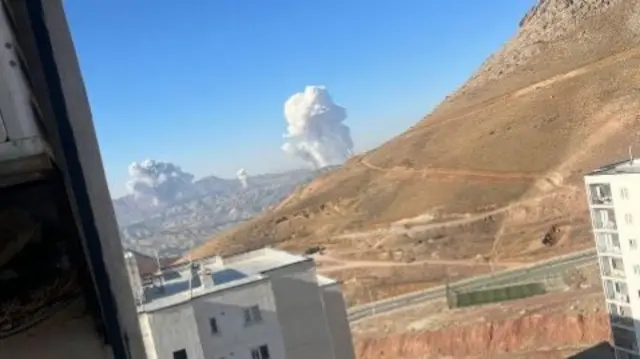
    BBC Verify has confirmed new footage of explosions and smoke rising in Pardis, Tehran Province, east of the capital city.

    We've reviewed satellite imagery showing the area of the smoke plumes, but haven't been able to identify a potential target.

    Our checks show the footage first began being shared on social media on Tuesday morning. We’ve geolocated the visuals by matching a sports pitch, high-rise buildings and features of a nearby hillside to those visible in satellite imagery.

    Earlier, the Israeli military said it was carrying out "simultaneous strikes" in Tehran and Beirut.

    Image shows explosions east of TehranImage source, Telegram/VahidOnline
  11. Red Crescent says Iranian death toll up to 787published at 09:51 GMT
    Breaking

    Ghoncheh Habibiazad
    Senior reporter, BBC Persian

    Some 787 people have been killed in Iran since the US and Israel launched strikes at the country on Saturday, Iran's Red Crescent Society says.

    Meanwhile, US-based Human Rights Activists in Iran (HRANA) reports that 742 civilians have died, including 176 children.

    Fatemeh Mohammadbeigi, a member of the Iranian Parliament Health Commission, said on Monday that nine hospitals were targeted in Iran, accusing Israel and the US of targeting them.

    The IDF has responded to allegations of targeting Gandhi Hospital in Tehran, saying the attack "was not targeted at the hospital". The BBC has contacted United States Central Command (Centcom) for a response.

    The Iran Foreign Ministry has today accused both Israel and the US of targeting the same hospital.

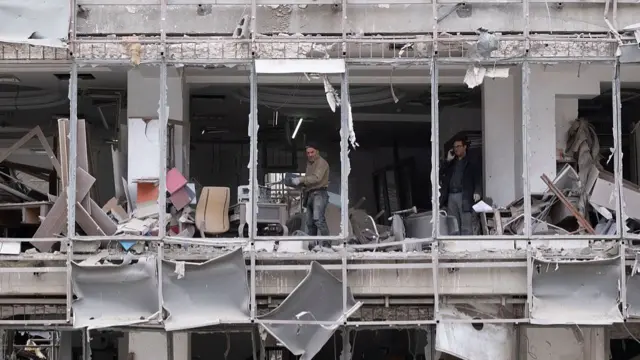
    A worker works at the Gandhi Hospital, which is damaged after U.S.-Israeli strikes on a state TV telecommunication tower nearby in Tehran, IranImage source, Getty Images
    Image caption,

    Workers were pictured on Monday clearing rubble from the Gandhi Hospital

  12. Every part of Tehran has been hit, journalist in Iranian capital tells BBCpublished at 09:44 GMT

    Aftermath of an Israeli and the U.S. strike on a police station, amid the U.S.-Israel conflict with Iran, in Tehran, Iran, March 2Image source, Reuters

    "This is a systematic attack on not just the military but civilians," journalist Mohammad Khatibi tells BBC World Service from inside Iran.

    He says "every part" of the capital, Tehran, has been hit by US and Israeli strikes since the conflict erupted on Saturday.

    This includes communication towers, broadcasting stations and the city's Grand Bazaar, which Khatibi says has been "reduced to rubble".

    Asked what the reaction has been to the death of Iran's Supreme Leader Ayatollah Ali Khamenei - killed in US-Israeli strikes - Khatibi says there were "small groups" of people celebrating but there's been no large-scale unrest.

    He also says that due to strikes on military and police installations - which typically respond to such unrest - he believes "separatists and opposition groups outside of Iran" will soon call for demonstrations similar to what Iran saw in January - which saw thousands killed.

    "This [regime change] was the plan all along," Khatibi claims. "The nuclear issue I think it was just the excuse."

    • A reminder: International news organisations are often refused visas to Iran, which severely limits their ability to gather information there.
  13. Israeli defence minister: Tehran's being hit with significant forcepublished at 09:30 GMT

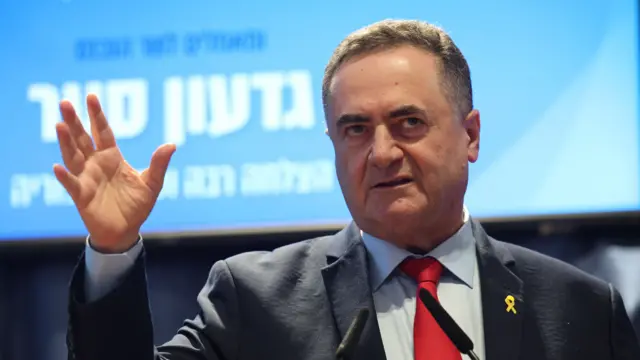
    Israel's Defense Minister Israel KatzImage source, EPA

    Away from Lebanon, Israeli Defence Minister Israel Katz says the country's air force has struck regime targets in Tehran with "significant force".

    Katz says Israel is continuing to "degrade" missile-launch capabilities in the country, too.

    The Iranian operation will "continue with full force for as long as necessary", he says.

  14. Analysis

    A new ground incursion or better defence of civilians? Israel has its say on Lebanonpublished at 09:29 GMT

    Yolande Knell
    Middle East correspondent, in Jerusalem

    Israel’s new ground move into “strategic areas in Lebanon” is a new blow to Lebanese sovereignty and the 2024 US-brokered ceasefire deal that was meant to end fighting between Israel and the Lebanese armed group, Hezbollah.

    But the Israel Defense Forces (IDF) is stressing its aim is not a new ground incursion, but better defence of civilians in northern Israel - tens of thousands of whom had to leave their homes during a year of cross-border attacks that went on in parallel to the Gaza war.

    The IDF partially withdrew from southern Lebanon following the ceasefire deal. However, it remained in five points. It says it sent in additional ground troops on Monday. Israeli defence analysts suggest these will help create a new buffer zone to preempt any possible attempt by Hezbollah to carry out a cross-border raid.

    Lebanese media say that Lebanon’s army has already left border positions in the south of the country in anticipation of the Israeli move.

    On Monday, the IDF told people in more than 50 villages in southern Lebanon to leave.

  15. Lebanese man says all he can do is wait and see 'how things unfold'published at 09:22 GMT

    Alice Cuddy
    Reporting from Beirut

    I’ve been talking to people from Lebanese communities near the Israeli border, following the announcement that the Israeli military will "advance and seize strategic areas in Lebanon".

    A man still in the town of Marjayoun, in the south of Lebanon, who asked not to be named because of safety fears, says he will stay in his home until he is forced to evacuate.

    "We’ve seen the reports but we’re not sure what we should do or what might happen next - I’ll keep assessing the situation with my family and move my parents to a safer place if necessary," he tells me.

    Khoudor Sheikh Ali, 26, has fled from his home in the south and is now here in the Lebanese capital Beirut.

    He says he was expecting this escalation, but that now "we can only pray".

    "It feels very difficult and uncertain. I’ll watch how things unfold - I can’t do anything else."

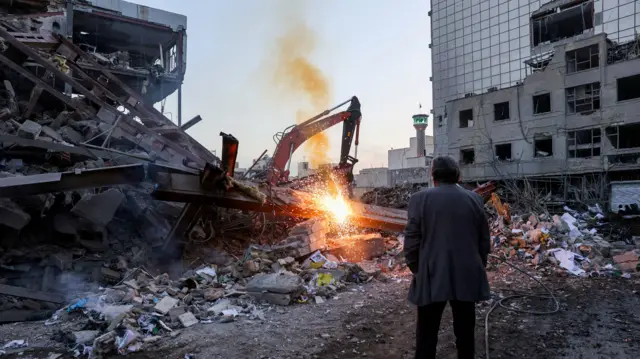
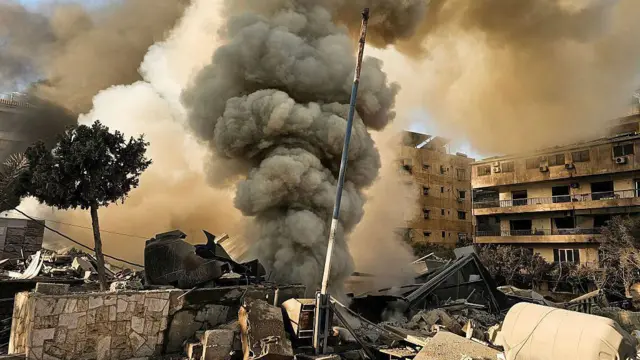
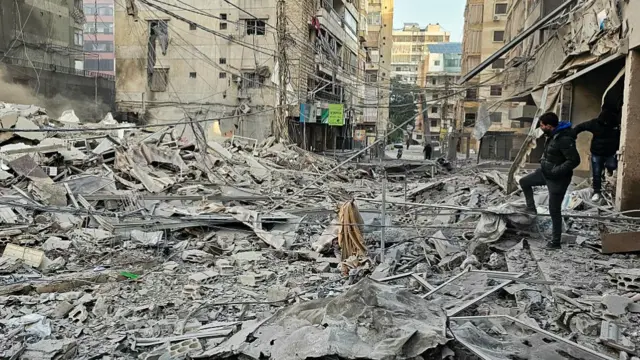
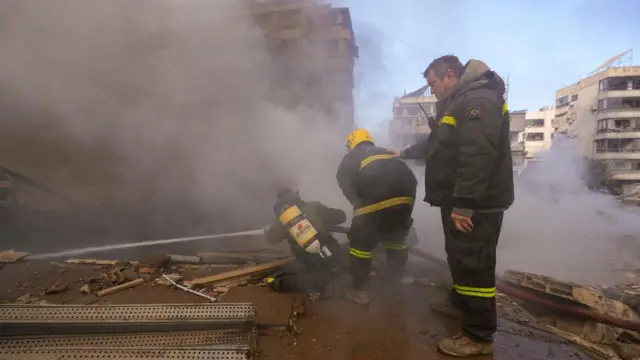
  16. Smoke billows above flattened buildings - the aftermath of Israeli strikes on Beirutpublished at 09:16 GMT

    A little before 08:00 local time (06:00 GMT), the Israeli military launched fresh strikes on the southern suburbs of Beirut as well as Iran's capital Tehran.

    Israel says it's hitting "military targets" in both locations. In Lebanon, the IDF says it's targeting sites that belong to Iran-backed Hezbollah.

    We're yet to see images of the damage caused in Iran, but the below are from locations in Iran.

    Smoke rises from the site of an Israeli airstrike on the southern suburbs of BeirutImage source, Getty Images
    Image caption,

    Smoke rises from the site of an Israeli airstrike on the southern suburbs of Beirut

    A man walks around the rubble of a destroyed buildingImage source, Getty Images
    Image caption,

    Residents were seen surveying the damage

    Three fire fighters put out a fire in a residential area in BeirutImage source, Reuters
    Image caption,

    Firefighters in Beirut were also pictured putting out a fire in a residential area

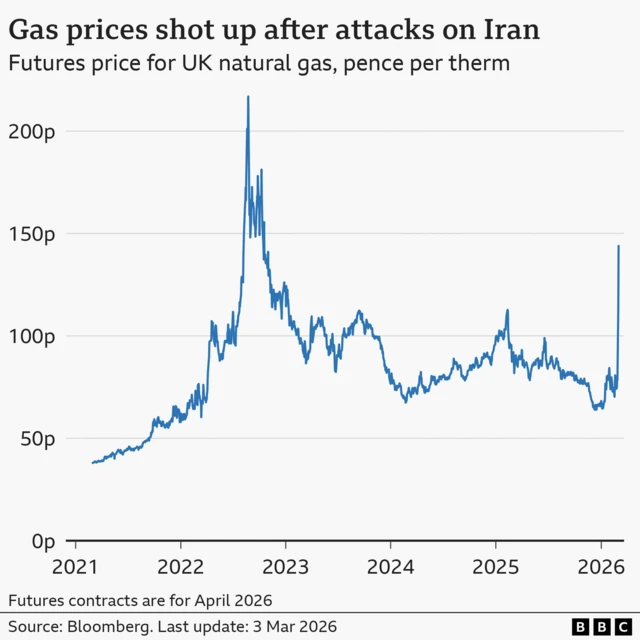
  17. Natural gas prices continue to surge amid conflict in Middle Eastpublished at 09:01 GMT

    Shanaz Musafer
    Business reporter

    Europe's benchmark gas price is up 33% today, while the UK benchmark is also up 30% - both are trading at their highest levels since January 2023.

    Gas prices had jumped about 50% on Monday after QatarEnergy, one of the world's biggest exporters, halted production following "military attacks" on its facilities.

    According to Trading Economics, the UK is "particularly exposed due to limited storage capacity and heavy reliance on imports, with domestic inventories below 30% at the end of February".

    A line chart titled 'Gas prices shot up after attacks on Iran', showing the futures (April contract) price for UK natural gas, in pence per therm. At the end of December, the price was around 39p. That rose to a high of 217p in late August 2022 after Russia's invasion of Ukraine, before falling again. It then rose sharply again to around 144p on 3 March 2026, after the US's attacks on Iran. The source is Bloomberg.
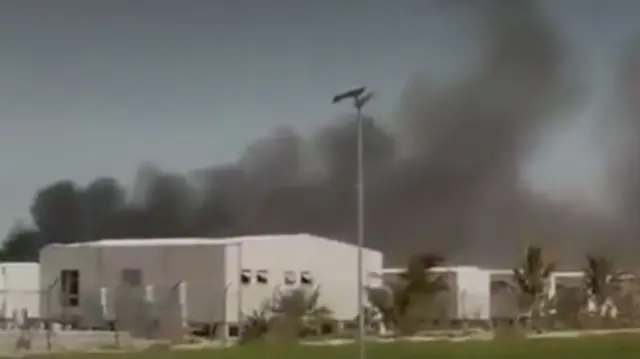
  18. Commercial port in Oman targeted in drone attack - state newspublished at 08:42 GMT

    Smoke rises over the port of Duqm in OmanImage source, UGC
    Image caption,

    Smoke was filmed rising over the Port of Duqm

    In Oman, a fuel tank at the Port of Duqm has been targeted in a drone attack, according to the country's state news agency.

    "The resulting damage was brought under control without any human casualties being recorded," an unnamed security source is cited as saying.

    The same port was targeted by drones over the weekend. One worker was injured, according to reports.

    In nearby Qatar, production of liquefied ⁠natural gas was halted on Monday - about a fifth of global supply - after Iranian attacks on some of its facilities. Saudi Arabia also suspended ​production at its largest domestic refinery.

    Oman has been a key mediator for years in US-Iran talks - the most recent of which took place in the country last month, with Iranian Foreign Minister Abbas Araghchi describing the mediated discussions as a "good beginning".

  19. Starmer's chief secretary: UK must do everything it can to defend British citizenspublished at 08:29 GMT

    We've a few more lines to bring you from Darren Jones, chief secretary to Keir Starmer, who's been talking to BBC Breafkast.

    He says the British armed forces are now involved in the Iranian conflict - in a defensive capacity - because British citizens are "at risk".

    "We were not involved in the initial American and Israeli strikes in Iran, but now that British citizens are at risk... it is right that we do everything we can to reduce that risk and to defend British citizens," Jones says.

    What does this involvement look like? It includes RAF pilots being in the skies "shooting down missiles", he says, and allowing the US to use British air bases. (Starmer explained that latter decision to MPs yesterday - read more on that here.)

    Asked if he believes the US's actions have been illegal, Jones says this is a question for the US.

  20. US-UK relationship the same 'operationally', despite Trump comments - ministerpublished at 08:09 GMT

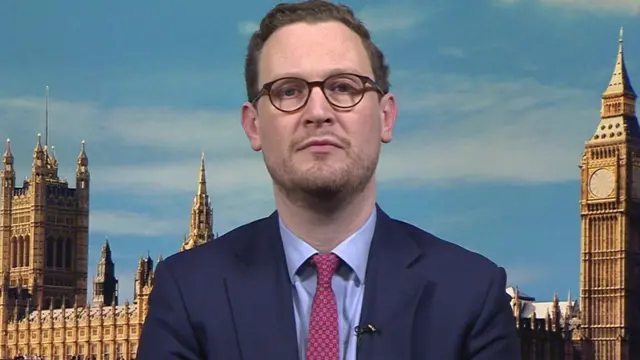
    Darren Jones speaking to BBC Breakfast

    This morning, new comments from Donald Trump have been released by the Sun - in which the US president says the US relationship with the UK is "obviously not what it was".

    Now the Chief Secretary to the Prime Minister, Darren Jones, says the relationship "remains important".

    "I understand the president has not been satisfied that we were not involved with the first wave of strikes," he tells BBC Breakfast.

    However, Jones says the UK "will only commit British armed forces when there is a legal basis to do so, a clear plan of action and when it is in the interest of our country".

    He adds that the US-UK relationship "operationally" remains the same, as their militaries are continuing to work closely together "right now".

    "I recognise the president has taken a different view... but as I say our military personnel are collaborating now in the interest of British citizens in the region," he adds.

    "That's a reflection of our special relationship, working as the public would expect us to."

    As a reminder, the UK initially said the US couldn't use British bases for strikes on Iran - then said they could be used for "defensive" strikes.